The refrigerator hums a low, mocking note in the quiet kitchen. Inside, the light illuminates a half-empty jar of yellow mustard, a wrinkled lime, and a carton of tap water.
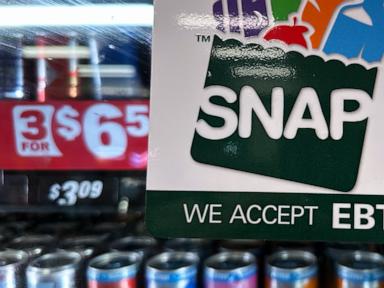
Outside, the neighborhood is waking up to another Tuesday, but Maria is staring at a piece of plastic mail that arrived yesterday, her chest tight with a familiar, suffocating arithmetic. Her SNAP benefits dropped again. Not by a handful of dollars, but by an invisible cliffside that leaves her family stranded halfway through the month. For a different look, consider: this related article.
She is not alone. Across kitchen tables from rusted trailer parks to concrete urban walkups, millions of Americans are experiencing the same sudden shrinkage. Enrollment in federal grocery aid is plummeting. Statisticians in Washington stare at spreadsheets and call it normalization, post-pandemic adjustment, administrative efficiency. But on the ground, the reality smells less like policy and more like hunger.
To understand why participation is dropping faster than anyone anticipated, we have to look past the macroeconomics and step inside the grocery aisle. We have to watch a mother calculate the weight of an onion against the cost of a gallon of milk. Related coverage on the subject has been published by NBC News.
The Paperwork Maze
Bureaucracy has a way of wearing you down until surrender looks like a choice.
When the federal public health emergency unwound, states rushed to reevaluate every single household enrolled in the Supplemental Nutrition Assistance Program. Think of it like a massive security checkpoint suddenly thrown open after years of relaxed rules. Suddenly, recipients had to prove what they earned, where they lived, and how many hours they worked, all over again.
Imagine trying to keep a job that changes your schedule every Friday, watching your phone for a mandatory renewal interview that might happen while you are standing on a ladder or ringing up groceries at minimum wage. Miss that call by three minutes, and the system assumes you vanished. The paperwork does not care that your car broke down or your youngest child spiked a fever. The machine simply moves on.
Drops in enrollment are routinely celebrated in budget committees as a sign of economic recovery. More people off the rolls must mean fewer people in need. Right?
Wrong.
Consider what happens when administrative hurdles act as a sieve. The people falling through the mesh are not necessarily the ones who found stable footing. They are the exhausted, the overwhelmed, the digitally disconnected, and the working poor who missed a certified letter because they were working two jobs to keep the lights on. The math of the state shows fewer names on the ledger. The reality in the pantry tells a very different story.
The Invisible Weight of Stigma
Pride is a heavy anchor.
There is a psychological tax paid every time someone hands an electronic benefit card to a cashier while watching the person behind them in line tap a sleek smartphone for payment. We have built a culture that tells people their worth is tied directly to their economic output, and then forces them to run an obstacle course of verification to prove they are poor enough to eat.
When the state introduces new verification hurdles, many recipients simply walk away. They decide the humiliation of a denied claim or the endless phone trees of a state agency are worse than skipping meals. They ration. They buy cheap, shelf-stable carbohydrates that fill the stomach while starving the body of nutrition.
This is where the statistics detach from humanity. A downward trend line on a quarterly report is translated by politicians as fiscal responsibility. Down on the street, it means fewer fresh vegetables in the crisper drawer. It means children eating cereal with water instead of milk during the final week of the month.
The Breaking Point of Modern Survival
We tell ourselves comforting myths about the safety net. We imagine it as a soft trampoline that catches you when you fall. But the modern safety net is often made of rusted wire, brittle and prone to snapping under sudden pressure.
When economic policy is designed by people who have never had to choose between paying for insulin and buying a bag of apples, the metrics become entirely divorced from flesh and blood. The drop in SNAP enrollment is not a triumph of job creation. It is a monument to attrition. It is a system successfully shrinking its footprint by making it too painful to participate.
Maria folds the state letter and slips it into a drawer with last month's utility bills. She does not call the agency hotline. She knows the hold music by heart, and she knows the silence that follows when a caseworker tells her that her documentation was received two days too late.
She puts on her coat, grabs a reusable canvas bag, and walks out the door into the morning light, calculating how many meals she can stretch out of a five-pound bag of dry beans.