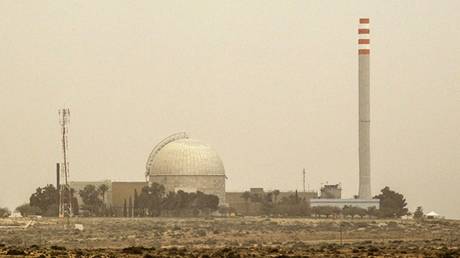
It's the open secret that has defined Middle Eastern diplomacy for over half a century. Everyone knows it exists, but no one in Washington is allowed to talk about it. We’re talking about Israel’s nuclear arsenal. For decades, the U.S. has maintained a policy of "strategic ambiguity," essentially pretending they don't know if their closest ally has the bomb. But a growing group of House Democrats is now saying the charade has to end, especially as tensions with Iran reach a breaking point in 2026.
Led by Representative Joaquin Castro, more than 30 Democrats sent a letter to Secretary of State Marco Rubio this week. Their demand is simple but massive: the Trump administration needs to stop the "official ambiguity" and publicly admit what the rest of the world already knows. The timing isn't an accident. With the U.S. and Israel currently engaged in a stalled war against Iran—a war largely fought to prevent Tehran from getting its own nukes—these lawmakers argue that honesty isn't just a moral choice; it's a strategic necessity.
Why the Silence is Falling Apart
The logic behind the letter is pretty direct. How can the U.S. lead a global non-proliferation effort while shielding one specific country from the same standards? The lawmakers argue that keeping Israel’s program in the shadows makes a coherent policy in the Middle East impossible. If you’re trying to convince Saudi Arabia or Iran to stay non-nuclear, it’s hard to do that when you won't even acknowledge the elephant—or the warheads—in the room.
The letter specifically points to the Dimona facility, officially known as the Shimon Peres Negev Nuclear Research Center. While Israel describes it as a "research reactor," it’s widely understood to be the heart of their weapons program. During the recent conflict, Iran even targeted the site, proving that the "secret" isn't exactly keeping the facility safe from enemy radar. The Democrats want Rubio to answer the big questions: How many weapons does Israel actually have? What is their doctrine for using them? Where are the red lines?
The Nixon-Meir Handshake That Started It All
To understand why this is such a big deal, you have to look back to 1969. That’s when President Richard Nixon and Prime Minister Golda Meir reached an unwritten "nuclear understanding." The deal was basically this: Israel wouldn't test its weapons or announce its status, and in exchange, the U.S. would stop asking questions and wouldn't press Israel to sign the Non-Proliferation Treaty (NPT).
It worked for a long time. It allowed Israel to have a "deterrent in the basement" while giving Washington enough plausible deniability to avoid triggering U.S. laws that might have restricted aid to a nuclear-armed state. But the world in 2026 looks nothing like the world of 1969. We’re now in a landscape where regional powers are openly eyeing their own nuclear options, and the Democrats argue that the Nixon-era hush-hush strategy is actually making the region more dangerous.
Trump, Rubio, and the Maximum Pressure Reality
Don't expect the Trump administration to flip the script overnight. Trump has doubled down on his "maximum pressure" campaign against Iran, and Secretary of State Marco Rubio has historically been one of Israel's staunchest defenders in D.C.. For them, acknowledging Israel’s nukes would likely be seen as an unnecessary gift to Tehran’s propaganda machine.
However, the pressure from the Hill is coming from a place of "constitutional responsibility." Lawmakers are essentially saying, "You're asking us to support a war based on nuclear threats, but you won't give us the full picture of the nuclear balance in the region". It’s a compelling argument, even if it’s one the White House is likely to ignore.
The reality is that "ambiguity" has always been a political tool, not a factual one. Whistleblowers like Mordechai Vanunu proved the program's existence back in the 80s, and even former U.S. officials like Robert Gates have slipped up and mentioned it in testimony.
If you're following this, the next date to watch is May 18. That’s the deadline the Democrats gave Rubio to respond to their questions. He probably won't give them the detailed inventory they're looking for, but the fact that the conversation is happening at this level shows that the "open secret" is becoming a lot harder to keep.
If you want to stay ahead of this, stop looking for a single "gotcha" moment and start watching how the U.S. handles nuclear talks with Saudi Arabia. If the Saudis start demanding the same "ambiguity" or enrichment rights that Israel has enjoyed, the pressure on Trump to finally lift the lid will become unbearable. For now, keep an eye on the House Foreign Affairs Committee—that’s where the real friction is going to happen.