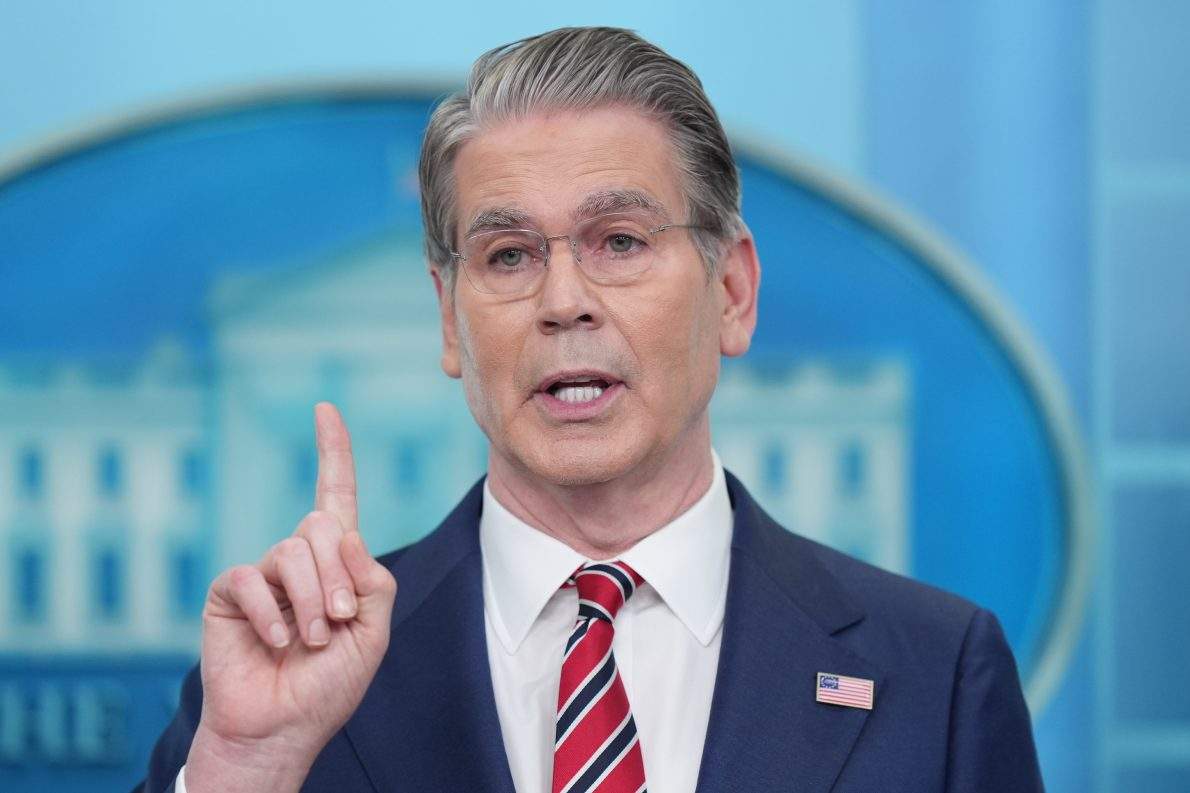
The desk of a Treasury Secretary is rarely just a piece of furniture. It is a pressure cooker where the abstract math of global economics meets the jagged reality of human survival. When Scott Bessent speaks about the future of energy, he isn’t just debating spreadsheets or ticker symbols. He is discussing a physical world where every gallon of oil moving through a rusted tanker in the Persian Gulf or a pipeline in the Siberian tundra dictates whether a family in a Midwestern suburb can afford their commute, or whether a drone factory in an authoritarian state stays powered through the night.
The era of the "wink and a nod" is over. For years, the global energy market has operated under a veil of strategic ambiguity. Sanctions were written in bold ink on paper, but the margins were filled with waivers—legal loopholes that allowed certain countries to keep buying oil from restricted regimes to prevent a price shock at the pump. It was a delicate, often hypocritical balance. We wanted to punish aggression without making the average voter pay five dollars a gallon for it.
Bessent’s recent signal that the U.S. will not renew these waivers marks a violent departure from that status quo. It is the sound of a door slamming shut.
The Ghost Fleet and the Kitchen Table
To understand why this matters, you have to look past the White House briefings and into the hull of a "ghost tanker." Imagine a ship, thirty years old and caked in salt, its transponders turned off so it vanishes from global tracking systems. This vessel carries millions of barrels of Iranian or Russian crude, weaving through international waters like a phantom. These ships are the lifeblood of regimes that the U.S. has spent years trying to isolate.
When waivers exist, these transactions often happen in the light of day. When they vanish, the pressure intensifies.
But there is a secondary character in this story: a woman named Elena. She lives in a small town outside of Pittsburgh. She doesn't know what a sanctions waiver is. She doesn't track the Brent Crude index. What she knows is that when she turns the key in her SUV, she calculates the cost of the trip to the grocery store against the cost of her heating bill. To Elena, the decision to end waivers feels like a gamble with her bank account.
This is the central tension of the new American energy policy. The administration is betting that the U.S. can choke off the revenue of its adversaries without suffocating its own citizens. It is a high-wire act performed over an abyss of inflation.
The Architecture of a Hard Line
The math behind the decision is cold. Russia and Iran rely on oil revenue to fund everything from social programs to missile strikes. By refusing to renew waivers, the U.S. is attempting to drain the pool. It is an economic siege.
In the past, the fear was that if you removed Russian or Iranian oil from the global supply too quickly, the price would skyrocket. It is basic physics: less supply plus steady demand equals a price spike. But the landscape has shifted. American oil production has hit record highs. We are pumping more crude than any nation in history. This surge in domestic production acts as a massive shock absorber. It gives the Treasury the confidence to say, "We don't need your oil, and we're going to make sure no one else buys it either."
[Image of an oil refinery at sunset]
Yet, confidence is not the same as certainty. The global market is a living, breathing organism. When you pull a thread in Tehran, the fabric bunches up in Tokyo and Berlin.
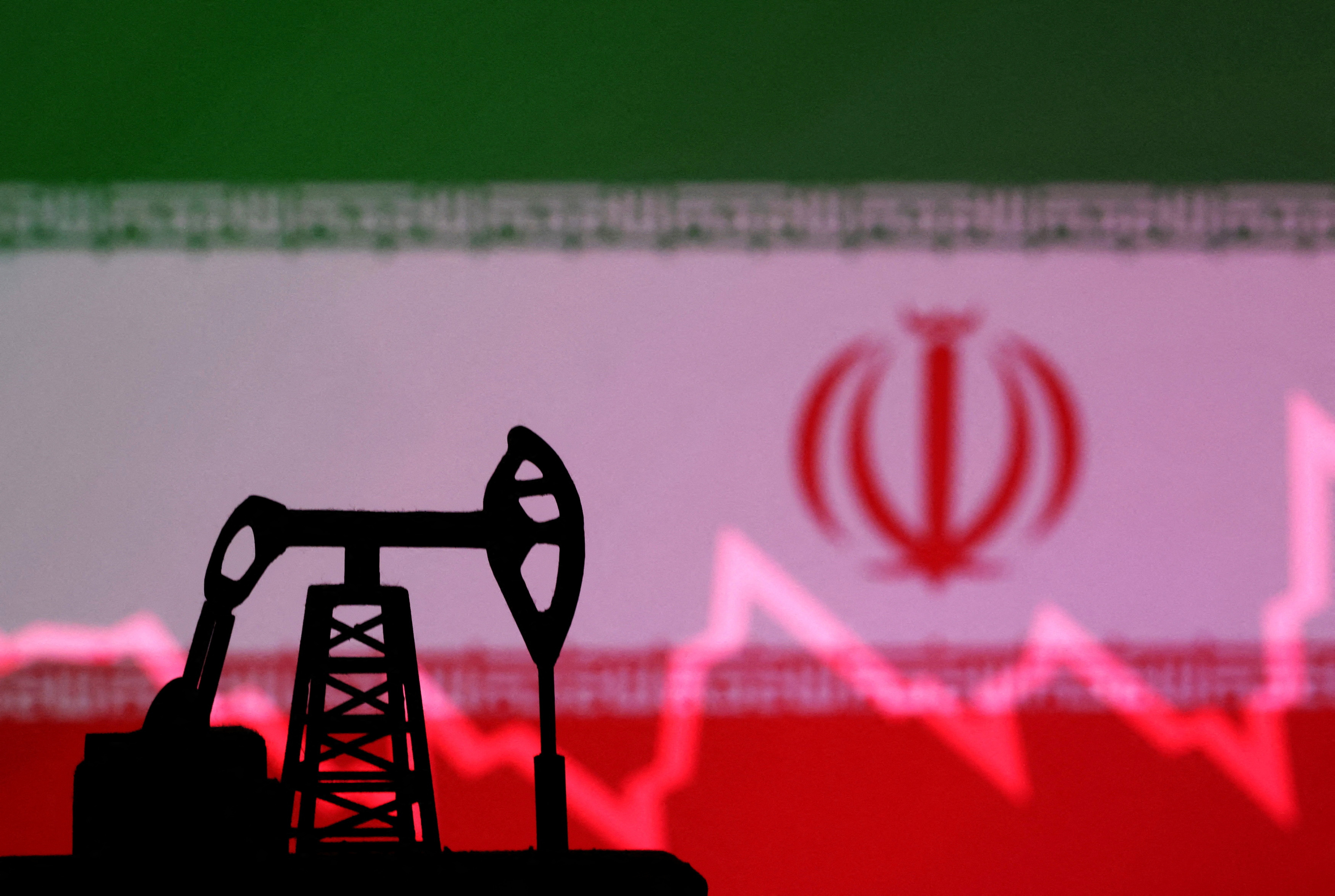
Consider the "Dark Fleet." As legal avenues for selling oil vanish, the black market expands. Iran has become a master of this shadow economy, using a labyrinth of shell companies and mid-sea transfers to get its product to refineries in China. By ending waivers, the U.S. is forcing a confrontation with these shadow players. It isn't just about stopping the oil; it's about making the cost of doing business so high—through fines, seizures, and secondary sanctions—that even the most daring smugglers find the risk unbearable.
The Human Cost of the Shadow Game
There are people caught in the gears of this transition who never asked to be part of a geopolitical struggle. Think of the merchant mariners working on those aging tankers. They are often from developing nations, working dangerous jobs for meager pay. When the U.S. tightens the noose on these shipments, these men find themselves on vessels that are increasingly unwelcome in any port. They become stateless, floating on millions of gallons of volatile cargo, waiting for a buyer that might never come.
Then there are the small-scale refiners in Asia. They have built their business models on the discounted oil that sanctioned nations are forced to sell. For them, a waiver wasn't a political tool; it was a lifeline. If that oil disappears or becomes too dangerous to touch, those refineries close. Jobs vanish. Local economies that have nothing to do with the war in Ukraine or the tensions in the Middle East begin to crater.
The stakes are invisible until they are agonizingly real.
Why the "Soft Touch" Failed
The criticism of the previous approach—the era of frequent waivers—was that it created a "leaky bucket" effect. You can't claim to be isolating a regime while simultaneously giving its biggest customers a hall pass. It sent a message of weakness. It suggested that American foreign policy was secondary to the price of a gallon of gas in a swing state.
Bessent’s stance is a rejection of that cynicism. It is an assertion that economic power is only effective if you are willing to use it fully. It assumes that the "pain" of higher prices, if it comes, is a necessary cost for a more secure world.
But how do you explain that to someone who is already struggling?
Energy is the most visceral form of economics. You can't opt out of it. You can skip a new iPhone or wait a year to buy a car, but you cannot stop the flow of heat to your home in January. This is why energy sanctions are the "nuclear option" of financial warfare. They touch everyone.
The Strategic Pivot
The real story here isn't just about what we are stopping; it's about what we are starting. By ending these waivers, the U.S. is signaling a permanent shift toward a "Fortress America" energy strategy. We are no longer trying to manage the global oil market; we are trying to dominate it.
This requires a massive internal mobilization. It means more permits, more pipelines, and more infrastructure. It means telling environmental advocates that the immediate need to bankrupt hostile regimes outweighs the long-term goal of carbon neutrality—at least for now. It is a messy, uncomfortable trade-off.
The administration is essentially saying that the "energy transition" to renewables cannot happen in a world where oil-funded autocracies dictate the terms of global security. We have to win the oil war before we can move past the oil age.
The Ripple in the Pond
Imagine a stone dropped into a still lake. The splash is the announcement. The ripples are what follow.
The first ripple hits the Chinese economy. China is the primary destination for the oil that used to move under those waivers. If they continue to buy, they risk being cut off from the U.S. financial system. It is a game of chicken between the world’s two largest economies. If China flinches, Iran’s economy collapses. If China doesn't flinch, we move closer to a bifurcated global economy—a world where there is a "Western" financial system and a "Shadow" financial system that never meet.
The second ripple hits the Middle East. If Iran can no longer sell its oil, it loses the ability to fund its proxies. The logic is simple: no money, no rockets. But a cornered regime is often the most dangerous. History shows us that when you take away a nation's primary source of income, they don't always go quietly to the negotiating table. Sometimes, they lash out.
The third ripple hits home. It hits the gas station on the corner of 5th and Main.
The Reality of the Risk
We are entering a period of profound uncertainty. The "stable" prices we have enjoyed were partly a result of these waivers acting as a pressure valve. Without them, the market becomes twitchy. A single fire at a refinery or a single drone strike on a terminal can send prices soaring because there is no longer any "slack" in the system.
Is it worth it?
That is the question that keeps Treasury officials awake. They are betting that the American consumer is resilient enough to handle a bit of turbulence in exchange for a world where Russia and Iran are significantly weakened. They are betting that the increase in U.S. and Guyanese oil production will be enough to keep the engine running.
It is a gamble played with the lives and livelihoods of millions.
The tragedy of modern statecraft is that the people who make these decisions—the ones sitting behind the heavy oak desks—are rarely the ones who feel the consequences. Scott Bessent will not be checking his bank account before he fills his tank. But the woman in Pittsburgh will. The merchant mariner in the Gulf will. The factory worker in Shanghai will.
We are watching the dismantling of a decades-old system of convenience. The invisible pipes that once carried sanctioned oil across the world, protected by the legal shield of "waivers," are being cut one by one.
The world is about to get a lot more expensive, and a lot more dangerous, in the hope that it eventually becomes more just. We are trading the comfort of the present for the security of the future. It is a cold, hard bargain, written in the language of oil and blood.
As the last of the waivers expire, the ghost tankers will have to find new shadows to hide in. The rest of us will be left watching the numbers on the pump climb, wondering if the cost of principle is a price we can actually afford to pay.
The pipeline is closing. The light is fading. The real test begins now.