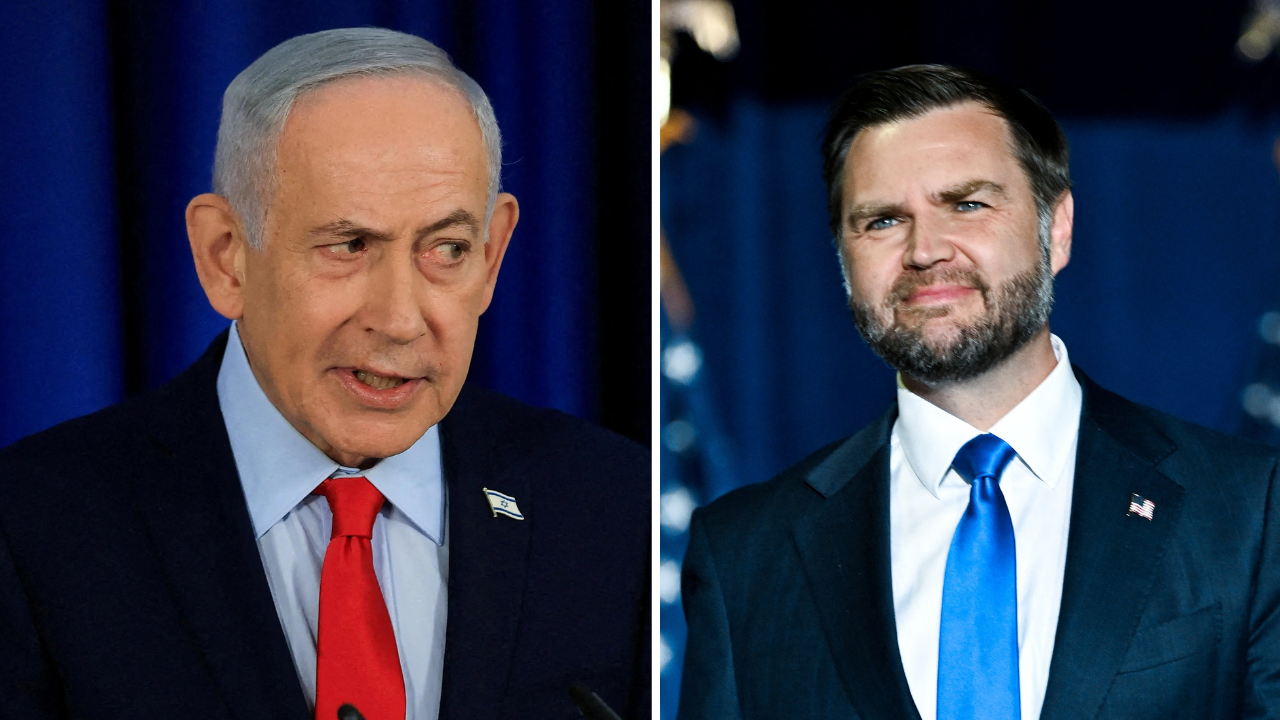
Standard political coverage of Vice President JD Vance’s refusal to endorse Israeli Prime Minister Benjamin Netanyahu ahead of Israel’s October 27, 2026 parliamentary elections treats the moment as a simple horse-race story or a personal rift with President Donald Trump. That framing misses the structural mechanics of two-level games, asymmetric signaling within a governing ticket, and the electoral arithmetic of an allied democracy.
When Trump offered a full endorsement of Netanyahu days before the vote while Vance declared he was neither pro-endorsing nor anti-endorsing and focused on American midterm campaigns, analysts mostly logged a headline contradiction. A rigorous strategic breakdown looks past surface quotes to map what a foreign endorsement actually costs, how domestic coalition constraints shape executive behavior, and why timing matters in a parliamentary system.
Deconstructing the Competitor Narrative
Coverage built around a headline such as "Not getting involved in Israeli elections" typically relies on four recurring moves. First, it treats a single interview quote as a complete explanation of motive. Second, it frames disagreement between a president and a vice president as a binary split rather than a division of labor or risk. Third, it compresses months of bilateral friction—over regional conflict, cabinet rhetoric, and domestic political pressures—into a one-day contrast. Fourth, it rarely tests whether a foreign endorsement moves votes in Israel or whether it mainly signals priorities to domestic factions in the United States.
This approach leaves three causal links unexplained. The first link connects domestic electoral incentives to foreign signaling discipline. A vice president campaigning for domestic candidates faces different coalition pressures than a president whose endorsement carries maximal brand weight across the movement. The second link connects past foreign endorsements to current risk aversion. Backing foreign leaders carries reputational downside when outcomes diverge from expectations. The third link connects parliamentary coalition math to external political capital. In a multi-party system, outside backing can rally core supporters while alienating swing voters or potential coalition partners.
A Framework for Foreign Election Signaling
To analyze foreign election commentary without inventing numbers or guessing private motives, treat every public statement by a senior official as an output of four variables: Signal Strength, Audience Targeting, Reputational Exposure, and Bilateral Leverage.
Signal Strength and Role Differentiation
In a two-person executive ticket, endorsements are not interchangeable commodities. When the top of the ticket issues an explicit endorsement, additional endorsements from lower-profile or differently positioned figures face diminishing marginal returns. A vice president stepping back from taking a side creates controlled ambiguity. It avoids direct contradiction of the president while preserving room to speak to skeptical domestic constituencies.
Audience Targeting Across Borders
Every statement aimed at a foreign election actually speaks to two audiences at once:
- Domestic political coalitions, which evaluate whether foreign policy aligns with non-interventionist instincts, hawkish security priorities, or upcoming domestic ballot priorities.
- Foreign political actors, including incumbents, opposition leaders, and coalition brokers, who read Washington’s tone for clues about future diplomatic support, military coordination, or negotiation posture.
Reputational Exposure and Sunk Costs
Endorsing a foreign candidate converts political prestige into a contingent asset. If the endorsed leader wins, the endorser claims credit for alignment. If the endorsed leader loses or faces severe domestic backlash, the endorser absorbs part of the optics—especially if the endorser previously campaigned or met visibly with foreign political figures. Avoiding an endorsement caps downside exposure without requiring an open break.
Bilateral Leverage and Policy Friction
Public posture toward an allied leader also interacts with ongoing policy disputes. Tensions over regional military operations, diplomatic negotiations, and domestic accountability debates affect how much political capital Washington wants to invest in a specific incumbent. A neutral stance signals that bilateral ties are tied to institutional interests and strategic priorities rather than a blank check for one person’s electoral survival.
Cause-and-Effect Chains Standard Coverage Misses
Standard reporting often stops at "Vance said he is focused on midterms". Following the causal chain reveals sharper dynamics.
Why Domestic Calendars Crowd Out Foreign Endorsements
Late October places U.S. officials inside the final sprint of a midterm cycle, where time, media slots, and message discipline are scarce resources. Spending bandwidth on a foreign vote diverts attention from domestic races where turnout and persuasion directly affect legislative control. Framing non-involvement around domestic elections gives a clean, defensible rationale that minimizes friction with both supporters and critics.
How Past Foreign Interventions Shape Present Restraint
Officials who have previously weighed in on foreign elections—whether through travel, rallies, or high-profile meetings—accumulate a track record. When earlier foreign bets falter or draw scrutiny, restraint becomes a rational risk-management choice. A refusal to endorse is not necessarily indifference; it can be an adjustment to the empirical track record of foreign political bets.
Why Parliamentary Systems React Differently to Outside Backing
Unlike a winner-take-all presidential race, a Knesset election determines party seat shares and coalition-building leverage. A foreign endorsement can energize loyalists who prize strong superpower backing, yet it can also trigger counter-mobilization among voters focused on domestic governance, judicial rules, security accountability, or regional war fatigue. External praise is therefore a double-edged sword: it sharpens identity among committed backers while risking backlash among undecided voters.
Known Facts Versus Educated Hypotheses
Separating verified facts from analytical inference prevents overreach.
Known facts include the public statements made around October 2026: Trump publicly backed Netanyahu ahead of the October 27 election, while Vance stated he was not endorsing or anti-endorsing Netanyahu and was focused on American midterm campaigns. It is also a matter of record that Vance had previously spoken on foreign elections and bilateral friction over regional conflict and diplomacy.
Educated hypotheses include the weight Vance placed on avoiding another high-profile foreign electoral bet, the degree to which domestic coalition dynamics influenced his phrasing, and how Israeli voters weighed American signals against domestic issues like the October 7 aftermath, Gaza, the West Bank, and judicial and institutional disputes. Without non-public polling or internal campaign records, those causal weights remain analytical estimates rather than settled facts.
Practical Method for Evaluating Foreign Election Statements
Analysts, communications teams, and strategists tracking allied elections can apply a five-step audit whenever a senior official declines or offers an endorsement:
- Log the exact wording and qualifier. Distinguish between a flat refusal, a procedural explanation (such as focusing on domestic elections), and a conditional statement.
- Map the timing against both electoral calendars. Compare proximity to the foreign vote against proximity to domestic primaries, midterms, or legislative deadlines.
- Compare across the leadership team. Check whether the president, vice president, cabinet secretaries, and party leaders are sending unified, staggered, or divergent signals.
- Cross-check against active policy files. Identify ongoing negotiations, military operations, or diplomatic disputes where leverage matters more than public cheerleading.
- Track post-election institutional behavior. Watch official diplomatic engagement, legislative priorities, and coalition negotiations after the vote—where durable policy lives—rather than treating campaign remarks as permanent doctrine.
Limitations and Analytical Blind Spots
No single framework captures every variable in foreign political signaling. Public statements can be tactical misdirection, and officials frequently hold private views that differ from public messaging. Furthermore, foreign voters rarely cast ballots based solely on a single remark from a visiting or campaigning foreign leader; domestic economic conditions, security perceptions, and party loyalties usually carry heavier weight. Analysts who treat a non-endorsement as a definitive policy shift overstate what words alone accomplish.
Strategic Recommendation for Decision-Makers
Treat public non-endorsement statements as option-preserving moves, not final verdicts on bilateral relations. Decision-makers in Washington, Jerusalem, and allied capitals should anchor strategy on institutional incentives—coalition arithmetic, legislative timetables, and shared security or diplomatic interests—while using campaign-season rhetoric only as a secondary indicator of domestic political pressure.