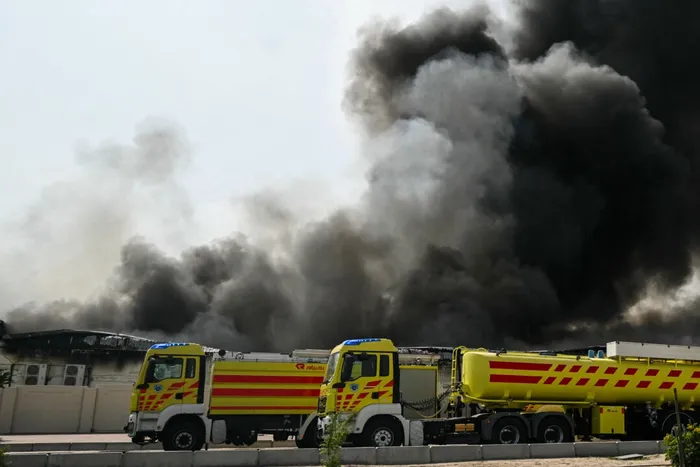
The map of the Middle East is changing faster than the headlines can keep up with. If you've been watching the news, you've seen the grainy footage of missiles streaking across the night sky over Tel Aviv and the orange glows of explosions in the suburbs of Tehran. This isn't just another flare-up in a decades-long grudge match. We've moved past the era of "shadow wars" and entered a period where the regional powers are trading direct blows, dragging every Iranian-backed militia and Western ally into a meat grinder that nobody seems to know how to stop.
Israel and the United States aren't just reacting to border skirmishes anymore. They're actively dismantling the "Ring of Fire" that Iran spent forty years building. When Israeli and American planes pound targets across the region, they aren't just hitting ammo dumps. They’re sending a message that the old rules of engagement are dead.
Why the Iranian Proxy Strategy is Crumbling
For years, Tehran played a clever game. They used groups like Hezbollah in Lebanon, the Houthis in Yemen, and various PMF (Popular Mobilization Forces) groups in Iraq to fight their battles. It was cheap. It was effective. Most importantly, it gave Iran "plausible deniability." If a drone hit a ship in the Red Sea, Tehran could shrug and point at the Houthis.
That shield is gone.
Recent strikes have shown that the U.S. and Israel are no longer content to just swat the mosquitoes; they're going after the swamp. When Israeli F-35s hit air defense systems inside Iran, it proved that the sovereign borders of the Islamic Republic are no longer off-limits. This shift is massive. It tells the leadership in Tehran that their strategy of fighting to the last Lebanese or Yemeni fighter won't protect the palaces in North Tehran anymore.
The militias are feeling the heat, too. In Iraq and Syria, Iranian-backed groups are finding that their bases are no longer safe havens. American strikes have become more frequent and more lethal, targeting high-level commanders rather than just empty warehouses. It's a high-stakes game of chicken where the infrastructure of an entire regional network is being systematically dismantled.
The Houthi Factor and the Global Shipping Crisis
Most people think of this as a local land war. They're wrong. The involvement of the Houthis in Yemen has turned a regional conflict into a global economic headache. By targeting commercial shipping in the Bab al-Mandab Strait, a group that many dismissed as a ragtag insurgency has managed to reroute global trade.
Think about that for a second. A militia in one of the poorest countries on Earth is forcing massive shipping conglomerates to bypass the Suez Canal and sail around the Cape of Good Hope. That adds weeks to travel times and billions to shipping costs. It’s why the U.S. launched Operation Prosperity Guardian. But even with a massive naval presence, the drones keep coming.
The Houthis aren't just fighting for Palestine. They're proving their worth to the "Axis of Resistance." They've shown that they can hurt the West where it hurts most: the wallet. This is why you see American planes hitting Houthi launch sites alongside Israeli strikes elsewhere. The coordination is tight because the threat is no longer just about regional borders; it’s about the flow of global capital.
The Intelligence Gap and How Israel Gained the Upper Hand
One thing that doesn't get enough play in the mainstream media is the sheer scale of the intelligence failure on the Iranian side. How does Israel manage to take out the top leadership of Hezbollah in a matter of weeks? How do they know exactly which floor of a building in Damascus contains an IRGC (Islamic Revolutionary Guard Corps) general?
The "Axis of Resistance" is compromised. Decades of infiltration by the Mossad and CIA have left these groups paranoid. When communication devices started exploding across Lebanon, it wasn't just a tactical hit. It was a psychological masterstroke. It told every militia member that their very tools of coordination were weapons owned by their enemy.
This intelligence dominance allows for the surgical nature of the current air campaign. When you see reports of "planes pounding Iran," it isn't carpet bombing. It’s a series of precision strikes designed to blind the enemy. By taking out S-300 surface-to-air missile batteries, Israel is essentially opening a door. They're telling Iran, "We can come back whenever we want, and you won't even see us on radar."
The Iraqi Tightrope
Iraq is in a nearly impossible position right now. The government in Baghdad wants to stay out of the crossfire, but they have thousands of Iranian-aligned militia members living within their borders. These groups often operate outside the control of the Iraqi state.
When the U.S. retaliates for drone attacks on its bases in Jordan or Iraq, it’s hitting sovereign Iraqi soil. This puts the Iraqi Prime Minister in a corner. If he condemns the U.S., he risks sanctions and losing military support. If he stays quiet, the militias accuse him of being a Western puppet. This internal tension is exactly what Tehran wants—a fractured Iraq is an Iraq they can control.
What This Means for Your Pocketbook and Security
You might think a war in West Asia doesn't affect you if you're sitting in London, New York, or Sydney. You're wrong. The region produces a massive chunk of the world's oil and gas. While the U.S. has become more energy independent, the global market is still interlinked. A major strike on Iranian oil terminals at Kharg Island would send crude prices screaming past $100 a barrel.
Then there's the risk of "spillover" terrorism. History shows that when these groups feel backed into a corner, they lash out globally. Security agencies across Europe and North America are already on high alert. The more the direct conflict escalates, the higher the chance of asymmetric attacks far from the front lines.
Moving Beyond the "Proportionality" Debate
You'll hear a lot of pundits talk about "proportionality." In the world of high-stakes geopolitics, that's a bit of a myth. No nation-state responds to an attack with an equal and opposite reaction. They respond with enough force to ensure the enemy doesn't do it again.
Israel’s strategy is now "total deterrence." They've decided that the cost of living under the constant threat of rockets is higher than the cost of a full-scale regional war. The U.S., while trying to prevent a total conflagration, is also making it clear that it won't let its assets in the region be targeted with impunity.
The Nuclear Elephant in the Room
Underlying all of this is Iran's nuclear program. Every time an Israeli jet enters Iranian airspace, the world holds its breath. Will they hit the enrichment facilities at Natanz or Fordow? Iran has hinted that if its survival is threatened, it might finally make the dash for a nuclear weapon. This is the ultimate red line. If Tehran goes nuclear, the entire security architecture of the planet shifts overnight. Saudi Arabia would likely want its own nukes. Turkey might follow. We’d be looking at a nuclearized Middle East, which is a nightmare scenario for everyone involved.
Reality Check on Modern Warfare
Warfare in 2026 isn't just about tanks and infantry. It's about cyberattacks that shut down power grids in Tehran and electronic warfare that misdirects missiles over Tel Aviv. We’re seeing a laboratory for the future of conflict. Drones that cost $20,000 are taking out multi-million dollar defense systems. It’s a lopsided, chaotic mess that favors the side with the best tech and the best intel.
Right now, that side is the U.S.-Israeli partnership. But Iran is a patient actor. They’ve spent decades playing the long game. Don't expect them to just roll over because a few air defense sites got hit. They will pivot. They will find new ways to squeeze the West, whether it's through cyber warfare or by activating sleeper cells in the region.
Stay informed by looking at raw data and primary sources. Don't just rely on social media clips that often lack context or are flat-out fakes. Follow reputable geopolitical analysts who understand the history of the IRGC and the internal politics of Lebanon and Iraq. The situation is fluid, and the old maps don't apply anymore. Prepare for a period of extended instability in the global energy markets and keep a close eye on the diplomatic backchannels—that’s where the real deals (or disasters) are being made.