The stability of the global liberal order is currently contingent upon the ability of the European Union to transition from a regulatory superpower to a geopolitical anchor. While historical narratives often frame the North Atlantic Treaty Organization (NATO) as the primary guarantor of Western security, a structural shift is occurring where European integration and institutional depth are becoming the essential stabilizing forces against systemic volatility. The Canadian perspective, as articulated by Prime Minister Justin Trudeau, identifies Europe not merely as a regional bloc but as a necessary counterweight to the erosion of multilateralism elsewhere.
The Triad of European Stability
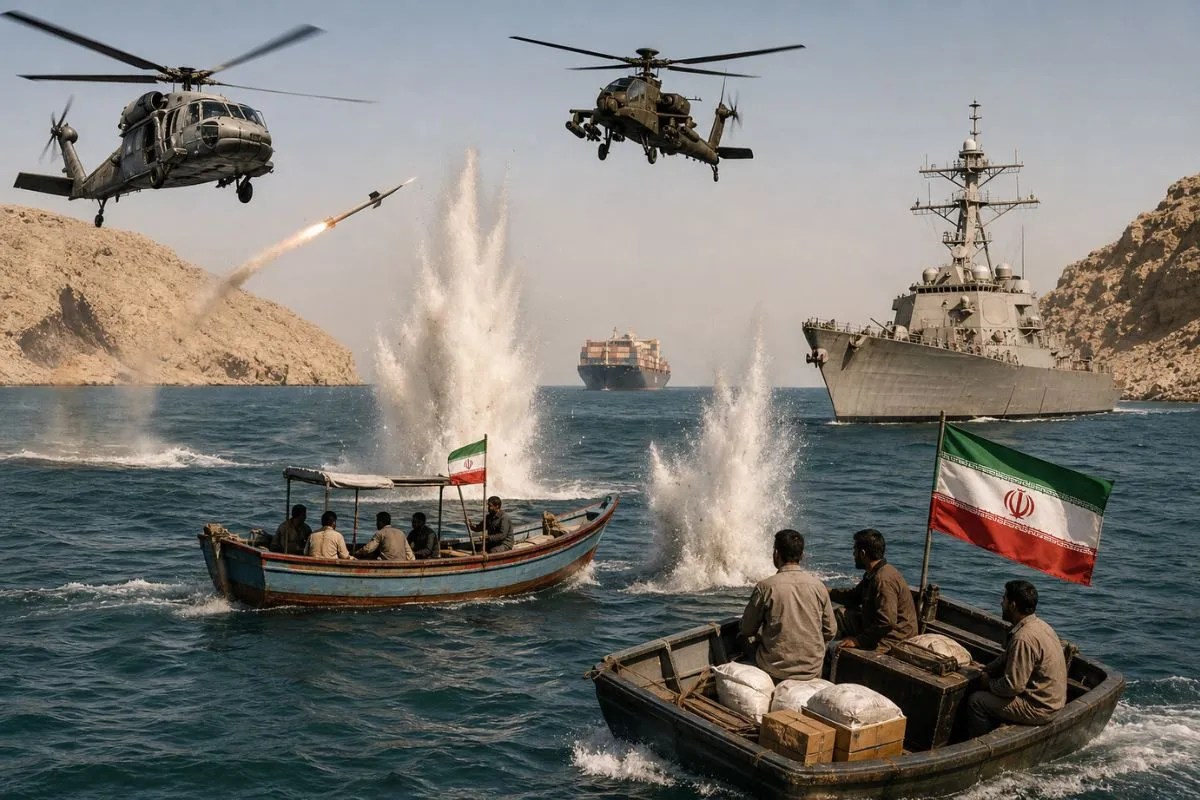
The thesis that Europe serves as an anchor for the world order rests on three distinct functional pillars. These are not static attributes but active mechanisms that mitigate global risk. Also making news in related news: Asymmetric Friction in the Strait of Hormuz: Kinetic Escalation and the Mechanics of Regional Interdiction.
- Regulatory Standard-Setting: The "Brussels Effect" ensures that European norms in technology, environmental policy, and data privacy become the de facto global standards. By dictating the terms of engagement for multinational corporations, Europe creates a predictable legal environment that prevents a race to the bottom in global governance.
- Integrated Economic Interdependence: The Eurozone represents a massive, unified market that forces internal cooperation among historically antagonistic states. This interdependence creates a high cost of conflict, making the European continent a zone of enforced peace that exports stability to its periphery.
- Institutional Continuity: At a time when domestic political volatility in the United States and other G7 nations threatens the longevity of international agreements, the European Union’s bureaucratic structure provides a level of policy inertia. This inertia is a strategic asset; it ensures that commitments to climate targets, trade rules, and human rights remain consistent across electoral cycles.
The Cost Function of Multilateralism
Maintaining a world order based on rules rather than raw power requires a significant capital and political investment. The Canadian-European partnership reflects a calculated attempt to distribute these costs. Canada’s reliance on a rules-based system is existential; as a middle power with a massive geography and a relatively small population, it lacks the kinetic force to protect its interests in a "might-makes-right" environment.
The strategy involves a specific feedback loop: Canada provides raw materials and ideological alignment, while Europe provides the institutional scale to enforce those values on the global stage. This relationship aims to solve the free-rider problem that often plagues international alliances. When European nations increase their defense spending and integrate their energy markets, they lower the security burden on their allies and create a more resilient network. Additional details on this are explored by BBC News.
The Geopolitical Bottleneck: Energy and Defense
The primary obstacle to Europe's role as a global anchor is the friction between its economic aspirations and its physical dependencies. The transition away from Russian hydrocarbons and the reliance on American security guarantees create a vulnerability that can be exploited by adversarial powers.
The logic of strategic autonomy dictates that Europe must achieve three technical milestones to solidify its position:
- Diversification of Energy Input Streams: This requires a massive overhaul of LNG infrastructure and a rapid scaling of hydrogen and nuclear capabilities to decouple economic growth from geopolitical blackmail.
- Unified Defense Procurement: The current fragmentation of European defense industries—where dozens of different tank and fighter jet models are in operation—creates massive inefficiencies. Standardizing equipment and command structures is the only way to achieve a credible deterrent that does not depend entirely on Washington.
- Technological Sovereignty: In the fields of artificial intelligence and semiconductor manufacturing, Europe is currently a consumer rather than a producer. Without domestic control over the foundational technologies of the 21st century, Europe’s regulatory power will eventually be bypassed by innovators in the US and China.
Deconstructing the Atlanticist Logic
A common misconception is that a stronger Europe weakens the Atlantic alliance. The inverse is true. A Europe that can project power and maintain its own neighborhood allows the United States to pivot its focus toward the Indo-Pacific without leaving a power vacuum in the West. This creates a more balanced and durable global architecture.
The Canadian Prime Minister’s rhetoric focuses on the shared values of democracy and human rights, but the underlying driver is pragmatic risk management. In a bipolar or multipolar world, a cohesive Europe acts as a stabilizer that prevents minor regional conflicts from escalating into global systemic shocks. The Comprehensive Economic and Trade Agreement (CETA) between Canada and the EU is a template for this; it is less about tariff reduction and more about creating a high-trust zone where supply chains are shielded from political interference.
The Mechanism of Value-Based Trade
The shift from "free trade" to "friend-shoring" is a direct response to the weaponization of economic ties. By aligning with Europe, Canada is betting on a trade model where shared standards on labor and the environment act as a barrier to entry for authoritarian states. This is not a purely moral choice; it is a defensive maneuver designed to protect domestic industries from state-subsidized competition that ignores externalized costs.
The effectiveness of this strategy is measured by the degree to which non-aligned nations (the "Global South") choose to adopt European standards over alternatives. If the EU can provide a more attractive model for development—one that offers stability and market access without the strings of debt-trap diplomacy—it solidifies its role as the anchor of the international system.
Strategic Divergence and the Risk of Fragmentation
Despite the alignment on broad goals, there are significant points of friction that threaten the stability of the anchor. These include:
- Fiscal Disparity: The gap between Northern and Southern European economies creates internal tension that can paralyze decision-making during crises.
- Resource Nationalism: As Canada and Europe compete for the same critical minerals required for the green transition, the "partnership" may be tested by domestic industrial requirements.
- Security Divergence: While Western Europe views Russia as the primary threat, Southern Europe is more concerned with migration flows from Africa, and Northern Europe focuses on Arctic sovereignty. Aligning these disparate priorities into a single strategic posture remains the core challenge for European leadership.
The survival of the current world order is not guaranteed by historical precedent but by the continuous recalibration of these interests. The Canadian endorsement of Europe as a global anchor is an admission that the era of unipolarity is over. Success now depends on the ability of middle and regional powers to build a network of "mini-lateral" agreements that can withstand the collapse of larger, more brittle institutions.
Investors and policymakers must treat Europe not as a stagnant market, but as a critical infrastructure project for global stability. The focus must remain on the hardening of supply chains and the integration of defense systems. The strategic play is to front-load investments in European energy independence and transatlantic technological interoperability. This is the only pathway to ensuring that the anchor holds against the coming pressures of resource scarcity and shifting global demographics.