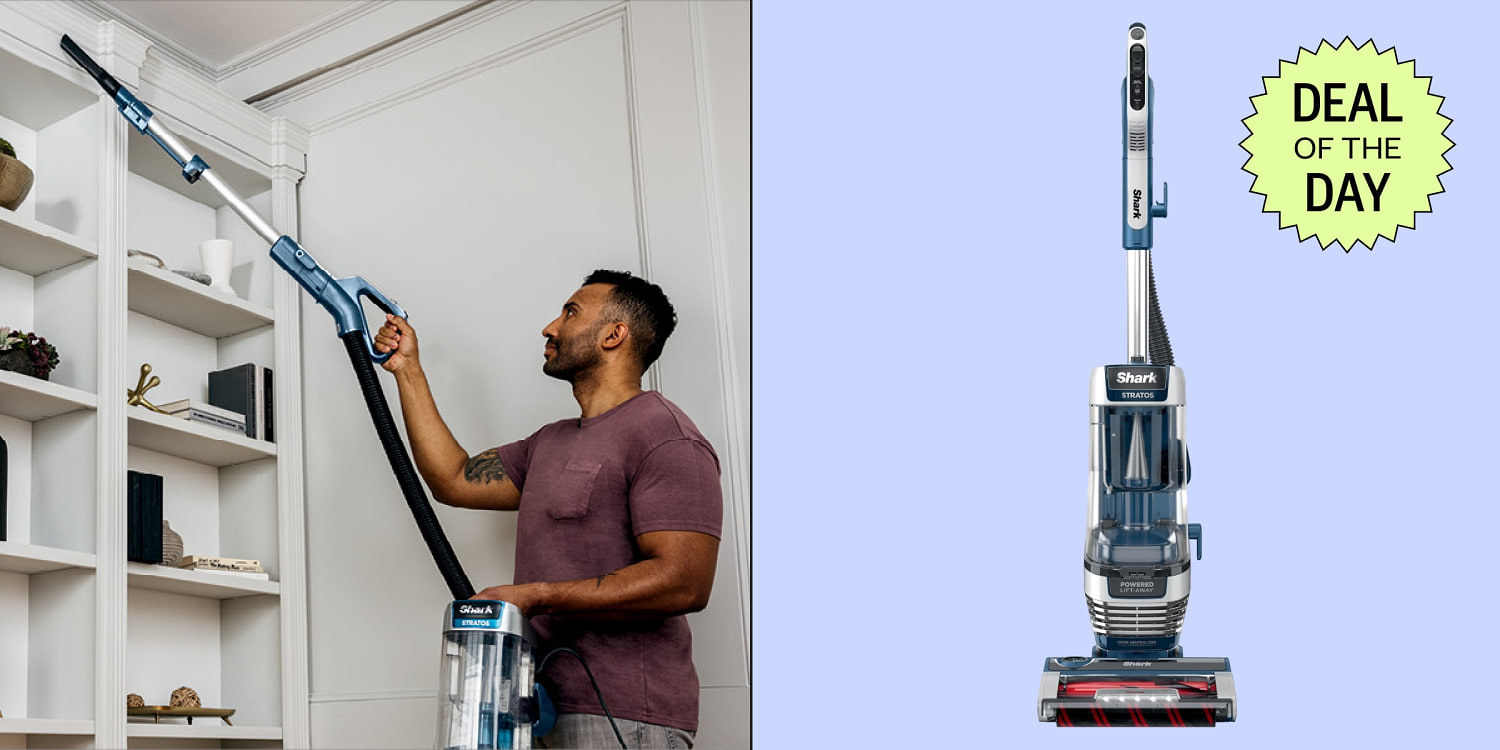
A 50% discount on a Shark vacuum rarely represents a literal halving of the manufacturer's standard retail value; instead, it signals either an inventory liquidation event ahead of a generational SKU refresh or an anchor-pricing maneuver designed to compress buyer deliberation. To capture genuine capital efficiency when purchasing floor-care appliances, buyers must strip away promotional framing and evaluate the hardware across three structural dimensions: retail pricing architecture, aerodynamic efficiency, and mechanical serviceability.
The Economics of Aggressive Appliance Markdowns
Consumer appliance pricing operates on high initial gross margins that accommodate predictable promotional cycles. When a retailer advertises a 50% markdown on a Shark upright, stick, or robotic vacuum, that figure is almost universally calculated against the Manufacturer's Suggested Retail Price (MSRP)—a benchmark the product rarely commands outside its initial 60-day launch window.
Reference Pricing and Anchor Distortion
In behavioral economics, anchor pricing establishes an artificial cognitive baseline. By setting an inflated MSRP, manufacturers create the mathematical room necessary to offer 40% to 50% discounts during major retail windows such as Black Friday, Prime Day, or seasonal clearance events.
A valid valuation requires tracking the 90-day median street price rather than the stated discount percentage. If a cordless stick vacuum carries an MSRP of $400, sells routinely for $260, and drops to $200 during a promotional event, the true economic discount is 23%, not 50%. Treating the MSRP as an objective measure of build quality leads buyers to overestimate the mechanical tier of the machine they are acquiring.
Inventory Liquidation and SKU Lifecycle Dynamics
SharkNinja operates on a rapid product iteration cycle, frequently releasing minor hardware revisions—such as altered brushroll housings, updated battery capacities, or modified digital displays—under entirely new model numbers. A genuine 50% reduction below the historical street price typically occurs under two specific operational conditions:
- Generational Obsolescence: The manufacturer is clearing warehouse space for an incoming flagship series, rendering the discounted model the outgoing generation.
- Channel-Specific Variants: Retailers often commission exclusive model numbers that omit secondary accessories (such as motorized pet tools or multi-angle wands) to hit aggressive promotional price points without violating Minimum Advertised Price (MAP) agreements on core SKUs.
Engineering Mechanics Behind Vacuum Performance
Evaluating whether a discounted vacuum represents a sound capital allocation requires looking past marketing nomenclature—such as proprietary brushroll names or vague suction claims—and analyzing the underlying physics of debris extraction. Vacuum performance is governed by the interplay between airflow, sealed suction, and mechanical agitation.
Airflow Versus Sealed Suction
Manufacturers frequently highlight motor wattage or peak suction metrics, neither of which accurately predicts real-world cleaning efficacy on carpet or hard floors. True extraction relies on two distinct variables:
- Airflow (Measured in CFM): Cubic Feet per Minute quantifies the volume of air moving through the system. High airflow is the primary driver of debris transport, lifting fine dust and surface particles off hard flooring and carrying them into the dustbin.
- Sealed Suction (Measured in kPa or Inches of Water Lift): This metric measures the negative pressure generated when the intake is completely blocked. High sealed suction is necessary to overcome the resistance of dense carpet fibers and pull embedded particulate matter from the backing.
A well-engineered vacuum balances both metrics. Budget-tier models—even those heavily discounted—often rely on high-RPM motors that generate acceptable initial airflow but suffer rapid performance degradation once the airway encounters resistance, because the housing lacks sufficient static pressure capability.
Filtration Integrity and Sealed System Architecture
Cyclonic separation uses centrifugal force to spin heavy debris out of the airstream before it reaches the filter media. However, sub-micron particles remain suspended in the air. Without a fully sealed chassis—incorporating rubber or silicone gaskets at every housing seam, dustbin latch, and exhaust port—negative pressure forces unfiltered air out through structural gaps before it ever reaches the High-Efficiency Particulate Air (HEPA) filter.
When assessing a discounted Shark model, verify whether the specification sheet explicitly states Anti-Allergen Complete Seal Technology paired with a true HEPA post-motor filter. Models lacking a sealed housing will recirculate fine particulate matter back into the room, negating the health utility of the filtration media regardless of how steep the retail discount appears.
Brushroll Geometry and Hair Wrap Mitigation
Traditional bristle brushrolls suffer from rotational friction and mechanical binding when long hair or synthetic fibers wrap around the spindle, increasing amp draw and risking motor burnout. Shark addresses this through finned silicone rollers paired with integrated comb structures (often branded as Zero-M or PowerFins) that continuously strip hair from the roller during operation.
While effective at preventing tangles, silicone fins interact differently with flooring surfaces than stiff nylon bristles. On hard floors, continuous fin contact creates a micro-seal that improves fine dust pickup compared to traditional bristles, which tend to scatter debris. On deep-pile carpets, however, stiff bristles provide superior mechanical agitation to dislodge ground-in grit. Buyers must match the brushroll architecture of the discounted SKU to their primary flooring substrate rather than assuming a single roller design optimizes all surfaces.
Total Cost of Ownership and Failure Modes
The acquisition price represents only the initial capital outlay. Over a three-to-five-year operational horizon, the Total Cost of Ownership (TCO) is dictated by consumable replacement rates, battery chemistry degradation, and component serviceability.
Battery Degradation in Cordless Architectures
If the 50% discount applies to a cordless stick vacuum, the primary mechanical vulnerability is the lithium-ion battery pack. High-discharge cordless vacuums pull substantial current—especially in boost or maximum suction modes—generating significant thermal stress within the cells.
- Thermal Cycling: Heat accelerates the growth of the Solid Electrolyte Interphase (SEI) layer inside lithium-ion cells, permanently increasing internal resistance and reducing runtime.
- Non-Removable Packs: Many entry-level and mid-tier discounted cordless models feature integrated, non-user-replaceable batteries. Once the pack degrades below 60% capacity—typically after 300 to 500 full charge cycles—the entire vacuum becomes functionally obsolete unless the user possesses the technical skill to solder new cells.
Purchasing a discounted cordless model without a removable battery pack trades upfront savings for a compressed replacement cycle.
Filter Maintenance and Consumable Cadence
Bagless cyclonic vacuums eliminate the recurring expense of dust bags, shifting that operational cost to foam, felt, and HEPA filters. Foam and felt pre-motor filters trap fine dust that escapes the primary cyclone; if they are not washed and thoroughly dried every 30 days, airflow restricts sharply, causing the motor to run hot and lose suction.
Over time, repeated washing degrades the structural integrity of foam filters, requiring replacement every 6 to 12 months. Before committing to a discounted SKU, verify the availability and cost of third-party or OEM filter kits. Discontinued models cleared out at 50% off frequently suffer from shrinking aftermarket parts availability within 24 months of liquidation.
Structural Weak Points and Repairability
Shark appliances rely heavily on proprietary ABS plastic assemblies, flexible corrugated hoses integrated into floor nozzles, and sealed motor housings. Unlike commercial-grade vacuums designed with modular, screw-fastened components, modern consumer stick and upright vacuums utilize snap-fit tabs and sonic-welded seams.
The lower nozzle hose—which flexes thousands of times as the steering swivel articulates—is a predictable mechanical failure point. On many Shark models, this short hose is permanently bonded to the motorized floor head. If the hose tears, the manufacturer rarely sells the hose independently, forcing the owner to purchase an entire replacement floor nozzle assembly that can cost nearly as much as the discounted vacuum itself.
Decision Framework for Evaluating a 50% Off Deal
Before executing a purchase on a heavily discounted vacuum, run the specific model number through a four-step verification protocol to separate genuine value from retail sleight-of-hand.
- Audit Historical Pricing: Check the exact model number (located on the rating label, not just the marketing title) against historical price trackers. Confirm that the sale price sits at least 25% below the 90-day median selling price, ignoring the inflated MSRP entirely.
- Verify Accessory Completeness: Compare the box contents of the discounted SKU against the standard flagship variant. Ensure the price drop has not been achieved by stripping out essential motorized upholstery tools or spare batteries.
- Inspect the Filtration and Battery Specs: Confirm the presence of a fully sealed HEPA system if allergy control is a requirement. For cordless units, verify that the battery pack detaches via a mechanical latch so replacement cells can be swapped in without tools.
- Match Brushroll to Flooring Substrate: Choose dual-roller systems (combining a soft front roller with a finned rear roller) for mixed hard-floor and low-pile environments, and prioritize stiff-bristle agitators if the home consists predominantly of medium-to-high-pile carpeting.
Do not purchase a discounted vacuum solely because the percentage-off figure triggers urgency. Target corded upright models with sealed HEPA filtration and dual-brushroll heads during generational clearances—these configurations avoid lithium-ion obsolescence, deliver consistent static pressure across all floor types, and provide the highest mechanical return per dollar spent.