Humidity clings to your collar before eight in the morning. That is the first thing you notice when the air stops cooling down at night. You walk out onto the porch with a mug of tea, expecting that brief, sharp sting of dawn that tells your lungs the day is fresh, and instead the sky feels like a damp wool blanket pressed gently against your face.
I have stood on enough sun-baked verandas and watched enough monsoon clouds fail to drop their weight to know that climate numbers never feel like numbers on the skin. They feel like sweat pooling at the small of your back. They feel like a fan pushing warm air from one corner of a room to another. They feel like a quiet shift in what your body expects from a Tuesday.
For years, a comforting word lived inside climate reporting: best-case. Best-case sounded like a safety net. It sounded like a polite dinner guest who wipes their shoes before stepping onto the rug. When scientists or UN assessments talk about projections, "best-case" usually refers to low-emissions pathways where humanity cleans up its act quickly, curbs greenhouse gases aggressively, and bends the curve before things spiral out of control. Yet recent UN assessments have pointed to a sobering reality: even under optimistic or best-case scenarios, projected global warming is edging higher than earlier optimism suggested.
Scary. Confusing. Easy to scroll past when you are just trying to get through a workday.
I will be honest with you: when I first sat down with dry climate summaries, my eyes glazed over by paragraph three. Carbon budgets, radiative forcing, decimal degrees—they can sound like accounting ledger entries from a distant planet. A tenth of a degree sounds like nothing. If your living room goes from 72.0 degrees to 72.1 degrees, you do not even reach for the thermostat. You don't blink.
So why does a fraction of a degree in global average temperature carry so much weight?
The Thermostat That Doesn't Turn Off
Picture a giant cast-iron skillet left over a low burner. That is a metaphor, and like all metaphors, it has limits—the atmosphere is a swirling ocean of gases, water vapor, and heat exchange, not a piece of cookware—but it helps explain inertia. Even if you turn the dial down today, the metal stays hot for a long time. The oceans absorb vast amounts of excess heat and release it slowly over decades.
Consider what happens next: when the baseline shifts upward, every swing of the weather starts from a higher floor. Heatwaves don't just feel hotter; their peaks climb higher and their nights stay warmer, giving human bodies—and crops, and electrical grids—less time to recover.
Let us step into a hypothetical scenario to make that visible. Suppose a wheat farmer named Tariq—an invented character created to illustrate how averages play out on real ground—has farmed the same stretch of alluvial soil for twenty-five years. Tariq knows the rhythm of planting and harvest in his bones. He knows which week the heat usually spikes and how much moisture the soil holds after a spring rain. When average temperatures creep up even under an optimistic trajectory, the margin for error shrinks. A hot spell arrives ten days earlier than his grandfather's calendar expected. The soil dries faster. A single bad week can turn a decent yield into debt.
Multiply Tariq by millions of farmers, fishermen, construction workers, and delivery riders across the globe. Suddenly, a decimal point in a UN report is no longer an abstraction. It is a schedule falling out of sync.
Why "Best-Case" Still Carries Heat
People often hear "best-case scenario" and assume it means going back to the weather of childhood. It rarely does. In climate modeling, an optimistic or best-case pathway generally assumes rapid, coordinated global cuts in emissions alongside existing momentum already baked into the climate system. Because carbon dioxide lingers in the atmosphere for a very long time and oceans warm sluggishly, the planet keeps warming for a while even as emissions fall.
Read that again. Stopping a freight train does not make it stop on a dime.
There is another reason projections shift upward over time: our understanding sharpens, or current emissions keep pushing the starting line forward. Every year of delay uses up more atmospheric headroom. What looked like a manageable ceiling ten years ago can look tighter when measured against real-world temperatures, ocean heat content, and lingering pollutants.
That can make anyone cynical. I catch myself feeling that way too—that tug of what's the point if even the good plan gets warmer?
Doubt is human. Cynicism is cheap. Neither one cools a single street.
What matters is the difference between higher than we hoped and unbounded chaos. Even when the floor rises in a best-case scenario, there is a vast gulf between a world that stabilizes after modest additional warming and a world that blows past every threshold. A fraction of a degree matters enormously when you are talking about coral bleaching events, glacial meltwater feeding rivers in dry seasons, or extreme rainfall events that overwhelm drainage systems built for another century.
The Invisible Stakes in Daily Life
Look at a city at midday. Concrete holds heat. Asphalt radiates it back up through the soles of your shoes. A bus stop without shade becomes an oven.
Most of the stakes of rising temperatures are quiet until they aren't. They show up in electricity bills when air conditioners run longer into autumn. They show up in supply chains when low water levels slow river barges or heat damages transport infrastructure. They show up in public health clinics when heat stress hits older adults, infants, or people working outdoors without rest breaks.
We tend to notice dramatic catastrophes—wildfires on television, floods washing out roads—and miss the slow creep. Yet the slow creep is what rewires everyday habits. You start planning errands around the sun. You check air quality and heat advisories the way people used to check if it might rain.
And notice how uneven that burden is. A household with insulation, backup power, and flexible indoor work experiences a three-degree heat spike very differently from a family living under a tin roof with no cross-breeze and a shift that starts at noon. Global warming is measured in averages, yet lived in inequalities.
Bending the Curve Without Losing Our Minds
When headlines say things are warming even in the best case, the temptation is to throw your hands up and order another cup of coffee. I get it. Big problems make small people feel small.
History offers a slightly steadier lens. Major shifts in how societies run—whether moving away from leaded gasoline, cleaning up choking urban smog, or scaling solar and wind power far faster than early forecasts predicted—rarely happen in a single dramatic movie moment. They happen through dull, stubborn, cumulative work: building codes updated one city at a time, grid batteries dropping in cost year after year, utilities retiring old plants, communities planting shade trees along bare avenues.
Progress rarely looks like a parade. Usually it looks like a spreadsheet finally turning green after years of red, or a neighborhood getting its first reliable solar microgrid.
Even in a best-case scenario where temperatures edge higher than we wish, every tenth of a degree we avoid is a real gift to someone down the line. Less strain on the power grid during July. Slightly more snowpack feeding a valley in May. One fewer week of extreme heat inside a classroom without cooling.
What Stays After the Headline Fades
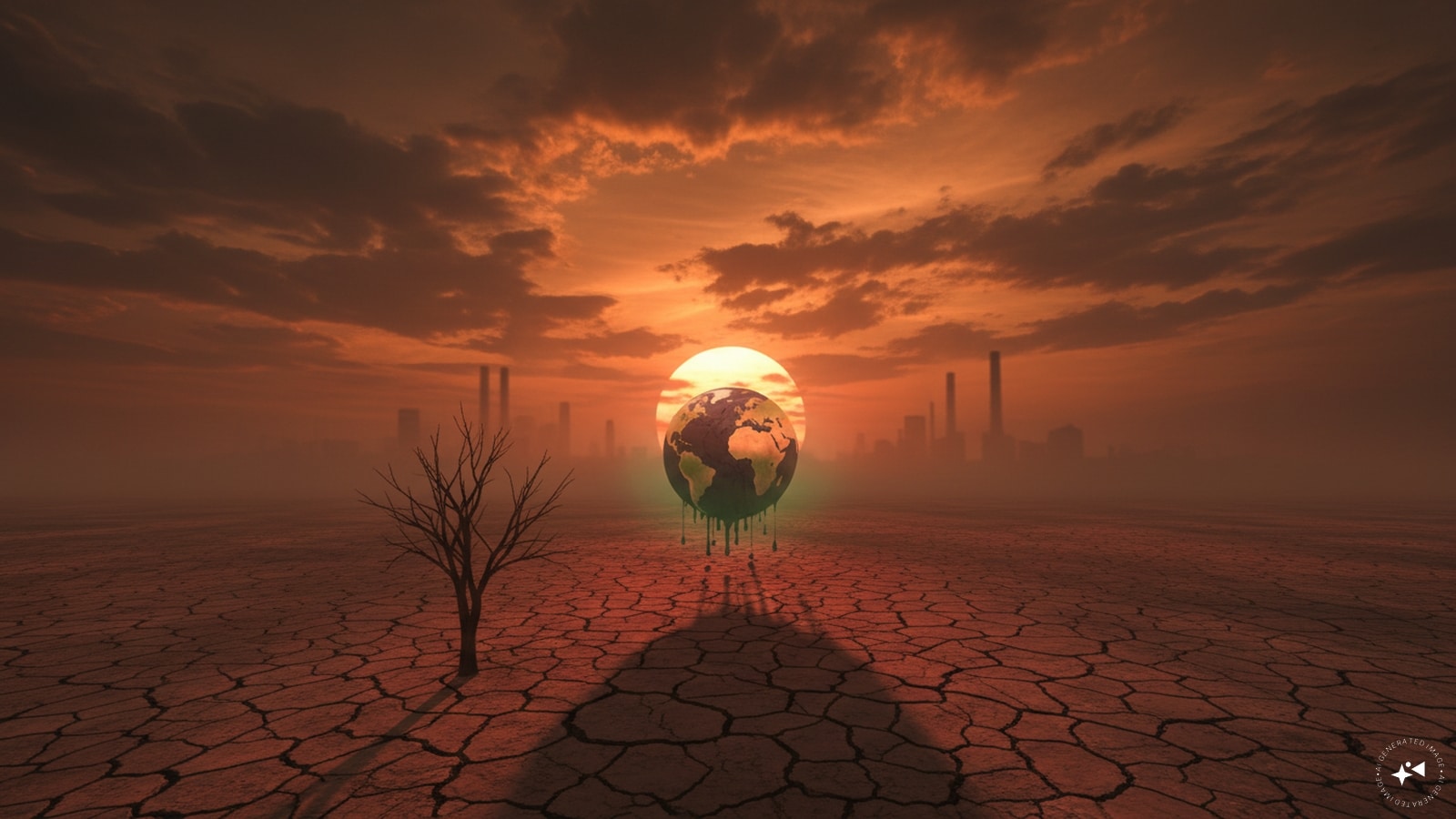
Evening arrives eventually, even on the longest summer day. The sun dips low, turning the dust in the air a bruised, copper gold, and a breeze finally comes off the water—warm at first, then a little softer, carrying the smell of dry grass and cooling stone.
You sit there listening to the hum of distant traffic and the first crickets testing the dark. The world has changed under our feet, and even our best-case maps show warmer ground ahead than we once dared to hope. Yet the story is not finished on the page. Every choice made in a boardroom, a voting booth, a workshop, or a kitchen still writes the next line.
The heat is real. So is the room left to shape what comes after.