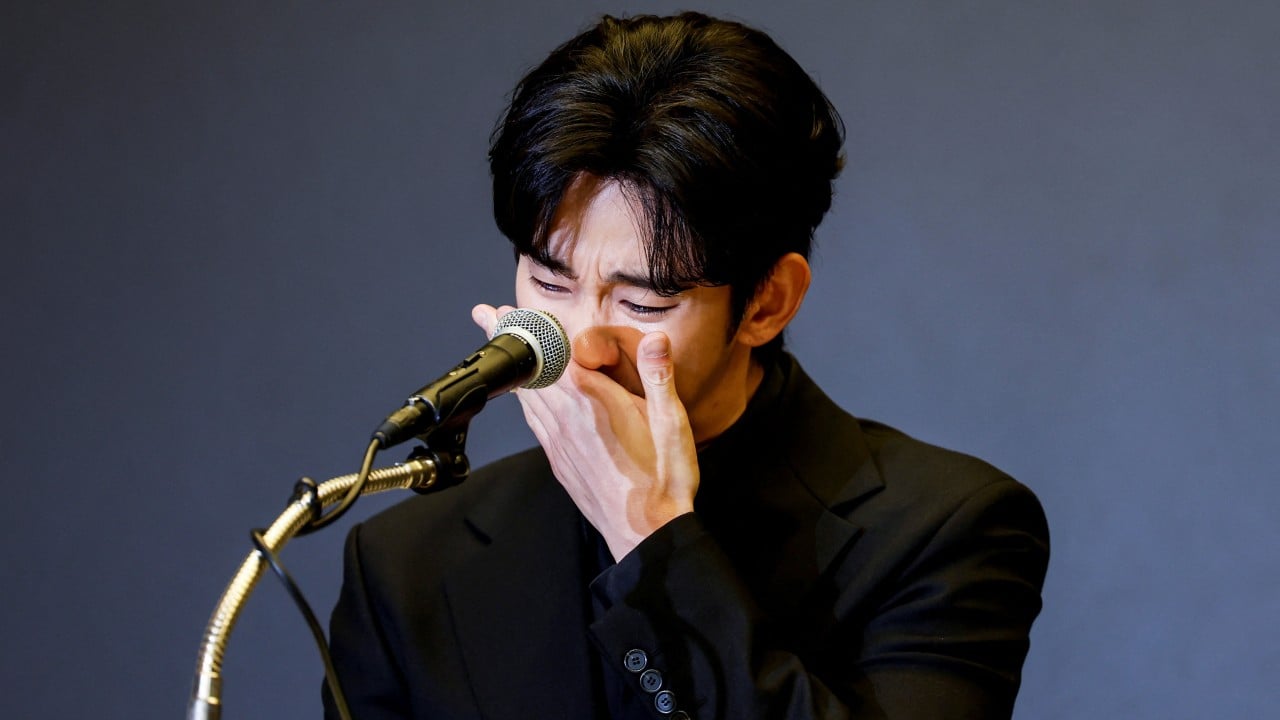
The mainstream entertainment press is currently patting itself on the back, spinning a neat little redemption narrative around South Korean megastar Kim Soo-hyun. They are calling it a "vindication." They point to the Seoul Central District Court granting an arrest warrant for HoverLab CEO Kim Se-ui. They focus on the police forensic reports revealing that the bombshell audio evidence—which alleged the Queen of Tears actor engaged in a romantic relationship with the late actress Kim Sae-ron when she was a fifteen-year-old minor—was entirely fabricated using generative AI voice-cloning technology.
They love the drama of a fallen star rising from the ashes. But this lazy consensus misses the real, terrifying lesson of the entire multi-million-dollar debacle.
Kim Soo-hyun did not win. The industry lost.
The fact that a top-tier global ambassador had his career completely frozen, lost premium endorsements like Prada, and was forced into psychiatric treatment for over a year due to a literal deepfake proves that our current corporate crisis management playbook is fundamentally broken. Brands did not protect themselves by cutting ties with the actor in March 2025; they exposed their own cowardice and total lack of technological literacy. By treating an unverified YouTube expose as a reason to execute a morality clause, the corporate world handed a weapon to every extortionist, rogue YouTuber, and bad actor with a graphics card and an internet connection.
The Illusion of Risk Mitigation
I have seen corporate boards blow millions of dollars retreating from manufactured controversies because their legal and PR teams operate on a decades-old framework. The traditional playbook says: when a high-profile ambassador is hit with a reputational crisis, sever ties immediately to insulate the brand equity.
In 2026, that strategy is not just obsolete; it is corporate malpractice.
When HoverLab dropped those manipulated KakaoTalk screenshots and the synthetic voice recording, the knee-jerk reaction from global brands was clinical risk aversion. But true risk management requires assessing the validity of the threat, not just the volume of the noise. The data trail was messy from day one. The screenshots had metadata discrepancies that local authorities eventually unraveled to show that HoverLab had manually swapped out an unidentified profile name with Kim Soo-hyun's name. The audio file was of such poor quality that the National Forensic Service initially declared it inconclusive before police digital forensics units proved it was an AI clone.
By pulling down ad campaigns and terminating contracts the second Kim held his tearful March 2025 press conference, corporations did not mitigate risk. They validated a fraud. They signaled to the market that they will let the most bad-faith online actors dictate their corporate roster.
Imagine a scenario where a competitor spends five hundred dollars on a GPU cluster to generate fake audio of a rival CEO using a racial slur, distributes it via an anonymous network, and watches that company's stock drop 15% because the board panics and fires the executive before conducting a basic forensic audit. That is the exact precedent global brands set when they hung one of Asia's most bankable talents out to dry.
The High Cost of the Morality Clause Panic
Let's look at the hard economics of this cowardice. Kim's legal team launched a 12-billion-won ($8.15 million) defamation suit against the perpetrators. That figure reflects the massive economic devastation wrought by the scandal, but it doesn't account for the sunk costs borne by the brands themselves.
When a brand cuts ties with a celebrity at the height of a global hit like Queen of Tears, they aren't just pausing a billboard campaign. They are abandoning:
- Millions in upfront talent acquisition fees.
- Global production assets, localized ad buys, and physical retail inventory.
- Cross-platform digital campaigns that take months to architect.
Replacing a global ambassador of that scale on short notice requires paying a premium to a new talent who knows they have the brand over a barrel. If the celebrity is actually guilty of a heinous crime, that financial loss is a necessary cost of doing business. But when the celebrity is entirely innocent, and the evidence was manufactured by a YouTuber trying to win a subscriber war against a rival channel, that loss is pure, unforced waste.
The mistake lies in confusing "public outcry" with "market reality." The digital noise generated by a vocal minority on algorithmic platforms rarely translates to a sustained consumer boycott, especially when the underlying accusations lack institutional backing. Brands ran away because they feared a social media firestorm, failing to realize that by running, they guaranteed the firestorm would control them.
A New Protocol for the Synthetic Media Era
If you are a CMO or a corporate communications director, the Kim Soo-hyun case is your final warning. You can no longer treat celebrity scandals as simple moral binary problems. They are now cybersecurity and information warfare problems.
To survive the current media environment, corporate legal and PR teams must rewrite their crisis management protocol from scratch.
First, cease immediate contract terminations based on unverified digital assets. If the primary evidence against your brand ambassador consists of screenshots, audio files, or video clips originating from non-traditional media channels or social media networks, the asset must be treated as hostile synthetic media until proven otherwise.
Second, establish an in-house or retained digital forensics unit. Do not rely on traditional PR firms whose only tool is drafting an apology press release. When a crisis hits, your first call should be to data scientists and forensic specialists who can analyze metadata, check for algorithmic voice patterns, and trace the digital provenance of the source material.
Third, restructure morality clauses to include mutual protection against malicious fabrication. If an ambassador's image is weaponized via unauthorized deepfakes or forged data, the brand should commit to a cooling-off period where an independent investigation is conducted before any punitive action or public distancing occurs.
The downside to this contrarian approach is obvious: your brand may have to endure a week or two of intense, highly volatile online criticism while the forensics team does its work. It requires a spine. It requires standing before a board of directors and explaining why you aren't bending to an angry mob on a digital forum. But the alternative is far worse: a permanent state of corporate vulnerability where your entire marketing infrastructure can be hijacked by anyone with a voice-cloning app.
The police have arrested the bad actors, and the headlines claim Kim Soo-hyun is vindicated. But the true systemic failure remains completely unaddressed. The brands that dropped him will undoubtedly try to crawl back with new contract offers now that the coast is clear. If his management team has any sense, they will tell them that the price of admission just went up.
The digital forensics team at Seoul's Gangnam Police Station proved that the digital paper trail was entirely manufactured, highlighting how easily public perception can be manipulated by weaponized synthetic media. To understand how South Korean authorities eventually cracked the case and exposed the digital forgery behind this massive celebrity scandal, watch this detailed breakdown on the Police investigation into HoverLab and Kim Soo-hyun's vindication.