The media machine loves a predictable script. A doctor returns to Paris from the Democratic Republic of Congo (DRC). They test positive for Ebola. Queue the flashing red banners, the somber news anchors, and the immediate, low-grade public panic about a localized apocalypse.
It happens every single time. It is lazy, it is predictable, and it fundamentally misdiagnoses the actual danger. Recently making headlines in related news: The Ghost in the Petri Dish.
The French public is currently hyper-focusing on the wrong threat. People are asking if the virus will breach containment in Europe, whether the metro system is safe, or if Paris is on the brink of a lockdown. These are the wrong questions. The risk of a sustained, secondary Ebola outbreak in a Western city with modern plumbing and isolated negative-pressure hospital rooms is effectively zero.
The real crisis isn’t that the virus traveled. The real crisis is how our hyper-fixation on borders exposes the profound fragility of global health equity and security. We are terrified of a spark hitting concrete, while ignoring the forest fire burning next door. Further details into this topic are covered by Medical News Today.
The Anatomy of a Flawed Fear
Let’s dismantle the biology of the panic immediately. Ebola is not Covid-19. It is not influenza. It does not hang out in the air waiting for an unsuspecting commuter to inhale it.
To contract Ebola, you need direct contact with the bodily fluids—blood, vomit, feces—of a symptomatic individual.
[Symptomatic Individual] ---> [Direct Fluid Contact] ---> [Infection]
                             ^
                             |
                   (Where containment works)
When a returning physician develops symptoms in France, they do not go to a crowded nightclub. They go into a highly regulated, top-tier medical isolation unit like those at the Hôpital d’Instruction des Armées des Genets or Bichat–Claude Bernard. Epidemiologists track their flight manifests, trace every contact, and ring-fence the risk within hours.
I have spent years analyzing health systems under stress. I have seen governments throw millions of euros at thermal cameras at airports—a completely useless theater tactic—while cutting funding for the actual frontline labs that sequence variants. The panic is performative.
By treating a single imported case in Europe as a national emergency, we indulge a dangerous illusion: that health security is a domestic issue.
The Hidden Cost of the Bureaucratic Ring-Fence
When a Western nation panics over a single case, the immediate institutional reflex is to pull the drawbridge up. We see calls for travel bans, stricter visa controls for medical volunteers, and increased border surveillance.
This reaction is worse than ineffective; it is actively counterproductive.
- It strangulates the response supply chain: Travel restrictions deter the very doctors, epidemiologists, and logisticians needed to fight the outbreak at its source in the DRC.
- It drives cases underground: If people know they will be treated like biological criminals upon arrival, they hide symptoms, falsify records, and bypass official channels entirely.
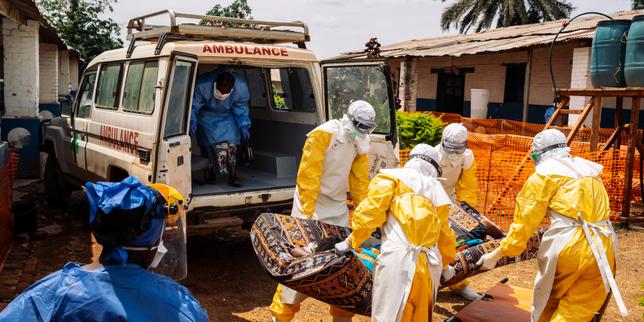
- It starves the source: Money spent on domestic border theater is money diverted from strengthening the fragile healthcare infrastructures in North Kivu or Equateur province.
The downside to calling out this media hysteria is that it can breed complacency. Let me be clear: Ebola is an horrific, brutal pathogen. But the battleground is not the streets of Paris. The battleground is the underfunded rural clinics thousands of miles away. If you want to protect Europe, you fund the healthcare systems of Central Africa. It is that simple, and that unpopular with nationalist politicians.
The Misguided Questions Everyone is Asking
Look at the standard search trends and media inquiries following this news. The premises are completely broken.
"Is Ebola mutating to become airborne?"
No. Viruses do not completely rewrite their evolutionary mechanics because they boarded an Air France flight. While minor genetic drifts occur during any outbreak, changing a filovirus from fluid-borne to aerosolized would require a fundamental restructuring of its structural proteins. Citing the World Health Organization (WHO) or the Institut Pasteur’s historical data confirms that transmission dynamics have remained stable for decades. Stop looking at the sky.
"Can we stop the virus at the border?"
You cannot quarantine your way out of a globalized ecosystem. Incubation periods for Ebola range from 2 to 21 days. A clinician can pass through Charles de Gaulle airport feeling completely healthy, clear every thermal scanner, and develop a fever 48 hours later at home. Border checks are a security blanket for a terrified public, not a viable containment strategy.
Shifting the Paradigm from Defense to Offense
If we want to stop playing defense against pathogens, we have to stop treating global health as a charity project and start treating it as hard infrastructure.
The current playbook relies on reactive funding. An outbreak happens, the West panics, money pours in, the outbreak is contained, the West forgets, and the funding dries up. This cyclical amnesia ensures that the next outbreak will happen under the exact same conditions.
Instead of building higher walls around Europe, the global health apparatus needs to focus on two non-negotiable pillars:
- Decentralized Vaccine Manufacturing: The Ervebo vaccine is a triumph of science, but its distribution relies on complex cold-chain logistics controlled by Western entities. We need regional manufacturing hubs in Africa that can deploy countermeasures without waiting for international permission slips.
- Permanent, Well-Paid Local Surveillance Teams: The heroes of Ebola containment are not the Western experts flying in; they are the local community health workers who know the terrain, speak the languages, and spot the initial cluster of unexplained deaths before it becomes an epidemic. They are routinely underpaid and under-equipped.
The Hard Truth About Biosecurity
The French physician currently in isolation is not a threat to France. They are a symptom of a deeply fractured global strategy. We have normalized a system where a deadly pathogen must threaten a Western capital before it commands sustained media attention and resources.
Every euro spent on upgrading domestic anxiety levels is a euro wasted. The virus is not coming for your suburban neighborhood. But as long as we treat global health security as a border patrol problem rather than a systemic infrastructure deficit, we will remain perpetually vulnerable to the next spillover event.
Stop looking at Paris. Look at the map.