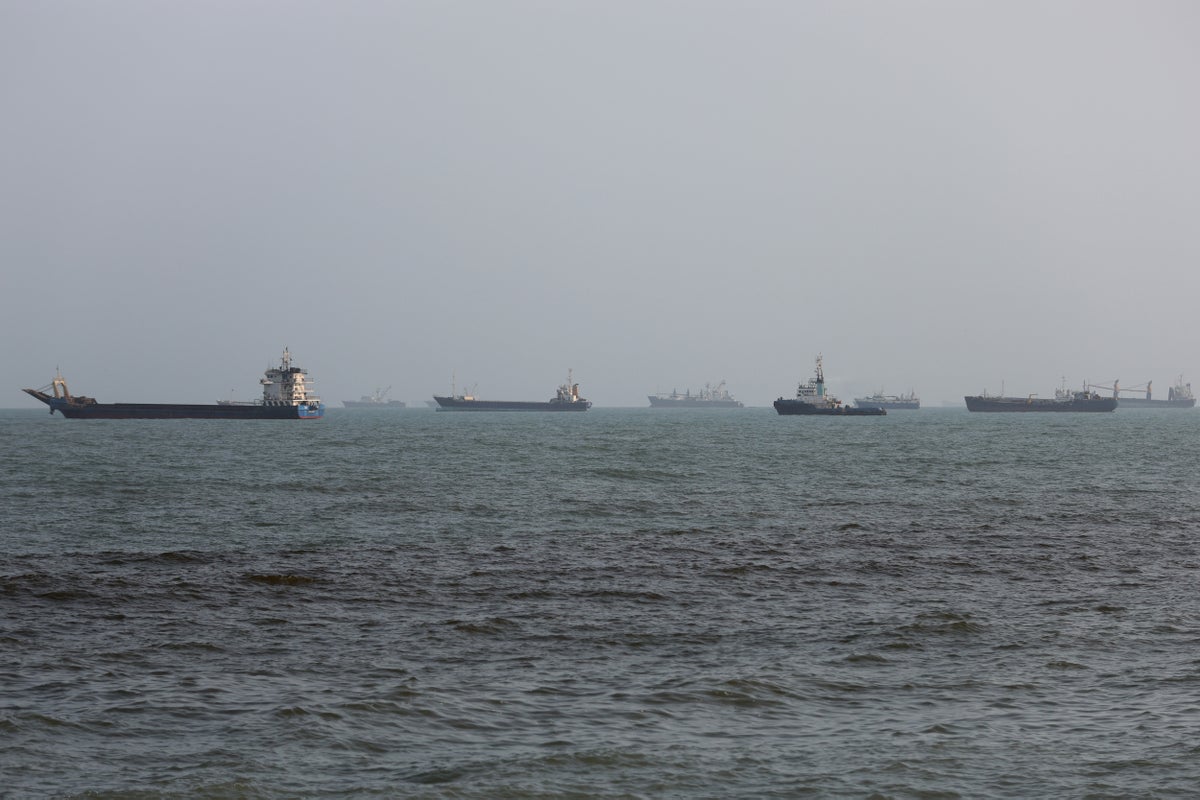
The media wants you to believe every naval engagement in the Middle East is a grand chess piece in a predictable ideological struggle. A ship moves, a missile flies, a headline is generated, and a panicking public nods along to a script written decades ago.
Stop buying the narrative. If you found value in this piece, you should read: this related article.
When the official reports drop claiming the United States military fired missiles at a vessel accused of testing an Iranian blockade, the armchair strategists crawl out of the woodwork to debate sovereignty, maritime law, and deterrence. They argue about the rules of engagement as if the modern global supply chain operates on a clean set of eighteenth-century maritime treaties. They miss the entire point because they are looking at the smoke instead of the engine.
I have spent years advising private maritime security operations through high-risk chokepoints, watching logistics firms hemorrhage capital because they treat geopolitical flashpoints like weather patterns they can simply wait out. The conventional wisdom is that these kinetic strikes are isolated escalations meant to enforce a clean diplomatic boundary. For another look on this event, see the recent coverage from NPR.
That is pure fiction.
The Myth of the Clean Blockade
Let us look at the lazy consensus. The standard line is that an enforcement action like a missile strike is a defensive line drawn in the sand—a surgical intervention to preserve international order against rogue actors trying to bypass sanctions.
The reality on the water is far messier and much more cynical. Modern blockades are rarely about stopping contraband; they are high-stakes financial stress tests. Every time a cargo vessel alters its route, insurance premiums spike globally. Every time a missile is launched, the cost of risk is priced directly into the next barrel of crude oil and the next container of manufactured goods.
The ship allegedly seeking to violate the barrier was not just carrying cargo. It was carrying optionality. In modern asymmetric warfare, the real battle is fought over liquidity, supply chain resilience, and the cost of denial.
When Washington authorizes a strike on a grey-market vessel, the strategic objective is rarely to sink a hull. It is to send a terrifying, expensive memo to every shipowner from Piraeus to Singapore: compliance is no longer a legal checkbox; it is an unbearable financial burden.
Who Profits From the Escalation
To understand why these incidents keep happening, you have to follow the ledger, not the flag.
Mainstream analysis treats military action and commerce as two distinct realms. Diplomats handle the politics; merchants handle the goods. This separation died the day global supply chains were weaponized as economic sanctions became the West's default foreign policy tool.
Consider the mechanics of maritime risk. When a trade route becomes a combat zone, independent operators get squeezed out, leaving the field to mega-conglomerates with deep enough pockets to absorb exorbitant war-risk insurance or state-backed protection.
- The Sanctions Paradox: Strict enforcement creates a black market so lucrative that the rewards of running a blockade outweigh the risk of a kinetic strike.
- The Insurance Tax: Every missile launched justifies another quarter of inflated freight rates, padding the balance sheets of maritime insurance syndicates who thrive on volatility.
- The Deterrence Illusion: Punishing one vessel does not close a route; it merely raises the price of admission for the next one willing to take the gamble.
I have seen shipping executives panic over a single advisory note, blowing millions on unnecessary route diversions because they confuse tactical noise with strategic reality. They react to the theater of war while ignoring the structural shifts happening beneath the surface.
The Wrong Questions Everyone Keeps Asking
If you tune into cable news or read the standard policy briefs, you will find a predictable loop of questions being asked by commentators who have never spent a day navigating a dark corridor in the Persian Gulf.
Is this an act of war? Does this violate international waters? Will Tehran retaliate proportionally?
These are the wrong questions. They assume a rational framework that no longer exists. Asking whether a blockade violation is legal is like asking if a hurricane has a permit to destroy your house. The legalities are a retroactive justification for power dynamics already in motion.
The correct questions are far more uncomfortable:
- Who absorbs the cost when a commercial corridor becomes uninsurable?
- How long can a sanctions regime survive when grey-market fleets adapt faster than naval bureaucracies?
- At what point does the cost of enforcement eclipse the value of the asset being protected?
When you stop asking about international norms and start looking at the economics of denial, the fog clears instantly.
The Unconventional Playbook
If you manage global logistics, energy portfolios, or supply chain exposure, conventional geopolitical advice is a liability. Relying on state department press releases to dictate your risk tolerance is a quick way to insolvency.
Stop treating maritime security as a background variable. You must price volatility directly into your core operations.
First, abandon the assumption of route permanence. The traditional maritime highway is fracturing into heavily guarded corporate corridors and high-risk grey zones. If your supply chain depends on smooth passage through contested chokepoints without a redundancy plan, you do not have a logistics strategy; you have a prayer.
Second, recognize that deterrence via kinetic force has diminishing returns. When the cost of a missile strike vastly outweighs the value of the targeted cargo, the asymmetry favors the disruptor, not the superpower.
The next time a headline screams about a missile strike in a contested sea, look past the political posturing. Do not ask who fired first or who violated whose line. Ask who is getting rich off the uncertainty, and adjust your portfolio before the market does it for you.