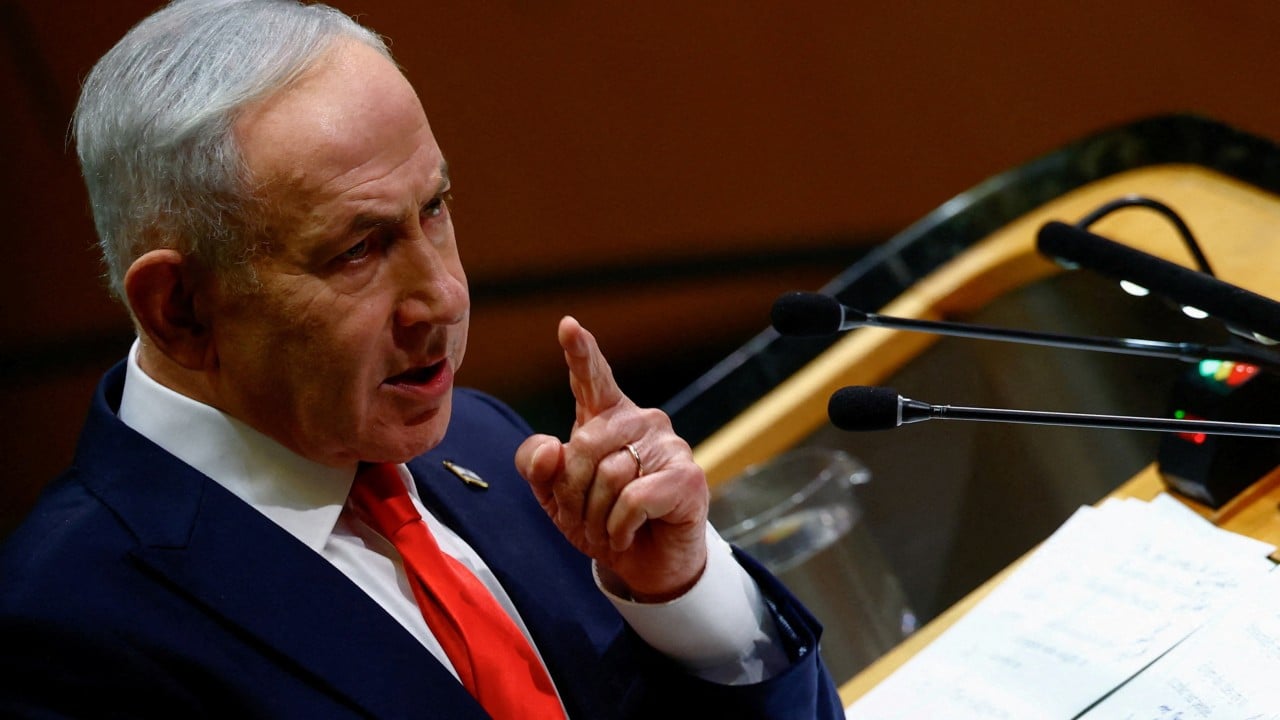
The headlines screamed about a security breach, a rogue TV report, and an internal state investigation into whether Benjamin Netanyahu secretly hopped a flight to the United Arab Emirates. Security agencies filed complaints. Pundits reached for their fainting couches. The conventional narrative took off at a sprint: intelligence services are furious, state secrets were leaked, and the sacred boundary between covert diplomacy and public gossip has been violently breached.
It is a completely superficial reading of how modern statecraft actually operates.
I have spent enough years watching intelligence apparatuses panic over optics rather than substance to spot a managed distraction when I see one. The entire panic surrounding the leaked UAE visit misses the foundational mechanics of regional diplomacy in the Middle East. When intelligence agencies file formal complaints over media reports about high-level diplomatic travel, your first instinct should not be to ask who leaked. Your instinct should be to ask who benefits from the leak becoming public knowledge in the first place.
The Naivety of the Leak Panic
Let us dismantle the core premise driving the standard reporting. The consensus view argues that sensitive travel by a sitting prime minister to a strategic partner state must remain classified to protect operational security and maintain diplomatic discretion. Violating this cloak of secrecy allegedly damages trust between nations and exposes vulnerabilities.
It sounds terribly logical if you have never stepped foot inside a real Situation Room.
In reality, clandestine visits by heads of government to capitals like Abu Dhabi are never kept secret from the people who actually matter. The local intelligence services, foreign surveillance networks, commercial air traffic monitors, and regional adversaries knew about the flight before the wheels even touched the tarmac. Transponders can be turned off, but private Boeing 737s belonging to state-linked operators leave digital and physical footprints that military radar tracks effortlessly.
When a visit leaks to a domestic television network, it is rarely an accidental slip by a disgruntled bureaucrat. It is an intentional signal.
Governments leak things when official channels hit a wall or when domestic political theater requires a bold foreign policy flex. If Netanyahu wanted a genuinely hidden trip, it would have stayed hidden. The fact that it surfaced on a television broadcast means the information was cleared for public consumption by someone who calculated that the downstream political benefits outweighed the administrative theater of an internal security investigation.
The Operational Reality of Regional Realpolitik
To understand why the security agency complaint is mostly performative bureaucracy, you have to look past the dramatic headlines and examine the actual incentives driving Israel-UAE relations.
For years, the diplomatic architecture built around the Abraham Accords has relied on a delicate balance between public economic cooperation and quiet, highly pragmatic security alignment. Traditional journalism treats these relations as fragile porcelain vases that will shatter if someone speaks too loudly about a VIP flight. That view patronizes both Jerusalem and Abu Dhabi.
Both nations operate in a harsh neighborhood where strategic alignment is dictated by existential threats, not polite protocol. The UAE does not panic because a prime minister's travel schedule leaks on the evening news. Abu Dhabi deals with actors who measure statecraft in ballistic missile trajectories and intelligence-sharing pacts. A leaked flight report is background noise to leaders who manage multi-billion-dollar defense acquisitions and regional deterrence daily.
Yet, domestic security agencies love a good leak investigation because it justifies their existence and projects an image of ironclad control. Launching an official inquiry into a media report lets the agency wave the flag of operational security while simultaneously allowing the political echelon plausible deniability. It is a choreographed dance. The politicians get the strategic outreach; the spooks get to look rigorous by launching a probe that will quietly vanish into a classified filing cabinet three months from now.
Why the Media Keeps Falling for the Trap
The journalistic establishment eats this up because it plays into a comforting, cinematic trope of rogue agents, state secrets, and political intrigue. It turns complex geopolitical recalibration into a domestic gossip column.
When reporters obsess over whether a security agency filed a complaint, they are looking directly at the finger pointing at the moon. They ignore the broader transformation happening across the Gulf. The real story is not that a flight leaked. The real story is that the institutional machinery connecting Israel and the Gulf states has matured to a point where routine high-level coordination is so frequent that leaks are an inevitable statistical byproduct.
When you normalize relations with regional heavyweights, the old rules of absolute secrecy begin to fray. You cannot maintain a Cold War level of cloak-and-dagger operations in an era characterized by direct commercial flights, joint cyber-defense exercises, and open technological integration. The friction is a symptom of transition.
The Unspoken Cost of Manufactured Outrage
The danger of buying into the standard media panic is that it forces leaders into defensive postures. When every diplomatic movement is treated as a potential security disaster, governments become paralyzed by optics rather than focused on outcomes.
Real diplomacy requires ambiguity, speed, and the willingness to take calculated risks that defy standard bureaucratic pathways. If we punish leaders every time their movements become public knowledge—whether through accidental exposure or calculated strategic leaking—we incentivize cowardice. We reward bureaucrats who prefer inaction over bold, direct engagement because inaction never makes the evening news.
The security agency filing a complaint is not a sign of a broken system. It is the system functioning exactly as designed: putting on a show for the domestic audience while the adults in the room continue doing the gritty, unglamorous work of regional alignment.
Stop treating routine diplomatic friction like a constitutional crisis. The real threat to national security is not a leaked flight manifest. It is the inability of modern commentary to look past the headlines and recognize real power when it is staring them in the face.