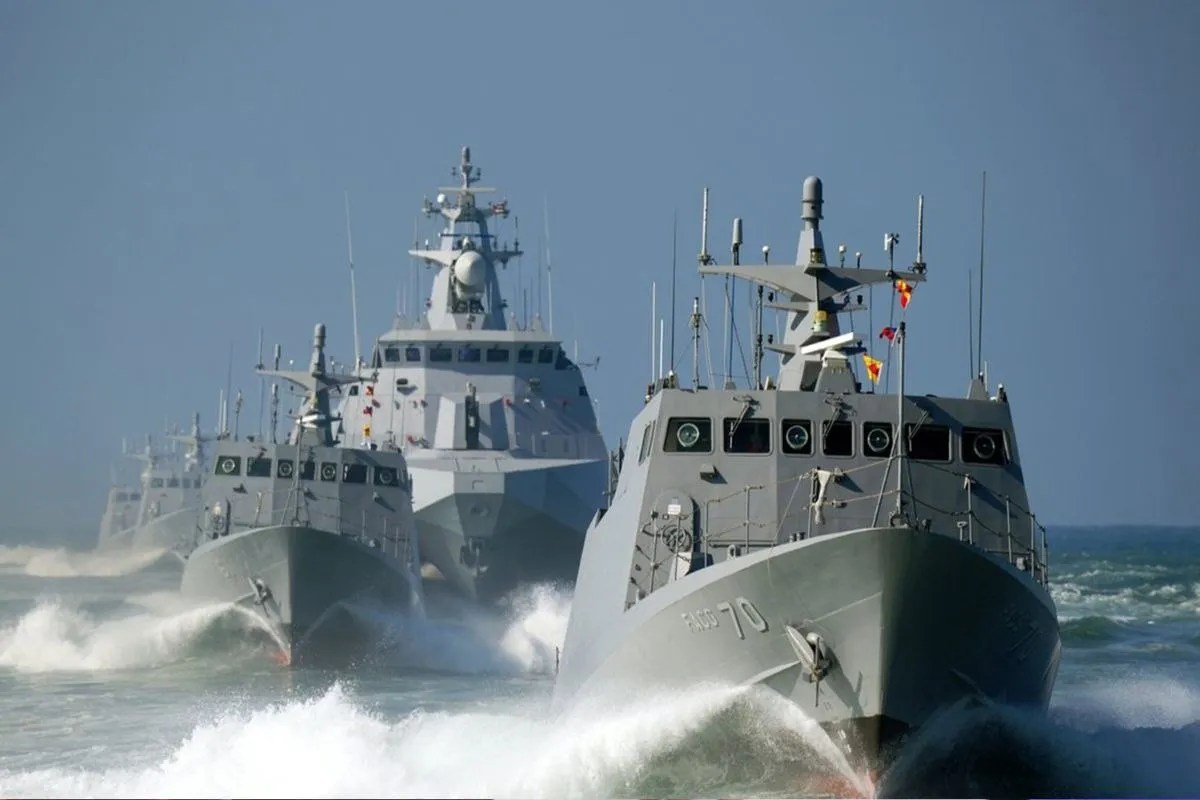
Every single time Beijing sends a dozen fighter jets and a couple of frigates across the median line of the Taiwan Strait, the global press runs the exact same headline. Sirens wail in copy-paste columns. Pundits on cable news adjust their ties and talk about imminent invasion, red lines, and the collapse of the international order. It is lazy, formulaic theater, and it completely misunderstands how modern great power friction actually operates.
If you think a few J-10s buzzing an air defense identification zone signals the start of an amphibious assault, you are falling for the oldest trap in defense journalism: mistaking routine operational signaling for a strategic tipping point.
Let us look at what is actually happening.
The Routine of Routine
Military organizations do not wake up one morning and decide to launch a full-scale amphibious invasion of an island with heavily fortified beaches, mountainous terrain, and an active reserve force numbering in the hundreds of thousands because the weather was nice. Amphibious operations require months of silent logistical buildup, fuel hoarding, blood plasma stockpiling, and commercial shipping requisitioning that cannot be masked by flying a few fighters around a median line.
What the headlines call an escalation is actually just baseline friction. Beijing maintains a permanent operational tempo in the strait for three distinct reasons, none of which involve landing troops tomorrow.
First, military readiness requires repetition. Pilots need flight hours, radar operators need live tracks on foreign tracking systems, and electronic warfare units need to map radar frequencies.
Second, continuous pressure creates normalization. By flying daily missions across the median line, Beijing shifts the baseline of what is considered normal airspace management. Ten years ago, crossing the line was a diplomatic crisis. Today, it is Tuesday. That normalization is a deliberate psychological and legal strategy designed to erode Taipei's administrative confidence without firing a single shot.
Third, domestic audience management requires visible displays of strength. When economic growth stutters at home, state media needs a reliable narrative to redirect public attention outward. A flotilla steaming near the Penghu islands plays well on domestic social media feeds, costing very little in actual fuel and zero political capital.
The Cost of Overreaction
The real danger is not that Beijing’s patrols will accidentally trigger World War III. The danger is how the responding side reacts to the noise.
When financial markets panic, supply chains shudder, and insurance premiums for shipping through the Taiwan Strait skyrocket over routine military movements, the defending side inflicts self-harm. Every time international observers scream that the crisis is boiling over, they hand Beijing a win on the economic front without any kinetic action taking place.
Imagine a scenario where a major shipping insurer doubles rates every time a fighter jet crosses a map boundary. Who pays for that? Not the military planners in Beijing or Washington. The consumer buying semiconductors manufactured in Hsinchu pays that tax.
By treating every patrol as a crisis, the global community creates a state of perpetual high anxiety that benefits no one except defense contractors and sensationalist media outlets looking for click-through rates.
The Wrong Question
People ask: When will China attack Taiwan?
That is the wrong question. It assumes the goal is territorial conquest via D-Day style landing craft. A more accurate question is: How does a modern superpower absorb a strategic competitor without firing a shot?
The strategy is gray-zone attrition. It is maritime law enforcement vessels shadowing civilian fishing fleets. It is undersea cable cuts. It is cyber probes against critical water and power infrastructure. It is economic integration coupled with relentless diplomatic isolation.
A kinetic invasion is an option of absolute last resort, chosen only if all other instruments of statecraft fail permanently. Military exercises near the coast are not the prelude to that failure; they are the background music of a long-term containment strategy designed to exhaust the opponent's financial and psychological endurance.
Moving Past the Noise
If you want to understand cross-strait dynamics, stop looking at daily fighter jet tallies. Pay attention to semiconductor supply chains, dry bulk shipping rates, energy reserve inventories in Taipei, and legislative debates over defense budgets. Those are the metrics that actually matter.
The next time a news alert flashes across your screen warning of Chinese warplanes near the strait, take a breath. Look past the breathless prose. You are watching a drill, not a declaration of war.
Stop buying the panic. Start looking at the ledger.