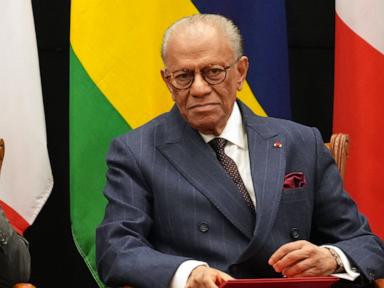
For months, the conventional punditry treated Adam Hamilton's campaign as a quaint exercise in futility. The lazy consensus was straightforward: a moderate megachurch pastor stepping onto the federal stage in a deeply red state was merely tilting at windmills. Pundits droned on about party registration advantages, baseline conservatism, and the structural impossibility of a Democratic upset in the heart of the Heartland.
They missed the entire plot.
When Hamilton unseated incumbent Republican Senator Roger Marshall with over fifty-one percent of the vote, political strategists scrambled to find excuses. They called it a fluke. They blamed incumbent fatigue. They pointed to localized campaign blunders. This is intellectual cowardice. The victory in Kansas was not an accident of circumstance. It was a masterclass in exploiting the fatal blind spots of modern partisan tribalism.
The Myth of the Unbreakable Partisan Lock
Look at the data. For decades, political scientists treated state lines and voter registration rolls as ironclad cages. If a county voted a certain way in presidential cycles down to the decimal point, consultants assumed it was locked in amber forever.
This model is broken. Voters are not punchcards feeding into a partisan machine. They are deeply exhausted by performative outrage. When Roger Marshall campaigned on standard Washington talking points, he assumed the safe-red brand label would do the heavy lifting. He forgot a basic truth of human psychology: familiarity breeds contempt when leadership feels detached from local reality.
Hamilton did not win by convincing hardcore partisans to abandon their worldview. He won because he bypassed the political industrial complex entirely. As the founder of the United Methodist Church of the Resurrection, his currency wasn't political dogma; it was pastoral trust built over decades of community presence. While national commentators obsessed over nationalized talking points, Hamilton spoke directly to the pragmatic conservatism of ordinary Kansans who wanted boring, competent stewardship over culture war gymnastics.
The Center is Not a Compromise It Is a Weapon
The central failure of modern political strategy is the belief that campaigns must choose between base mobilization and centrist appeasement. Both choices are traps. Base mobilization leads to hyper-polarization that turns off suburban independents, while bland moderation leaves everyone uninspired.
Hamilton carved a completely different path. He branded himself as an independent-minded centrist who refused to bend the knee to party orthodoxy on either side. He did not win by hiding his values; he won by weaponizing authenticity against career politicians whose every public utterance sounds like it was vetted by a focus group of consultants.
Imagine a scenario where political parties stopped importing cookie-cutter messaging from coastal headquarters and instead recruited leaders rooted in local civic institutions. The Kansas outcome proves that voters will shatter long-standing voting patterns the second a candidate stops treating them as demographic targets and starts treating them as neighbors.
What Washington Refuses to Learn
The establishment wants to sweep this result under the rug because it invalidates their entire operational playbook. If a Democrat can flip a Senate seat in Kansas by leaning into moral clarity, community trust, and fierce independence, then millions of dollars spent on toxic cable news ads and algorithmic mudslinging are exposed as a waste of capital.
The takeaway for future cycles is brutal for party hacks on both sides. The era of winning strictly on the back of a nationalized brand is dying. Voters are looking past the letter in parentheses next to a candidate's name and are hunting for proof of competence and human decency.
Stop looking at partisan math. Start looking at local gravity.