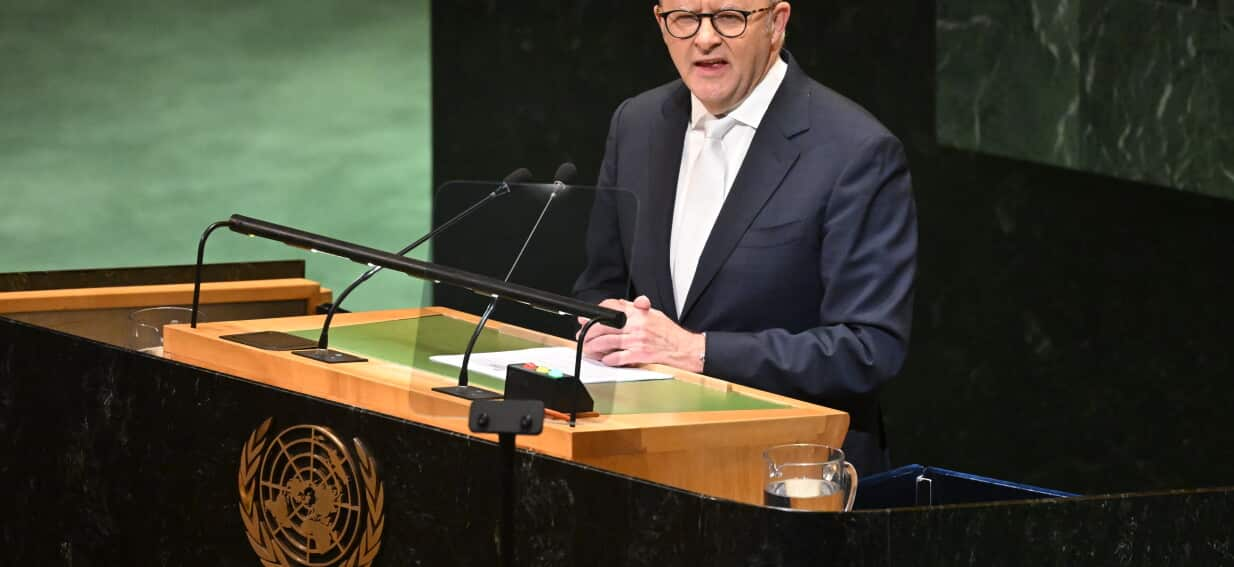
Seventy-seven diplomats stood up and walked out of the General Assembly hall during Benjamin Netanyahu’s speech. The media framed it as a moral stand, a unified rejection of rhetoric, a historic rebuke on the global stage.
It was nothing of the sort. It was a well-rehearsed choreography for domestic consumption. You might also find this related story interesting: Inside Tehran’s Power Struggle The Impeachment Threat Against Abbas Araghchi.
Let us stop pretending that a diplomatic walkout carries any operational weight in modern geopolitics. When a delegate abandons a seat, no treaties are rewritten, no sanctions materialize, and no lives are saved on the ground. The entire exercise is designed for thirty-second television clips and social media validation back home. It is a substitute for actual diplomacy, substituting theater for substance while the underlying conflict grinds on unaffected.
The lazy consensus in international reporting treats these theatrical exits as turning points. They are not. They are safety valves for politicians who want to signal outrage without bearing the cost of policy changes. As reported in latest articles by TIME, the implications are notable.
The Economics of Diplomatic Grandstanding
Consider the mechanics of high-level international summits. Every speech is scrutinized, timed, and pre-negotiated. Delegations know precisely who will speak, what talking points will be deployed, and what the baseline provocations will be. When a nation organizes a mass walkout, logistics teams coordinate the timing months in advance.
This is not spontaneous moral outrage. It is a managed production.
I have spent years watching institutional bodies handle crises, and the inverse relationship between performance and efficacy is absolute. The louder the protest in the hall, the less progress is happening behind closed doors. Real negotiations do not happen under television lights. They happen in windowless rooms where both sides hate each other enough to compromise.
When diplomats trade those grinding backroom negotiations for a walkout photo-op, they are prioritizing optics over outcomes. They are trading a seat at the table for a trending hashtag.
Dismantling the Moral Monopoly
The core argument underpinning these walkouts is that listening to a contested leader confers legitimacy. This logic collapses under basic scrutiny. International bodies were explicitly created to keep hostile states in the same room precisely because communication is most necessary when relations are at breaking point.
Refusing to listen to an adversary does not weaken them; it blinds you to their strategy.
When a delegation exits the hall, they surrender the floor. They abandon the opportunity for an immediate, sharp rebuttal. They forfeit the chance to dismantle false claims in real-time while the world is watching. Walking out is an admission of rhetorical defeat disguised as moral superiority. It says: "We cannot win this argument on merit, so we are leaving the room."
The Real Cost of Empty Gestures
The danger of this performative culture is that it numbs the global public to actual atrocities. When every speech boycott is hyped as a historic moral reckoning, the phrase loses all meaning. Real accountability gets diluted in a sea of manufactured outrage.
We saw this play out across multiple capitals. Citizens look at these protests and expect a shift in geopolitical reality, only to watch the exact same military campaigns and political stalemates continue the next morning. That gap between theatrical defiance and real-world impotence breeds deep cynicism among the electorate. People stop believing institutions can solve anything because the institutions spend half their time staging plays.
What Effective Action Actually Looks Like
If governments genuinely want to alter the trajectory of a conflict, walkouts are a rounding error. Real leverage is structural, financial, and logistical. It looks like targeted arms embargoes, precise financial intelligence sharing, and relentless, grinding backchannel mediation that yields zero television coverage.
None of those things happen while delegates are marching down the aisle of the General Assembly hall to catch the evening news broadcast.
Stop watching the aisle. Stop counting who stood up and who stayed seated. That is the distraction. The real work—and the real failure—is happening entirely out of sight, where performance art has no currency and words actually matter.