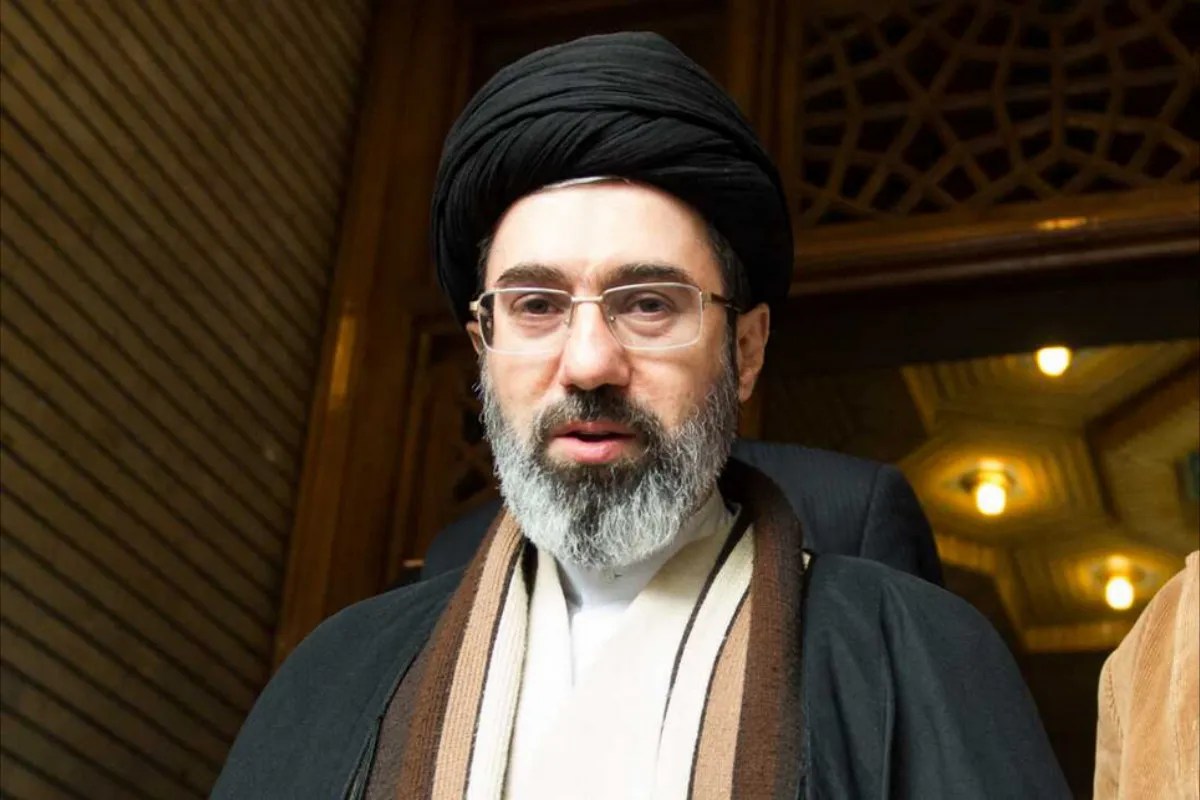
The headlines running across global news feeds right now are peddling a lazy, cookie-cutter narrative about Mojtaba Khamenei and Washington's latest talking points. US Vice President JD Vance and a chorus of cable news pundits want you to believe that political survival, royal-style inheritance, and palace intrigue are the only metrics that matter inside the Iranian power structure. They treat the clerical establishment like a sleepy family business waiting for a bitter custody battle over the crown. It is a dangerously shallow read of a regime that does not operate on Western governance models or standard dynastic rules.
Strip away the geopolitical theater and the breathless updates about who is alive, who is sidelined, and who is pulling strings behind closed doors. The entire conversation is missing the structural reality of how the Islamic Republic actually preserves its chokehold on power.
The Myth of Royal Succession in a Theocracy
For months, mainstream analysis has fixated on Mojtaba Khamenei as the inevitable heir apparent, framing his rise as a dynastic restoration. Commentators love this framing because it fits neatly into familiar historical templates. We saw the same tired analogies trotted out when Bashar al-Assad took over from his father in Syria or when North Korea cycled through the Kim bloodline.
Here is the inconvenient truth that lazy desk analysts refuse to acknowledge. The Islamic Republic was explicitly engineered to destroy the hereditary monarchy model. The architects of 1979 built an ideological system precisely to purge the Pahlavi-style bloodline politics from the country. Handing the keys of the nation to a supreme leader's son purely on the basis of lineage creates an existential ideological crisis for the clergy. It spits in the face of the foundational doctrine of velayat-e faqih, which theoretically roots authority in religious jurisprudence and revolutionary credentials rather than a genetic lottery.
When figures like JD Vance weigh in on these transitions, they project Western democratic anxieties or traditional autocratic playbooks onto a machine that plays an entirely different sport. Mojtaba is not waiting for a coronation. He operates in the shadows because visibility is a liability in a system where the Islamic Revolutionary Guard Corps holds the actual financial and physical leverage. Focusing on who sits in the symbolic chair ignores the men holding the guns, the trade routes, and the cyber warfare apparatus.
The Real Power Broker is Not Who You Think
If you want to understand where Iran goes next, stop staring at the clerics in Qom. The clerical class has been taking a back seat to the security state for over a decade. The real governance model in Tehran is a corporate military junta wrapped in clerical robes.
I have watched foreign policy experts spend decades mapping out theological factions while completely ignoring the balance sheets of the bonyads and the sprawling corporate holdings of the Revolutionary Guard. These conglomerates control everything from telecommunications to oil smuggling networks, immunizing the regime against external pressure far more effectively than any speech from a supreme leader.
When an outsider pundit claims that a specific political figure's health status or endorsement will tip the scales of regional stability, they are confusing public relations with operational reality. The machinery runs on self-preservation and economic integration with alternative global partners. It does not pause because one man transitions out of the picture.
Why Washington Keeps Falling for the Same Trap
Western intelligence and political commentary suffer from a chronic failure of imagination. They project their own institutional frameworks onto adversaries, assuming that every government is motivated by the same incentives of voter approval, economic growth, or dynastic continuity.
When a high-ranking official makes a public statement about foreign leadership changes, it is rarely an objective assessment. It is domestic signaling designed to satisfy a local constituency or justify existing policy postures. Buying into the superficial drama of who is "alive and well" in Tehran is a masterclass in missing the forest for the trees.
The structural flaws of the current regime are real, but they stem from compounding economic mismanagement, severe demographic shifts, and an unbridgeable chasm between the governed and the governing class. None of those structural rot points get fixed or worsened simply because Mojtaba Khamenei takes a higher profile role or stays hidden in the background.
Stop treating geopolitical survival like a soap opera. The state machinery in Tehran is a brutal, institutionalized survivalist cult that outlived multiple generations of predicted collapses. Until analysts start tracking balance sheets, logistics networks, and security force cohesion instead of gossip about family trees, they will continue to be blindsided by every shift on the board.


