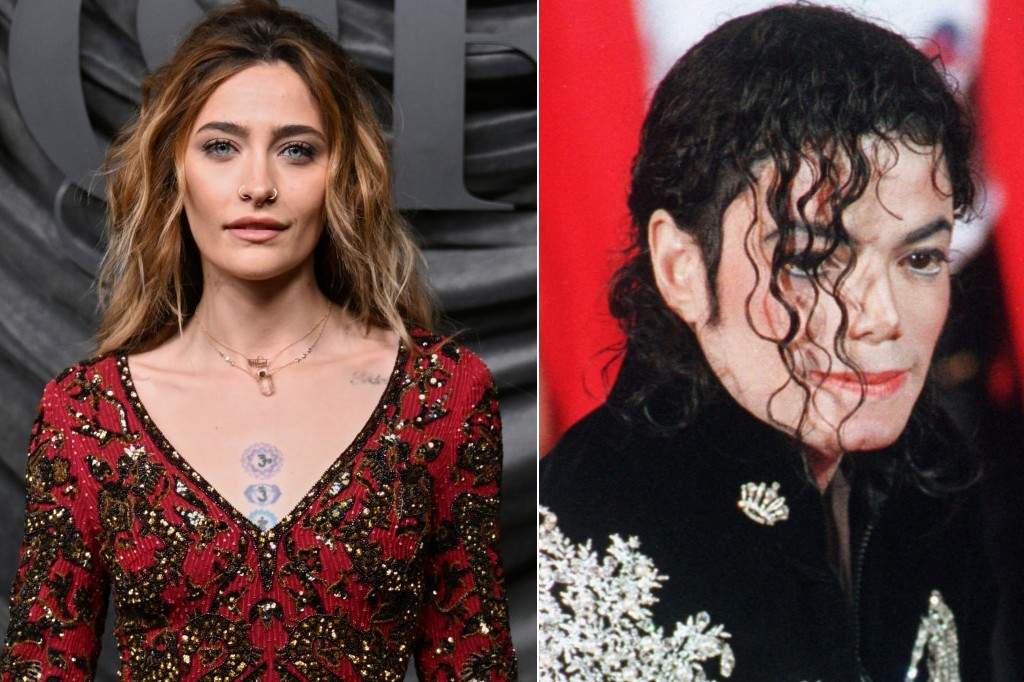
Tabloid headlines love a greedy heir narrative. They see a massive dollar figure attached to a famous last name, slap a sensationalist headline on the page, and let the comment section burn. That is exactly what happened when news broke regarding Paris Jackson and a $600 million valuation tied to the Michael Jackson estate.
The lazy consensus paints this as a typical celebrity cash grab. An entitled twenty-something demanding a nine-figure payout to fund a lavish lifestyle. If you enjoyed this article, you might want to read: this related article.
That narrative is completely backwards.
If you actually understand how high-net-worth probate law, fiduciary duty, and music catalog valuations operate, you realize this is not about a spoiled kid asking for an allowance. It is a textbook masterclass in asset protection, tax mitigation, and corporate governance. Most entertainment reporters barely understand how a basic W-2 works, let alone the Byzantine mechanics of a billion-dollar California probate estate. They read court filings like movie scripts instead of balance sheets. For another perspective on this event, check out the recent coverage from The New York Times.
Let us dismantle the gossip and look at the cold, hard math of what is actually happening behind closed doors.
The $600 Million Illusion
First, we need to correct the biggest misconception floating around the internet. When a headline claims an heir is "seeking $600 million" from an estate, the average reader pictures Paris Jackson walking into a bank in Los Angeles with a giant novelty check and demanding a wire transfer to her personal checking account.
That is not how probate works. Not even close.
Under the terms of Michael Jackson’s 2002 will, his assets were designated to flow into the Michael Jackson Family Trust. The beneficiaries of that trust are his mother, Katherine Jackson, and his three children: Prince, Paris, and Bigi. However, for over fifteen years, the estate has remained trapped in probate court.
Why does a probate drag on for a decade and a half? Because the executors—John Branca and John McClain—have been locked in a brutal, multi-front war with the Internal Revenue Service over the valuation of Michael’s assets at the time of his death in 2009.
Here is the mechanics of that fight. When a celebrity dies, the IRS taxes the fair market value of their estate. The executors initially valued Michael’s image and likeness at a few thousand dollars, arguing his brand was toxic at the time of his death. The IRS disagreed, claiming the estate was worth hundreds of millions more, and slapped them with a massive tax bill and penalties. You cannot fully close a probate and distribute the bulk of the assets to a family trust until the IRS signs off on the final tax clearance, or until sufficient reserves are ring-fenced to satisfy potential liabilities.
When numbers like $600 million surface in connection with funding the family trust, we are talking about estate administration and asset transfer, not a personal shopping spree. Moving capital from the probate estate into the family trust is the literal fulfillment of the deceased’s legal wishes.
Why Trust Funding Is an Offensive Weapon
I have spent years watching generational wealth evaporate because heirs waited too long to force executors to close out probate. Every year an estate remains in limbo, the beneficiaries bleed money in legal fees, administrative overhead, and lost investment opportunities.
Let us look at the numbers. Executors of a California probate estate are entitled to statutory fees based on a percentage of the estate's value, plus "extraordinary fees" for complex litigation and business management. When an estate generates over $2 billion in gross revenue post-mortem—as Michael Jackson’s has—the administrative costs alone run into the tens of millions of dollars annually.
By pushing to fund the family trust with a massive tranche of capital, the beneficiaries accomplish three critical business objectives:
- Separating Risk from Reward: Assets held inside an active probate estate are sitting ducks for lingering creditor claims, opportunistic lawsuits, and endless administrative challenges. Once assets are legally transferred into the family trust, they gain a critical layer of structural insulation.
- Unlocking Compound Growth: Cash sitting in conservative probate accounts earns minimal yield. Capital deployed inside a properly structured family trust can be invested across diverse asset classes—private equity, real estate, index funds—generating exponential returns that outpace inflation.
- Ending the Executor Bottleneck: While an estate is in probate, the executors hold absolute operational control. The beneficiaries have to petition the court or ask the executors for distributions. Funding the trust shifts the center of gravity toward the trustees and beneficiaries, giving them direct visibility and leverage over their own inheritance.
The Sony Catalog Deal Changed the Math
To understand why these massive numbers are hitting the press right now, you have to follow the liquidity. For years, the Michael Jackson estate was asset-rich and cash-poor. They owned priceless intellectual property, including the Mijac Music catalog and a stake in EMI Music Publishing, but their liquid cash was constantly tied up fighting debts and the IRS.
Then came the 2024 blockbuster deal with Sony Music Group. Sony agreed to acquire half of Michael’s recorded music and publishing catalog in a transaction that valued the entire catalog at north of $1.2 billion.
Suddenly, the estate was sitting on an ocean of liquid cash. At least $600 million of it.
Do you see the connection now? That $600 million figure is not a random number pulled out of thin air by a greedy heir. It mirrors the exact liquidity event generated by the Sony catalog sale.
Imagine a scenario where you are the beneficiary of an estate that just liquidated half of its crown jewel asset for $600 million in cash. Meanwhile, the executors are still dragging their feet on funding the family trust because of ongoing tax disputes and administrative hurdles—including public disagreements over how the estate handles business deals and legal expenses. If you sit quietly, that $600 million sits under the exclusive control of the executors, paying their legal teams to fight battles you might not even agree with.
Demanding that the proceeds of a massive asset sale be transferred into the family trust is not entitlement. It is basic fiduciary self-defense.
Dismantling the "Greedy Heir" Myth
Whenever a celebrity child makes a legal move involving their late parent's money, the internet immediately asks the wrong questions.
People ask: "Why doesn't she just get a job and make her own money?"
This is a fundamental misunderstanding of ownership. Paris Jackson has her own career in music, modeling, and acting. More importantly, she is the legal owner of the equitable interest in her father’s estate. Suggesting she walk away from hundreds of millions of dollars her father specifically willed to her is absurd. No rational human being on earth would tell a business owner to abandon their equity just because they happen to have a day job.
People ask: "Isn't $600 million way more than one person needs?"
Again, the premise is flawed. First, the money goes to the Michael Jackson Family Trust, which supports multiple beneficiaries, including her brothers and her grandmother, alongside future generations. Second, in the world of high-finance, capital is not measured by how many sports cars it can buy. It is measured by control, philanthropy, and generational preservation. If the heirs do not take control of the capital, corporate lawyers and tax authorities will gladly keep it for themselves.
People ask: "Didn't the executors save the estate from bankruptcy?"
Let us give credit where it is due. When Michael Jackson died in 2009, he was roughly $500 million in debt and facing foreclosure on Neverland Ranch. John Branca and John McClain pulled off one of the greatest financial turnarounds in entertainment history. They restructured the debt, produced This Is It, launched Cirque du Soleil shows, and turned a sinking ship into a multi-billion-dollar juggernaut.
But here is the uncomfortable truth that estate attorneys rarely admit out loud: the skills required to rescue a distressed asset are completely different from the mindset required to let go of it.
Executors who spend fifteen years building an empire often develop a god complex. They start viewing the estate as their company rather than a temporary holding vessel meant to be transferred to the deceased’s children. Friction between seasoned executors and maturing heirs is not an anomaly. It is an inevitability.
The Downside of the Contrarian Play
If we are being completely honest about the mechanics of wealth management, aggressively pushing to fund a trust before every single tax issue is resolved carries real risk.
The executors have a legitimate argument for caution. If the estate distributes $600 million into the family trust today, and the U.S. Tax Court rules against the estate tomorrow, the IRS can claw that money back through transferee liability. Worse, if the trust has already locked that capital into illiquid investments, the family could face a brutal cash crunch, forced to sell assets at a discount just to pay the government.
Furthermore, bringing family trust disputes into public court filings creates leverage for third-party litigants. Every time the Jackson family and the executors argue in probate court, plaintiffs’ attorneys take notes, looking for cracks in the armor they can exploit in civil lawsuits. Transparency in probate is a double-edged sword; it keeps executors honest, but it hands ammunition to enemies.
How Smart Heirs Actually Win Estate Battles
Most celebrity heirs lose their fortunes not because they spend too much on private jets, but because they remain passive while lawyers, managers, and executors bleed the principal dry through endless billable hours.
If you ever find yourself navigating a complex estate or contested trust, ignore the tabloid noise and follow the rules that actually protect capital:
- Audit the burn rate immediately. Never accept vague summaries of administrative expenses. Demand line-item accounting of every legal fee, consultant retainer, and executor commission. If the overhead exceeds 1% to 2% of the estate's value annually, someone is getting rich off your inaction.
- Force partial distributions. You do not have to wait for a 100% final resolution with tax authorities to fund a trust. Competent probate attorneys use "reserve agreements"—leaving behind enough cash to cover the worst-case tax scenario while transferring the surplus into the family trust immediately.
- Separate emotional loyalty from fiduciary duty. Executors are service providers, not family members. Even if they saved the business ten years ago, their continued employment must be justified by current performance, not past glory.
- Control the narrative through filings, not interviews. Never go on a podcast to complain about your inheritance. Put your demands in formal probate petitions backed by forensic accounting. Courts care about statutory compliance, not feelings.
The Reality of the Throne
The narrative surrounding Paris Jackson and the $600 million figure is a litmus test for financial literacy. If you read it and get angry at a celebrity heir, you fell for the clickbait. If you read it and recognize a strategic maneuver to capture liquidity from the Sony catalog sale and move it out of the reach of probate overhead, you understand how the game is actually played.
Michael Jackson did not build a billion-dollar music empire so that probate lawyers and the IRS could argue over it until the year 2040. He left it to his children. Getting that money out of probate limbo and into the family trust is not a scandal. It is long overdue.