Stop looking at African football through the lens of a patronizing fairytale. For decades, international soccer pundits treated teams from the continent like a novelty act. You know the narrative: "so much natural raw talent, but they lack tactical discipline." It was a lazy, dismissive trope used by European coaches and executives to justify keeping Africa small on the world stage.
Right now, across the stadium fields of the United States, Canada, and Mexico, that old narrative is being shredded. The 2026 World Cup has witnessed an unprecedented African breakthrough, and it isn't an accident or a stroke of luck. Nine out of ten African teams that entered the group stage advanced to the knockouts. Let that number sink in.
This isn't a feel-good story about plucky underdogs capturing the hearts of neutrals. It's a calculated, long-overdue takeover of the global game.
The Myth of the African Underdog
If you watched the group stages, you saw Cape Verde hold European giants Spain to a 0-0 draw and battle Uruguay to a 2-2 thriller. Now, this tiny nation of just over half a million people is preparing to face Argentina in the round of 32 in Miami.
Predictive models gave Cape Verde a measly 1% chance of making noise in this tournament. The diaspora community immediately turned that insult into a battle cry: "1% chance, 99% faith." But if you actually look at how the Blue Sharks are built, faith has very little to do with it. This is about brilliant talent recruitment.
Cape Verdean manager Bubista didn't just scout local fields. He systematically tapped into the global Cape Verdean diaspora. Out of the starting eleven that shut down Saudi Arabia to seal their knockout spot, six players were born outside the islands. They grew up in top-tier youth academies across the Netherlands, France, Ireland, and Portugal. They brought elite tactical education back home, mixing it with an intense national pride.
Then there's the 40-year-old goalkeeper, Vozinha. His seven massive saves against Spain to deny Lamine Yamal turned him into an overnight internet sensation, exploding his Instagram following to over 17 million. It looks like a viral fluke, but it's just the world finally noticing a veteran who has been grinding in professional leagues for over a decade.
We see the exact same story with DR Congo. Their shocking 1-1 draw against Cristiano Ronaldo’s Portugal wasn't a defensive fluke. It was a tactical masterclass executed by a squad that refused to be intimidated. They followed that up by advancing to face England in an electric round-of-32 clash in Atlanta.
The Soft Power in the Stands
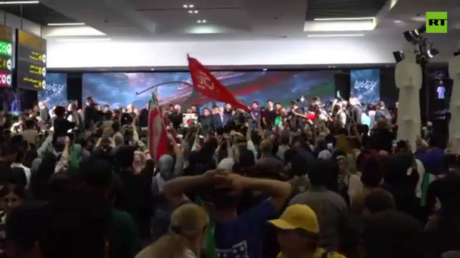
While the teams dismantle opponents on the pitch, African supporters are completely transforming the culture of the tournament off it. The World Cup Reputation Index recently surveyed 5,200 American adults across the 16 host cities to evaluate how visiting fanbases affect local perceptions. South African fans ranked fifth globally among 45 non-host nations for the most colourful and positive supporter culture.
It turns out that atmosphere actually matters. American sports culture is heavily corporate and structured, but African fans brought an organic, unstoppable energy. In Atlanta, before South Africa took on Czechia in front of tens of thousands of fans, local MARTA transit trains were literally vibrating. South African fans turned public transit into a moving choir, singing traditional songs and trading jerseys with locals.
Outside the stadiums, the vibes are matching the metrics. In Atlanta, right before the high-stakes knockout match between England and DR Congo, the streets didn't fill with hooliganism. Instead, viral videos showed a lone DR Congo fan leading a massive conga line filled with England supporters. They danced, laughed, and sang together through downtown.
Then you have Michel Nkuka Mboladinga, famously known as "Lumumba Vea" (Lumumba Stands). He became an internet icon during the Africa Cup of Nations earlier this year by standing completely motionless, arm raised, for the entire 90 minutes of a match—a striking homage to Patrice Lumumba, his country's first post-independence prime minister. His arrival in Guadalajara for the match against Colombia instantly electrified the fan zones.
This isn't just entertainment. It's a massive exercise in soft power. Over 73% of Americans surveyed stated that the behavior of visiting fans directly changed how they view that country. Good fan cultures build real-world interest; 68% of respondents said a great interaction with a fan group makes them want to vacation in that nation.
Overcoming the Structural Blockades
To truly appreciate this historic run, you have to understand the systemic hurdles African football had to leap over. For years, European club managers openly complained whenever the Africa Cup of Nations came around, trying to block players from representing their countries. Prominent soccer figures even publicly argued that Africa should have fewer slots at the expanded World Cup, claiming the quality wasn't there.
They were wrong. The expansion to a 48-team format didn't dilute the tournament; it simply allowed the hidden depth of African football to breathe. The quality was always there, but the old qualifying system was a brutal bottleneck that choked out deserving teams.
Look at Egypt. After securing a monumental 3-1 victory over New Zealand in Vancouver, global icon Mo Salah didn't hide away in a luxury hotel. He hit the city streets, dancing and celebrating directly with fans. That level of connection and unburdened joy is exactly what the international soccer establishment tried to undervalue for decades.
What Happens Next
The era of treating African football as a heartwarming side plot is officially over. If you want to keep up with where the sport is heading, you need to change how you watch these games.
First, throw out the old scouting biases. Watch how teams like Cape Verde and DR Congo structure their midfields. Notice the tactical discipline and the deliberate pacing. They aren't relying purely on athleticism; they are out-thinking traditional powerhouses.
Second, pay attention to the diaspora networks. The blueprint Cape Verde utilized is being replicated by other nations. The global footprint of African football means talent is no longer restricted by local infrastructure limitations.
The knockout rounds are already delivering historic matchups. Don't be surprised when the old guard continues to fall. African football didn't just arrive at the 2026 World Cup; it's here to stay.
African fans revel in World Cup success as continent makes record showing
This video highlights how soccer analysts and fans are reacting to Africa's historic performance on the global stage, shedding light on the internal and external challenges the continent's teams have successfully overcome.