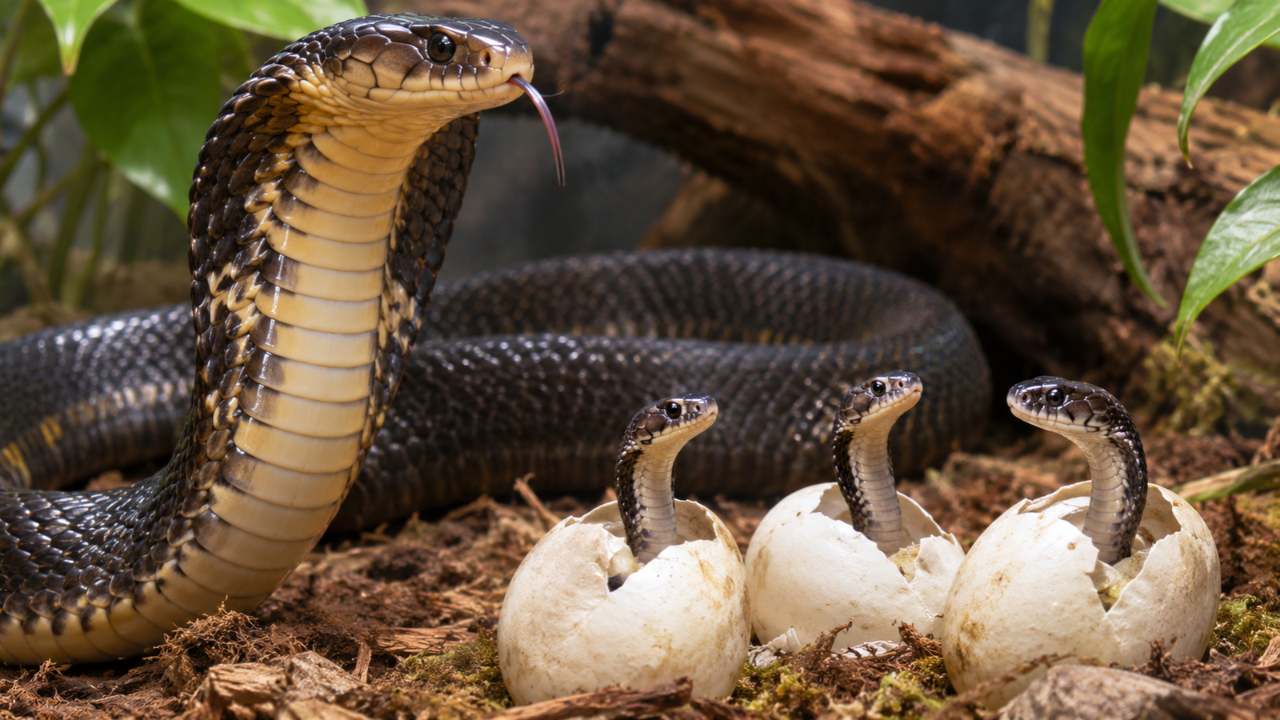
Celebratory headlines about king cobra hatchlings arriving after a sixteen-year dry spell sound great at a Sunday brunch. They also miss almost everything that actually matters in herpetology and captive conservation.
A sixteen-year gap between clutches is not a fairy-tale comeback. It is a symptom. When a zoological institution or reptile park goes more than a decade and a half without successfully hatching Ophiophagus hannah, the story is not triumph. The story is how hard it is to replicate the biological, thermal, and behavioral triggers of a species that has zero interest in living by human schedules.
Most popular coverage treats captive breeding like a scoreboard. Big number of years. Cute little venomous noodles. Cue the applause. That lazy consensus reduces complex reptilian biology to a feel-good press release while ignoring the brutal logistics, ecological trade-offs, and uncomfortable realities that sit behind every single egg.
The Lazy Consensus Around Rare Captive Births
When a reptile park announces its first king cobra hatchlings in sixteen years, the standard narrative writes itself. Dedicated keepers beat the odds. Nature finds a way. Conservation wins.
None of that is a lie on its face, yet all of it stops short of the real examination. Captive reproduction of a giant elapid is not a victory lap; it is an operational stress test. King cobras are the longest venomous snakes in the world, capable of exceeding four meters in length, with an specialized diet centered heavily on other snakes—a trait reflected in their genus name Ophiophagus, meaning "snake-eater." Keeping one healthy for years takes discipline. Getting two adults to breed, lay viable eggs, incubate them accurately, and raise fragile neonates without losing them to stress, refusal to feed, or husbandry errors takes something else entirely.
I have watched facilities treat a single rare hatch like a cure-all for past missteps. They pour publicity behind a milestone while glossing over why sixteen years passed in the first place. Sometimes a facility did not have a compatible pair. Sometimes housing or thermal cycling was off. Sometimes priorities shifted toward public display rather than quiet, repeatable husbandry. A sixteen-year gap is a long time. Calling it purely a triumph without asking what changed—and what still fails—is lazy journalism.
What "First in 16 Years" Actually Signals
In animal husbandry, long intervals between successful reproductions usually point to bottlenecks rather than mere bad luck. Reptiles are ectotherms. Their physiology is tightly coupled to ambient temperature, humidity, photoperiod, and barometric or seasonal shifts. If a facility misses the subtle cues that trigger courtship or egg-laying, years can slip by while the animals simply exist in climate-controlled comfort.
There is also a definitional trap in how the public reads these announcements. "King cobra" covers a wide geographic range across South and Southeast Asia, and herpetologists have increasingly examined distinct lineages and regional variations within Ophiophagus hannah and related populations. When news outlets flatten all of that into a single romanticized "king cobra" trope, readers walk away thinking every hatchling contributes uniformly to some grand global rescue.
It does not. Captive breeding has a specific job, and confusing public spectacle with wild population recovery is where the trouble starts.
Captive Breeding Is Not Wild Salvation
Here is the question readers usually ask when they see headlines about king cobra hatchlings: does this save the species from extinction?
Wrong question. Better question: what problem does a captive hatchling actually solve, and what problems does it create?
King cobras face genuine pressures in the wild—habitat fragmentation, deforestation, human-snake conflict, and illegal trade across parts of their range. Yet dropping a handful of captive-bred snakes into degraded habitat is not a magic button. Wild survival demands learned foraging instincts, predator evasion, thermal navigation in complex terrain, and freedom from pathogens or territorial clashes. Reintroduction programs across reptiles and amphibians have a long history of requiring rigorous protocols, quarantine, genetic screening, and habitat protection before a single animal is released. Without intact habitat and local community support, release programs are theater.
Even within accredited zoological networks, space is finite. Venomous snakes require high-security enclosures, strict bite-response protocols, specialized antivenom logistics where applicable, and experienced handlers. Every hatchling that survives past the delicate early weeks becomes a long-lived, high-maintenance commitment. King cobras can live for two decades or more in human care. A cute hatchling today is a massive, fast-moving, medically significant apex reptile in five years.
A hatchling is not an asset until it can feed reliably, shed cleanly, and be housed safely over the long haul. Before that, it is an obligation with teeth.
Imagine a Scenario Where Every Rare Clutch Was Kept
Imagine a scenario where a reptile park breeds king cobras every year for ten years and keeps every surviving snake on-site. Within a decade, the facility would face acute spatial limits, rising feeder costs, heavier keeper workload, and potential genetic bottlenecks if the founder stock is small. Good husbandry demands restraint, studbook coordination, and clear end-goals—not hoarding milestones just to pad an annual report.
The Uncomfortable Mechanics Behind the Hatchlings
If you want to understand why a sixteen-year drought ends, look at the unglamorous details rather than the press photos.
King cobra reproduction hinges on precision. Females build nests—often mounding leaf litter and debris—and guard them fiercely, a behavior unusual among snakes. In captivity, keepers manage incubation temperatures and humidity carefully, knowing that even small swings can affect hatching success or neonatal vigor. Once the eggs hatch, the real work begins. Neonates are tiny, vulnerable to dehydration, and picky. Getting hatchlings to take appropriate prey consistently without becoming stressed or injured requires patience and sharp observation.
Heavy hitters in herpetology and zoological management—researchers and curators who have spent decades studying elapid biology, venom ecology, and reptile husbandry—have long emphasized that captive propagation only carries real conservation weight when tied to coordinated breeding plans, disease screening, and broader habitat or educational impact. A single headline event does not replace decades of field ecology or forest protection.
I have seen institutions celebrate a birth while underinvesting in basic preventative veterinary care and staff training. That is backwards. You do not build credibility on a rare clutch if your day-to-day standards lag behind modern zoo medicine.
| Common Headline Narrative | Operational Reality | Why It Matters |
|---|---|---|
| "First in 16 years" means instant conservation breakthrough | Often reflects past husbandry, pairing, or facility hurdles finally overcome | Prevents false confidence about species recovery |
| Hatchlings equal immediate wild reinforcement | Reintroduction requires strict health, genetic, and habitat criteria | Avoids wasting animals on unviable releases |
| Breeding success is the finish line | Rearing delicate neonates and housing adults for years is the real test | Keeps long-term welfare front and center |
Answering What People Actually Search For
People typing queries about king cobra hatchlings usually want three things: whether the babies are venomous right away, how rare the event is, and what happens to them next.
First: yes, venomous snakes produce venom from early life, and treating any hatchling of a medically significant species with anything less than full respect is a fast way to get bitten. Brutal honesty beats cute myths every time. Second: rarity in a specific park often reflects local facility history more than global biology, even when the species faces real conservation threats in the wild. Third: what happens next should be boring, structured, and disciplined—veterinary checks, feeding records, careful record-keeping, and placement or program alignment rather than endless photo ops.
Where My Contrarian Stance Can Bite Back
Let me put my cards on the table, because pushing back against celebratory coverage carries its own blind spots.
If you strip away all the fanfare and talk purely in terms of logistics, protocols, and long-term commitments, you risk sounding cynical about people who genuinely care for difficult animals. Keepers who spend years perfecting microclimates, monitoring egg clutches, and coaxing reluctant hatchlings to eat are doing real, demanding work. Public excitement around rare births also funds education, draws families into zoos and reptile parks, and sparks curiosity about misunderstood predators like cobras. Ignoring public engagement altogether is a mistake of its own.
There is also a danger of over-indexing on perfection. Reptile husbandry has evolved dramatically over the past twenty years, and learning from past gaps is part of progress. Criticizing a sixteen-year gap without recognizing genuine improvements in care would be unfair if the institution actually raised its standards.
Actionable Advice That Actually Works
If you run a reptile facility, cover wildlife news, or simply care about honest conservation, change how you operate on Monday morning:
- Audit the full timeline, not just the birth date. Ask what changed in husbandry, veterinary oversight, or pairing strategy to make reproduction possible now, and publish transparent welfare metrics alongside the announcement.
- Tie breeding to a clear ten-year plan. Never hatch animals—especially large, long-lived venomous species—without mapped-out space, feeder supply, medical readiness, and program goals for adulthood.
- Shift public storytelling from spectacle to ecology. Use hatchling news to explain habitat loss, human-wildlife coexistence, and snake biology accurately instead of leaning on sensationalism.
- Measure success by survival and stewardship, not clicks. A quiet, healthy snake living well for fifteen years matters far more than a viral debut week.
Stop clapping for the ribbon-cutting and start checking the cages.