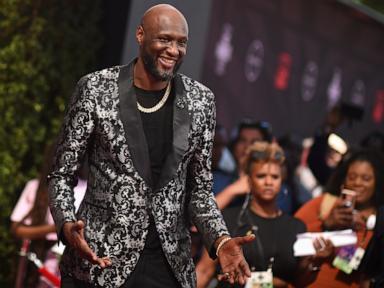
The media treats every celebrity arrest like a high-stakes courtroom drama, a moral play where wealth either buys absolute freedom or faces a crushing hammer of public accountability. Look at the coverage surrounding former NBA player Lamar Odom and his legal situation in Las Vegas. The talking heads and tabloid columnists frame his impending plea deal as some sort of systemic failure, an extraordinary concession, or a shocking twist in a tragic narrative.
They are entirely wrong.
What the public views as an anomaly is actually the assembly line functioning exactly as designed. The commentators crying foul or expressing shock do not understand how criminal courts function. They mistake standard operating procedure for preferential treatment. Having watched high-profile defendants spend millions on defense strategies across jurisdictions, I can tell you the real scandal isn't that celebrities get special deals. The real scandal is that the legal system relies on these exact mechanics for everyone, yet the public only notices when a famous name is attached to the docket.
The Myth of the Hardline Prosecution
The dominant narrative suggests that prosecutors want to make an example of high-profile figures. We are told that the state will bring the full weight of its resources to secure a conviction to prove that no one is above the law.
This is a fundamental misunderstanding of prosecutorial metrics.
District attorneys are not moral crusaders; they are risk managers running an underfunded bureaucracy. A trial is a massive allocation of resources, hours, and personnel. It introduces a variable that prosecutors despise above all else: unpredictability. When a celebrity hires elite legal counsel, they are not buying a get-out-of-jail-free card. They are buying the ability to expose every microscopic flaw in the state’s case. They challenge the calibration of the breathalyzer. They question the chain of custody of the blood sample. They scrutinize the exact wording of the field sobriety test instructions.
Faced with a defense team willing to litigate every single procedural detail, a prosecutor calculates the probability of a win versus the cost of a loss. A plea deal is not a surrender by the state. It is a guaranteed win recorded in their statistics without the downside risk of an acquittal in the headlines. Nevada law, like most state statutes, provides clear frameworks for negotiating charges down from a standard DUI to reckless driving, particularly when specific evidentiary hurdles exist. This is not a loophole. It is the grease that keeps the wheels of justice turning. Without plea bargaining, the entire court system would collapse under its own weight within forty-eight hours.
Blood Alcohol Mechanics and the Mirage of Certainty
The public looks at a blood test or a breathalyzer reading as an absolute, immutable truth. If the number is above the legal limit, the case should be open and shut. This binary thinking ignores the messy reality of forensic science.
Consider the timeline of a standard traffic stop. A driver is pulled over. The officer conducts a series of highly subjective roadside tests. An arrest is made. The driver is transported to a facility or a medical center. The blood draw occurs hours after the actual operation of the vehicle. This gap introduces a concept known as retrograde extrapolation.
Did the individual's blood alcohol concentration rise or fall between the time they were driving and the time the needle entered their arm? If an individual consumed alcohol right before driving, their body might still be absorbing it. They could have been under the legal limit while operating the vehicle, only to spike above it during the administrative delay at the police station.
Experienced defense attorneys do not argue that their client didn't drink. They argue that the state cannot prove the precise chemical state of the driver at the exact moment their keys were in the ignition. When a defense attorney presents a credible toxicological counter-argument, a prosecutor does not see a fight worth having over a misdemeanor charge. They offer a plea to a lesser offense because their ironclad scientific evidence is suddenly exposed as a series of educated guesses.
The Financial Reality of Elite Defense
There is a persistent belief that justice is blind, but the quality of a legal defense is directly tied to liquidity. This is uncomfortable to admit, but pretending otherwise is intellectual dishonesty.
A standard public defender is an elite legal asset strapped to an impossible caseload. They have minutes to review a file before standing in front of a judge. They do not have the time to hire independent experts to audit the maintenance logs of a gas chromatograph machine used to analyze blood samples.
A wealthy defendant can spend tens of thousands of dollars on independent laboratories, accident reconstruction specialists, and retired law enforcement consultants who can point out exactly where the arresting officer deviated from the National Highway Traffic Safety Administration training manual.
When the defense dumps three binders of expert depositions and procedural objections onto a prosecutor’s desk three weeks before a hearing, the leverage shifts entirely. The prosecutor knows that proceeding to trial means spending the next six months responding to motions rather than clearing the dozens of other cases on their daily calendar. The plea deal is the natural byproduct of this economic disparity. It is an exercise in resource optimization.
Dismantling the People Also Ask Fallacies
The public frequently asks variations of the same question: Why do athletes get away with these offenses repeatedly?
The premise itself is flawed. They do not "get away" with it. They navigate the statutory penalties using the maximum legal leverage available. A typical plea deal for a first-time offense involves heavy fines, mandatory substance abuse education, community service, and a suspended jail sentence. If the defendant violates the terms of that agreement, the suspended sentence triggers automatically.
Another common query is whether high-profile status helps or hurts in front of a judge. The reality is a double-edged sword. A judge knows the media is watching, which makes them less likely to grant unearned leniency that could look bad in an election cycle. However, a celebrity also has access to immediate, high-end rehabilitation resources that a typical defendant cannot afford. When a defense attorney can present a judge with a signed intake form from an exclusive inpatient facility, it gives the court a politically safe justification to opt for treatment over incarceration. The system rewards the appearance of proactive rehabilitation, a metric heavily skewed toward those who can write a check for thirty days of private care.
The Hypocrisy of Public Outrage
The collective anger surrounding these cases is rarely about public safety. It is about the frustration of seeing the wealthy avoid the raw, unvarnished misery that the average citizen experiences when entering the penal system.
If an average worker is arrested for a DUI, they often lose their job because they cannot show up for work the next morning. They cannot afford bail, so they sit in a holding cell. They cannot afford a private attorney, so they take the first plea offered by the state, regardless of whether the police followed proper procedure.
When a celebrity avoids this specific trajectory, the public reacts with fury. But the solution isn't to force the celebrity into a broken, punitive system just for the sake of symmetry. The focus should be on why the standard system denies the average citizen the procedural protections, careful evidentiary scrutiny, and rehabilitative alternatives that are routinely utilized in high-profile negotiations.
The Lamar Odom case is not a breakdown of law and order. It is a textbook demonstration of how the machinery operates when it is fully funded by the defense. The state gets its conviction on a modified charge, the defendant avoids immediate incarceration while accepting court-mandated oversight, and the court clears its docket. It is transactional, predictable, and utterly devoid of the drama the headlines claim to find. Stop looking for a moral lesson in a standard administrative resolution.