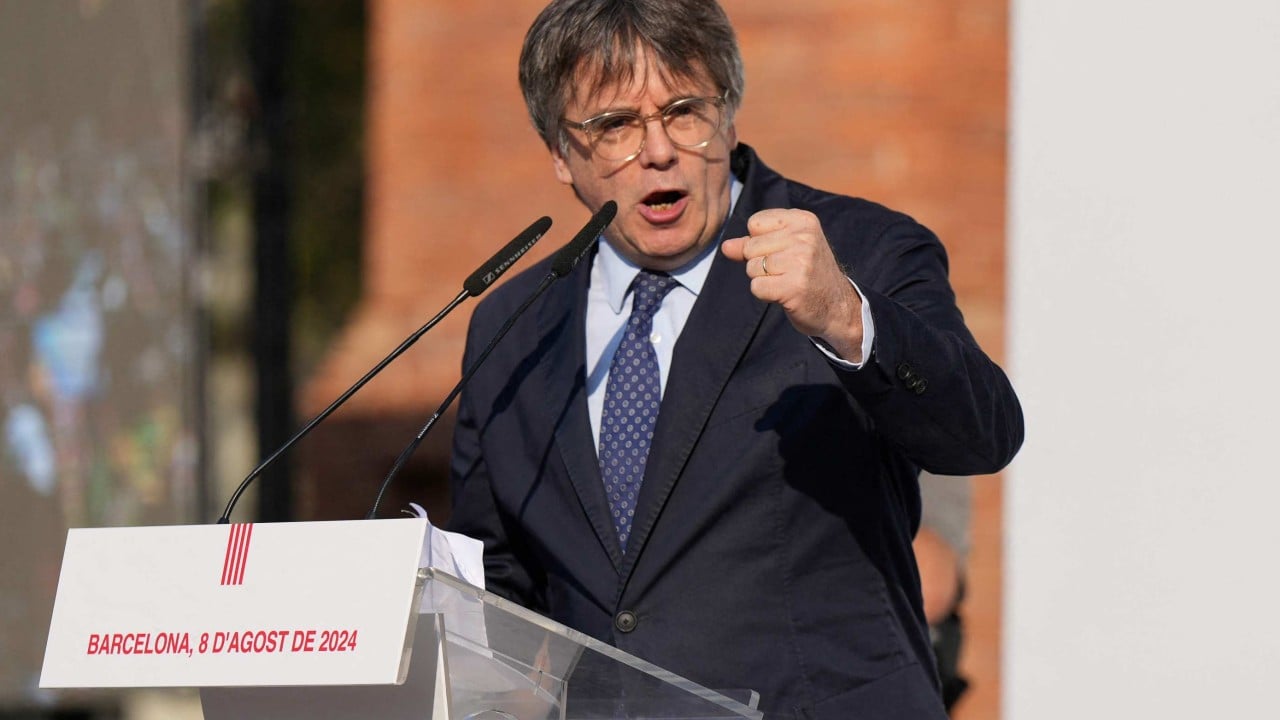
The national arrest warrant hanging over former Catalan regional president Carles Puigdemont has finally been lifted by a Spanish Supreme Court judge, concluding nearly nine years of self-imposed exile in Belgium. This legal pivot follows a contentious constitutional struggle over the controversial amnesty law championed by Prime Minister Pedro Sánchez. Puigdemont is now legally cleared to return to Spain without facing immediate detention. Yet, this long-awaited homecoming arrives at a moment when the separatist movement he once commanded with absolute authority is fracturing from within.
When Puigdemont fled across the border in the trunk of a car following the chaotic, unauthorized independence referendum of October 2017, he became a polarizing symbol of defiance against Madrid. For years, his presence abroad functioned as a rallying cry for the pro-independence camp. Every legal battle fought in European courts kept the embers of the 2017 constitutional crisis burning. But political realities in Catalonia have shifted dramatically over the span of a decade. The unified front that once paralyzed Spanish governance has splintered into competing factions, ideological infighting, and voter exhaustion.
The mechanics of the lifting of the arrest warrant expose deep institutional friction within the Spanish state. Supreme Court magistrate Pablo Llarena acted in response to binding constitutional directives, even while making it clear that he disagreed with the broader interpretation of the amnesty. The core dispute centered on whether the misuse of public funds during the independence push could be forgiven under the amnesty legislation. While the court ultimately conceded that the law must apply, the friction between Spain's judiciary and its executive branch remains raw. Judges view the political bargain struck between Sánchez's Socialist party and Catalan separatists as an executive encroachment on the independence of the courts.
For Puigdemont and his party, Junts per Catalonia, the timing of this judicial clearance coincides with a critical electoral cycle. Yet, his return does not guarantee a triumphant restoration of his former political dominance. Support for the separatist cause has waned significantly as voters grow weary of protracted constitutional warfare that yielded no independent state. Furthermore, the political landscape in Catalonia is no longer a binary choice between unionists and separatists. A new, hardline fringe represented by parties like Aliança Catalana has emerged, siphoning away radical voters by framing the traditional leadership as too moderate or compromised by institutional deals in Madrid.
Consider a hypothetical scenario to understand the current dynamic: a corporate CEO who spent a decade managing a company from abroad through proxy directives suddenly returns to headquarters. While the legal barriers to entry are gone, the internal culture has evolved, middle management has built independent fiefdoms, and the clients have moved on to alternative vendors. Puigdemont faces a similar dilemma. He returns not as an unchallenged martyr, but as a political actor forced to navigate a diminished and suspicious electorate.
The amnesty that cleared his slate was never about regional reconciliation; it was an exercise in raw political survival. Prime Minister Sánchez needed Catalan votes in the national parliament to maintain his grip on power, and Puigdemont needed a way back across the border to salvage his political relevance. This transactional marriage of convenience kept the national government afloat, but it alienated voters on both sides of the national divide. Spanish conservatives view the amnesty as a capitulation of the rule of law, while radical separatists view the parliamentary deals with Madrid as a betrayal of the 2017 mandate.
As preparations for his physical return unfold, the broader question is whether a physical presence can revitalize a dormant movement. Historical precedent suggests that exiled leaders often struggle to re-establish domestic momentum upon return, as the myth of their absence frequently outweighs the reality of their everyday politics. Puigdemont will no longer be an untouchable abstraction living in a Belgian villa. He will have to answer for compromises made, strategies failed, and the current fragmentation of the very movement he helped forge.
The arrest warrant is gone, but the political labyrinth remains entirely intact.


