Salt hangs heavy in the air off Bandar Abbas long before the sun clears the mountains behind the city. It coats the railings of the ferries, stings the corners of a tired eye at three in the morning, and settles like fine white dust over every antenna and radar dish pointed toward the Strait of Hormuz. Anyone who has stood on a waterfront when a crisis brews knows that sound is rarely what arrives first. First comes the hum of coolers in a dark room. Then comes the blue glow of a monitor. Then comes the quiet argument between people trying to decide what a blip on a screen actually means before someone pulls a trigger.
Listen. That hum is where modern conflict lives now.
When word breaks that Iran says it shot down a US LUCAS drone over Bandar Abbas, most readers skim a headline, shrug at another acronym, and move on to their morning coffee. Another unmanned aircraft. Another contested airspace. Another claim from a region where truth has been stretched so thin for so long that people treat every official statement like weather—something to watch, rarely something to trust without checking the sky yourself.
Yet a single downed drone over one of the world’s tightest maritime chokepoints is never just a piece of hardware hitting warm water. It is a test of nerves at three in the morning. It is a tug-of-war over who controls the story before debris even stops sinking. And it is a reminder of how quickly a machine without a pilot inside it can pull human beings toward a brink nobody voted to cross.
To make sense of what happens in moments like this—and why a claim over Bandar Abbas matters far beyond one coastal city—we have to separate what is known from what is asserted, trace how unmanned systems changed the geometry of risk in the Gulf, and look closely at the people sitting at the edges of that narrow waterway.
A Narrow Strait and a Crowded Sky
Bandar Abbas sits on the northern shore of the Strait of Hormuz, where the Persian Gulf squeezes into a throat barely wide enough for shipping lanes to stay apart without rubbing paint. Thousands of barrels of oil, liquefied natural gas, and commercial cargo pass near these waters every day. A single miscalculation here does not stay local. Freight rates jump in London. Fuel prices twitch in Manila or Chicago. Factory managers in distant time zones start recalculating shipping windows before noon.
Because the geography is so unforgiving, surveillance and air defense are constant preoccupations for every force operating near the strait. For years, the region has been a laboratory for unmanned aerial vehicles—drones that fly longer than human endurance allows, carry sensors or payloads into places where sending a manned jet carries steep political and human costs, and blur the line between routine patrol and overt provocation.
Consider what happens next: a claim arrives from Tehran stating that air defenses brought down a US LUCAS drone over Bandar Abbas. Notice the framing right away. Iran says. In modern conflicts and gray-zone standoffs, attribution and verification rarely arrive together in the same hour. A government can announce an interception for domestic morale, strategic deterrence, or psychological pressure. Another government can deny a loss, dispute the location, withhold details to protect intelligence sources, or say nothing while analysts pick apart satellite imagery and flight patterns days later.
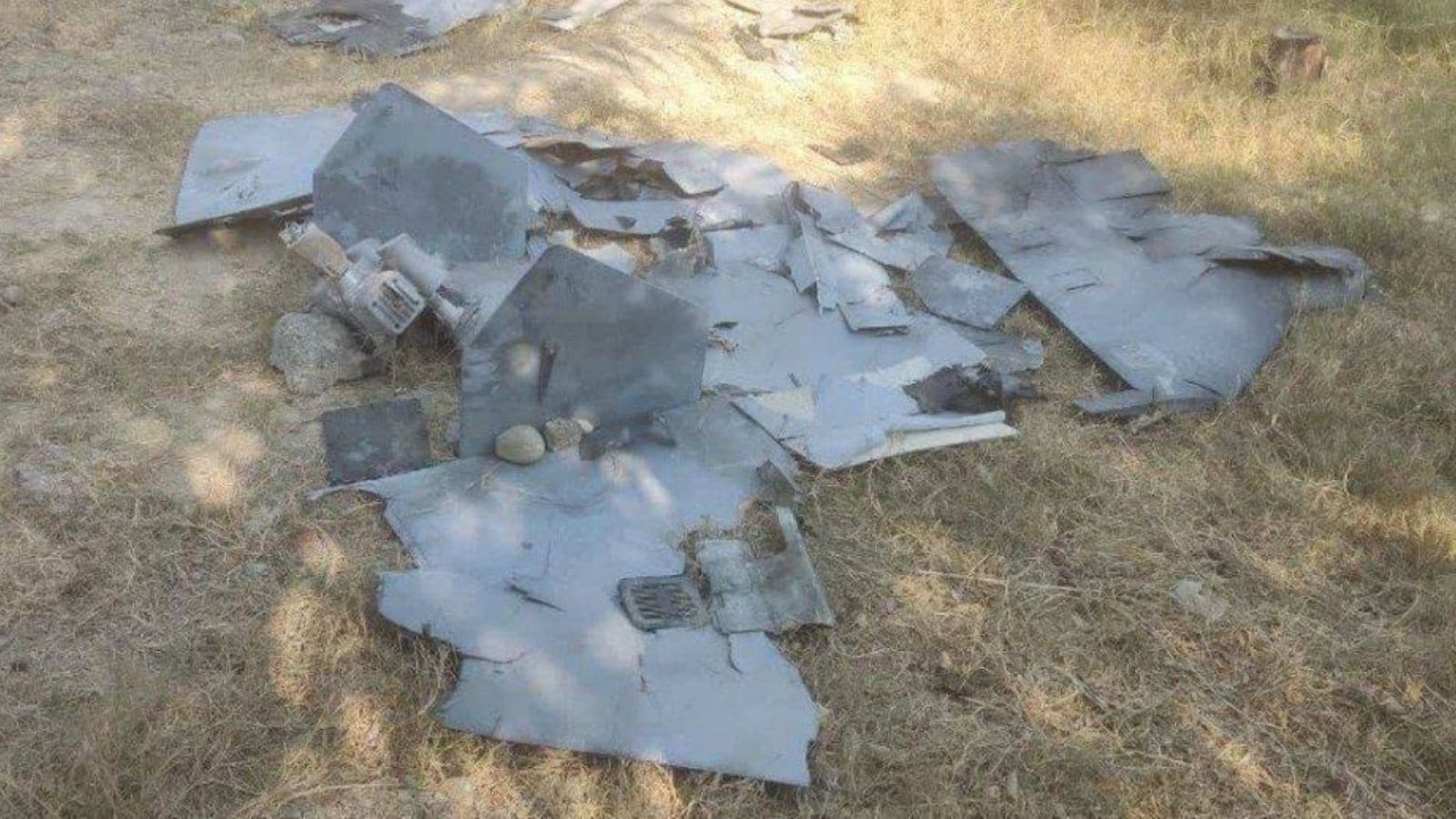
Even when a claim is true, proving it to an outside observer takes time. Debris can sink deep in coastal waters. Radar tracks can be classified or contested. Rumors travel faster than salvage vessels. That gap between the claim and the proof is not empty space; it is where anxiety grows.
The Human Weight Behind an Uncrewed Machine
People often talk about drones as if removing the pilot removes the danger. That is an easy illusion to fall into, and a dangerous one.
(Hypothetical scenario: To picture the human friction behind a headline like this, consider two people who never meet. Farida is a radar and air-defense shift supervisor near the coast whose back aches from twelve-hour rotations under fluorescent lights, listening to static and watching tracks drift across a tactical display. Three hundred miles away—or across an ocean—is Lt. Commander Samira Patel, an operations officer reviewing route risk, sensor coverage, and escalation thresholds with a cold cup of coffee beside a stack of printed briefings.)
Neither Farida nor Samira is a caricature of a villain or a hero. Both are professionals trained to follow protocols in an environment where every second carries consequence. Yet look at the asymmetry in their risk. If an unmanned aircraft goes down, no family gets a knock at the door from a casualty officer because a pilot did not return. That lower immediate human cost makes decision-makers slightly more willing to fly closer to contested edges.
Lower immediate human cost does not mean lower strategic risk. Quite the opposite.
When an uncrewed platform is shot down—or claimed to be shot down—near a sensitive port like Bandar Abbas, every side has to ask a harder question: Was that a routine defensive shot against an intrusion, a signal meant to deter further reconnaissance, or the opening move of something wider? Each side reads the other’s restraint as weakness and the other’s response as aggression.
When machines take the forward edge of a standoff, humans still have to interpret the silence—and the noise—that follows.
Think about how exhausting that posture is for ordinary residents living under layered air defenses and patrol corridors. A fisherman heading out before dawn doesn't read white papers on deterrence theory. He feels vibration in the hull when a vessel passes fast in the dark. He sees flashes high up or hears sirens test and wonders whether today is just another drill or the day the strait closes.
Why Claims Over Bandar Abbas Hit So Hard
If you strip away the jargon, a report that Iran shot down a US LUCAS drone over Bandar Abbas presses on three nerves at once.
First, there is the credibility contest. In an era of manipulated video, selective leaks, and rapid-fire social media amplification, audiences are caught between blind belief and total cynicism. Neither extreme helps. Believing every claim at face value hands propaganda free reign; dismissing every claim out of hand blinds you to real shifts on the ground. The disciplined middle ground is patience—looking for corroboration, checking incentives, and distinguishing between confirmed wreckage and unverified assertions.
Second, there is the escalation ladder. A drone is not a crewed bomber, nor is it a lone fishing boat. Shooting at—or claiming to shoot down—an American unmanned system near a major Iranian naval and commercial hub tests how far each side will push without triggering direct, large-scale retaliation. Every such incident nudges the baseline of what feels "normal" a little closer to open fighting.
Third, there is the economic and psychological ripple. Even without a single tanker struck, tension over the Strait of Hormuz acts like a tax on certainty. Insurers reprice risk. Commanders tighten rules of engagement. Diplomats spend hours clarifying statements instead of solving root causes.
Honest truth: sometimes even seasoned analysts cannot tell you in the first twenty-four hours whether a reported shootdown involved a mechanical failure, electronic spoofing, an actual missile intercept, or a misidentified track. Admitting that uncertainty isn't weakness. It is the only honest way to read fast-moving news in a contested theater.
How to Read the Next Headline Without Losing Your Head
But the real problem lies elsewhere: once a story like a claimed drone shootdown over Bandar Abbas hits the feed, most of us react emotionally before we check our footing. Fear pulls us toward doom; tribal loyalty pulls us toward cheering a side.
You don't need a security clearance to read these moments clearly. You just need a habit of slowing down when the stakes sound loudest.
Watch who makes the claim and what proof follows. An announcement without corroborating detail is a data point about intent and messaging, not yet a settled fact about what happened in the sky. Look for independent verification, physical evidence, or consistent follow-up over several days rather than treating the first hour's report as gospel.
Watch the reaction, not just the incident. Often the most revealing sign after a claimed interception is what happens next—whether flights or patrols adjust, whether diplomatic channels quiet down or flare up, and whether regional shipping slows or continues on schedule.
And keep the human scale in view. Behind every acronym and every strategic signal are real people working long shifts in hot climates, families waiting for messages to go through, and communities whose livelihoods depend on calm waters in the Gulf.
Out on the water near Bandar Abbas, the tide keeps turning regardless of what appears on a screen. A shadow falls over the waves, salt settles on the steel, and somewhere in a quiet room a light blinks once—waiting to see who answers next.