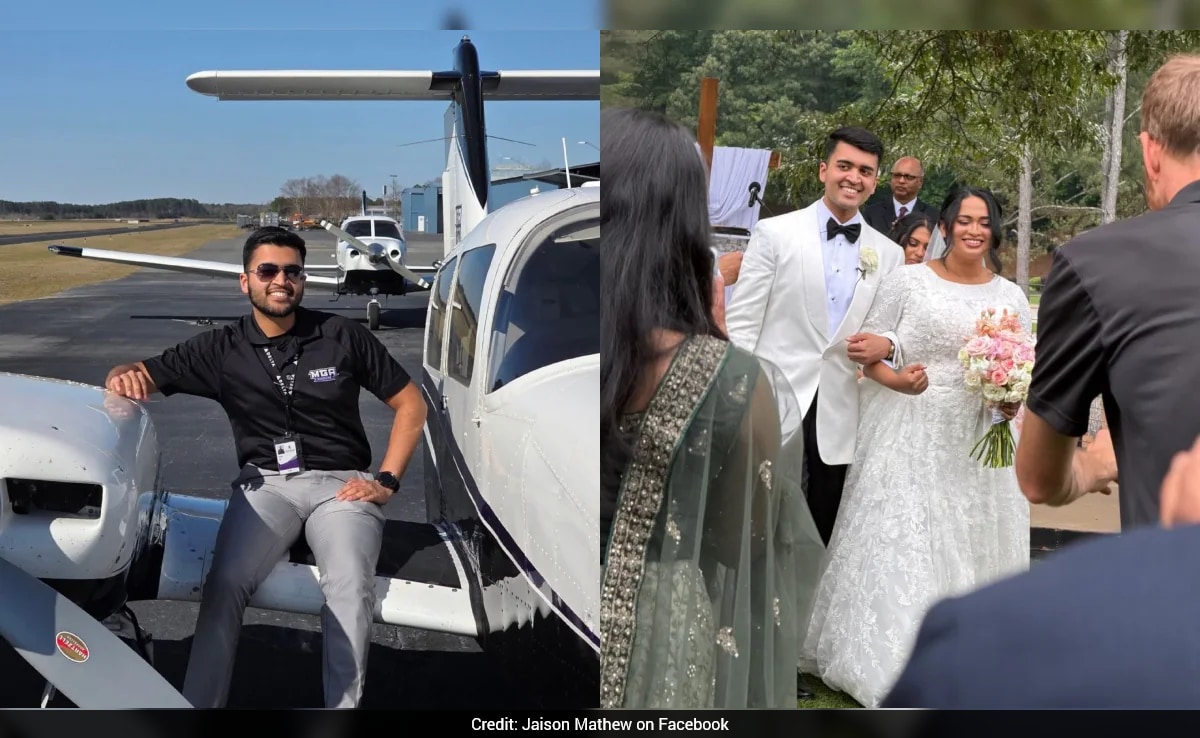
The media operates on a predictable, morbid formula. When a tragic helicopter or light aircraft crash occurs, mainstream outlets do not analyze the aerodynamics, the maintenance logs, or the systemic failure of private pilot training pipelines. Instead, they weaponize the victim's personal life for clicks.
We saw it again with the tragic coverage of an Indian-origin pilot who lost his life in a US helicopter crash just hours after his wedding. The headlines did not focus on the machine, the weather, or the critical decision-making window. They focused on the tuxedo and the vows.
This is not just lazy journalism. It is a dangerous distraction that actively undermines the critical conversation around general aviation safety. By transforming an engineering and human-factors tragedy into a tear-jerking melodrama, we completely miss the brutal, uncomfortable realities of private aviation.
The Romanticization of the Cockpit is Killing Pilots
Mainstream news coverage treats private aviation like a poetic endeavor where daring souls defy gravity. In reality, flying a light aircraft or a helicopter is an unforgiving exercise in risk management, physics, and strict procedural discipline.
When we view these incidents through a lens of tragic irony—"he died just hours after getting married"—we subconsciously treat the crash as an act of cruel fate. An act of God. A cosmic anomaly.
It rarely is.
According to data from the National Transportation Safety Board (NTSB), the vast majority of general aviation accidents are rooted in human factors.
- Spatial Disorientation: Losing track of the horizon in poor visibility.
- Aeronautical Decision Making (ADM): Pushing into deteriorating weather conditions because of external schedule pressure.
- Loss of Control (LOC): Aerodynamic stalls or mishandling the aircraft during critical phases of flight.
When a publication spends 800 words detailing a pilot’s wedding registry and two sentences mentioning that the National Transportation Safety Board is investigating, they hide the mechanics of survival from the public. They teach aspiring pilots to mourn the tragedy rather than study the telemetry. Over my years analyzing aerospace mechanics and safety protocols, I have seen this narrative cycle stall real, regulatory pressure for safer training standards.
The Unspoken Danger of Get-There-Isis
Let's address the elephant in the hangar that the mainstream media refuses to touch because it feels insensitive: the psychological state of a pilot during major life milestones.
In the aviation world, we call it "Get-there-itis."
It is a documented, psychological phenomenon where a pilot becomes so hyper-focused on reaching a destination—or sticking to a high-stakes schedule—that their ability to assess risk drops to zero.
Imagine a scenario where a pilot has just married the love of their life. The emotional high is astronomical. The cognitive load is immense. The pressure to get to the next venue, the honeymoon, or the family gathering is overwhelming. This is exactly when the checklist gets rushed. This is exactly when a pilot looks at a marginal weather report and says, "We can make it."
High Emotional State + External Schedule Pressure = Compromised Risk Assessment
Am I saying this specific pilot made a mistake? No. The NTSB investigation will reveal the mechanical and environmental facts in due time. But by completely ignoring the psychological context of high-stress life events in relation to pilot performance, the media misses a vital teaching moment.
We should be talking about the FAA’s I'M SAFE checklist, which every pilot is supposed to run before turning an ignition key:
- Illness
- Medication
- Stress
- Alcohol
- Fatigue
- Emotion
Emotion is on that list for a reason. Euphoria alters risk perception just as profoundly as grief. If we want to honor dead aviators, we need to stop writing obituaries that read like soap operas and start talking about the cold, hard psychology of command.
The Massive Disparity Between Commercial and General Aviation
The public looks at a helicopter crash and instinctively fears commercial air travel. This is a massive statistical error.
Commercial airlines operate in an entirely different safety ecosystem than private helicopters and light planes (General Aviation). Commercial aviation uses dual-pilot crews, rigorous recurrent simulator training every six months, and highly sophisticated dispatch teams. General aviation often relies on a single pilot, sometimes with minimal hours in a specific airframe, making high-stakes decisions completely alone.
| Aviation Segment | Oversight Level | Primary Accident Drivers | Risk Profile |
|---|---|---|---|
| Commercial (Part 121) | Extreme / Multi-Crew | Systemic / Rare Tech Failure | Ultra-Low |
| General Aviation (Part 91) | High / Single-Pilot | Human Factors / Weather | Significantly Higher |
The NTSB reports consistently show that the accident rate for General Aviation is exponentially higher than that of commercial airlines. Yet, the media treats every private crash like an unpredictable lightning strike rather than the predictable outcome of an inherently high-risk activity that requires flawless execution.
Stop Asking the Wrong Questions About Air Safety
Whenever a crash happens, the public asks: Who was on board? What were their dreams? Who is left behind?
These are the wrong questions. If you want to actually fix the systemic issues in private aviation, you must ask:
- What was the cloud ceiling and visibility at the time of departure?
- Did the pilot possess an active instrument rating for the specific meteorological conditions?
- What was the total time of the pilot in this specific make and model of aircraft?
- Was there a mechanical failure, and if so, did it stem from a known Airworthiness Directive (AD) that went unaddressed?
Dismantling the premise of the media's tragic narrative means admitting something uncomfortable: aviation doesn't care about your wedding day. The laws of aerodynamics do not bend for romance. A rotor blade or a wing profile responds only to physics, velocity, and angle of attack.
The Actionable Truth for Aspiring Pilots
If you fly, or if you ever plan to step foot in a private aircraft or helicopter, ignore the sensationalized news cycles. Do not let the media convince you that crashes are just random tragedies that happen to good people.
Safety is an active, aggressive choice.
- Isolate Your Flight Decisions: Never let your personal schedule dictate your go/no-go decision. If missing a meeting, a vacation, or a family dinner makes you uncomfortable, you have no business inside a cockpit that day.
- Enforce the Sterile Cockpit Rule: This isn't just for commercial liners. Keep your mind entirely clear of external life events when you are calculating weight, balance, and fuel reserves.
- Respect the Emotional Checklist: If you have experienced a massive life shift in the last 48 hours—whether it is a tragedy or a celebration—stay on the ground. Your brain is chemically compromised by adrenaline and cortisol.
The competitor's article wants you to cry over a broken dream. I want you to understand the mechanics of the machine and the fragility of human judgment so you don't become the next headline.
Stop reading the melodrama. Start reading the accident reports.