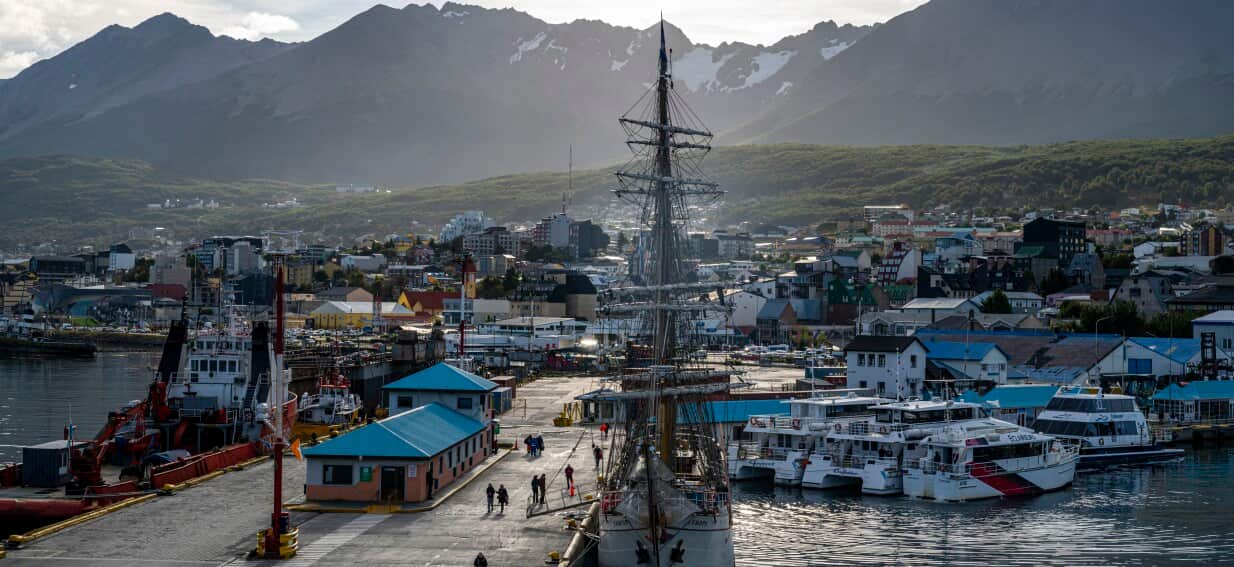
A tragic plunge from a Caribbean pier has exposed a lethal oversight in the booming cruise industry. When an elderly passenger lost control of her mobility scooter and fell into the water at a popular port of call, it wasn't just a freak accident. It was the predictable result of a massive disconnect between modern vessel accessibility and the aging, unregulated infrastructure of international ports. While cruise lines sell a dream of "barrier-free" travel to the fastest-growing demographic in tourism, the reality on the ground often involves steep inclines, narrow walkways, and a total absence of safety barriers that could prevent a simple mechanical or human error from turning fatal.
The cruise industry is currently navigating a silver tsunami. As the global population ages, the demand for accessible travel has skyrocketed, leading to more motorized mobility aids on ships than ever before. However, the legal protections that passengers enjoy while docked in Florida or New York vanish the moment the gangway touches a foreign pier. If you liked this post, you should read: this related article.
The Illusion of Universal Access
Modern mega-ships are marvels of engineering, designed to accommodate thousands of guests with varying levels of mobility. They feature wide corridors, automatic doors, and sophisticated elevator systems. This environment creates a profound sense of security for passengers who rely on power wheelchairs and mobility scooters. They feel capable. They feel mobile.
But this confidence is often misplaced. For another look on this story, see the recent update from AFAR.
The transition from ship to shore is a leap between two different worlds of safety standards. In many Caribbean, Mediterranean, and Southeast Asian ports, the piers were originally designed for cargo or smaller vessels. They have been retrofitted to handle thousands of tourists, but the upgrades are often cosmetic rather than structural. A passenger who has spent three days navigating the flat, carpeted surfaces of a luxury liner is suddenly thrust onto a sun-baked concrete pier that may have a five-degree tilt toward the ocean to facilitate drainage. For a heavy mobility scooter with a high center of gravity, that slight incline is a hazard.
The Physics of a Pier Tragedy
Mobility scooters are not cars. They lack the complex braking systems, roll cages, and stability controls that we take for granted in road vehicles. Most consumer-grade scooters operate on a "wig-wag" throttle system. You pull a lever to go, and you release it to stop.
The mechanics are deceptively simple. When a user panics, a common neurological response is to grip the controls tighter. In a car, this might mean slamming the brakes. On many scooter models, a panicked grip can lead to the lever being held in the full-throttle position. Within seconds, a three-hundred-pound machine, plus the weight of the rider, is hurtling toward the edge of a pier at five or six miles per hour.
Most piers do not have "bull rails"—the raised wooden or concrete edges designed to stop a wheel from rolling over the side. In the interest of maintaining a clean, aesthetic look for tourist photos, many ports opt for flush edges. It looks beautiful in a brochure. It is a death trap for someone who loses steering control for a fraction of a second.
Jurisdictional Shadows and Liability Shields
When a tragedy occurs on a foreign pier, the legal battleground is a minefield for the victims' families. Cruise lines typically operate under maritime law, which is notoriously restrictive regarding damages. More importantly, most cruise contracts contain clauses that distance the company from any liability for incidents occurring on shore.
The pier is usually owned by a local government or a private port authority. If a pier in a sovereign island nation lacks guardrails, the cruise line will argue it has no authority to install them. The port authority, meanwhile, may operate under local laws that offer little to no recourse for foreign tourists. This creates a "gray zone" where safety is nobody’s specific responsibility.
The business model of modern cruising relies on a high volume of "shore excursions." These are the lifeblood of the industry’s profit margins. Yet, the vetting process for the safety of the piers themselves is often opaque. Does the cruise line conduct a risk assessment for mobility-impaired guests at every port? Officially, they recommend guests exercise caution. Practically, they continue to funnel thousands of vulnerable people into environments that were never designed for motorized traffic.
The Speed of Innovation vs. The Slowness of Infrastructure
Technology in the mobility sector is moving faster than the concrete can be poured. We now see "all-terrain" scooters and high-speed power chairs that can reach speeds of ten miles per hour. These devices are being brought onto ships in record numbers.
The infrastructure is failing to keep pace.
A standard pier width hasn't changed much in decades, but the traffic on those piers has become more complex. You have pedestrians, cyclists, golf carts, and heavy mobility scooters all competing for the same narrow strip of land. When you add the factor of "port fatigue"—where elderly travelers are tired, potentially dehydrated from the tropical sun, and navigating crowds—the margin for error disappears.
Necessary Engineering Changes for Port Safety
- Mandatory Bull Rails: Every pier servicing passenger vessels must have a continuous raised edge of at least six inches to prevent wheels from slipping overboard.
- Friction-Coated Surfaces: Concrete becomes slick when sprayed with sea salt or rain. High-traction coatings should be standard on all primary pedestrian paths.
- Buffer Zones: There must be a clearly marked "no-go" zone at the edge of the pier, separated by a physical barrier like a heavy-duty railing that can withstand the impact of a 500-pound moving object.
The Myth of Personal Responsibility
There is a tendency in the industry to blame the victim. "She should have been more careful," or "He didn't know how to drive the device." This narrative ignores the fundamental principles of safe design. Humans are fallible. They make mistakes. They have medical episodes. They panic.
A safe environment is one that accounts for human error. If a child trips on a pier and falls into the ocean because there was no railing, we call it a tragedy and demand better infrastructure. When an elderly person in a scooter does the same, it is often dismissed as a lack of operator skill. This is a form of institutional ageism that allows port authorities to save money by skipping essential safety features.
The cruise lines hold the power in this relationship. They are the customers of the ports. If a major cruise line refused to dock at a pier that lacked basic safety barriers for the disabled, that pier would be upgraded within the month. The fact that they don't demand these changes suggests that the cost of a rare wrongful death lawsuit is still lower than the cost of exerting pressure on their port partners.
Beyond the Gangway
Travelers need to understand that the Americans with Disabilities Act (ADA) has no teeth once the ship enters international waters or docks in a foreign country. While many nations have their own disability laws, enforcement is spotty and standards vary wildly.
The industry needs a universal "Port Safety Rating" for accessibility. Currently, a "handicapped-accessible" port might just mean there are no stairs. It says nothing about the width of the pier, the presence of railings, or the slope of the walkways. Without a standardized rating system, passengers are essentially flying blind every time they leave the ship.
Families are now being forced to do their own "reconnaissance" via satellite imagery and travel forums before booking a cruise. This is an absurd burden to place on a consumer paying thousands of dollars for a vacation.
The tragedy on the pier is a warning shot. As the population of cruise passengers continues to age, these incidents will become more frequent. The industry can no longer hide behind the excuse that the pier is "someone else's property." If you sell a ticket to a passenger with limited mobility, you have a moral, and should have a legal, obligation to ensure the destination is as safe as the ship.
The solution isn't to restrict the movement of elderly travelers or to ban scooters. It is to acknowledge that a concrete slab over the ocean is a dangerous place that requires the same safety engineering we expect from a highway or a bridge. Until the industry demands physical barriers on the edges of every pier, the "paradise" they promise will remain a place of extreme risk for their most loyal customers.
Demand for accountability must come from the top. Every time a cruise line executive signs a contract with a port, they are endorsing the safety standards of that facility. If those standards don't include protecting a grandmother on a scooter from a twenty-foot drop into the sea, the contract shouldn't be signed. Safety is not a luxury upgrade; it is the bare minimum required for a civilized industry.
The next time you see a sleek, multi-billion dollar ship docked at a crumbling, rail-less pier, ask yourself why the protection stops at the end of the gangway.