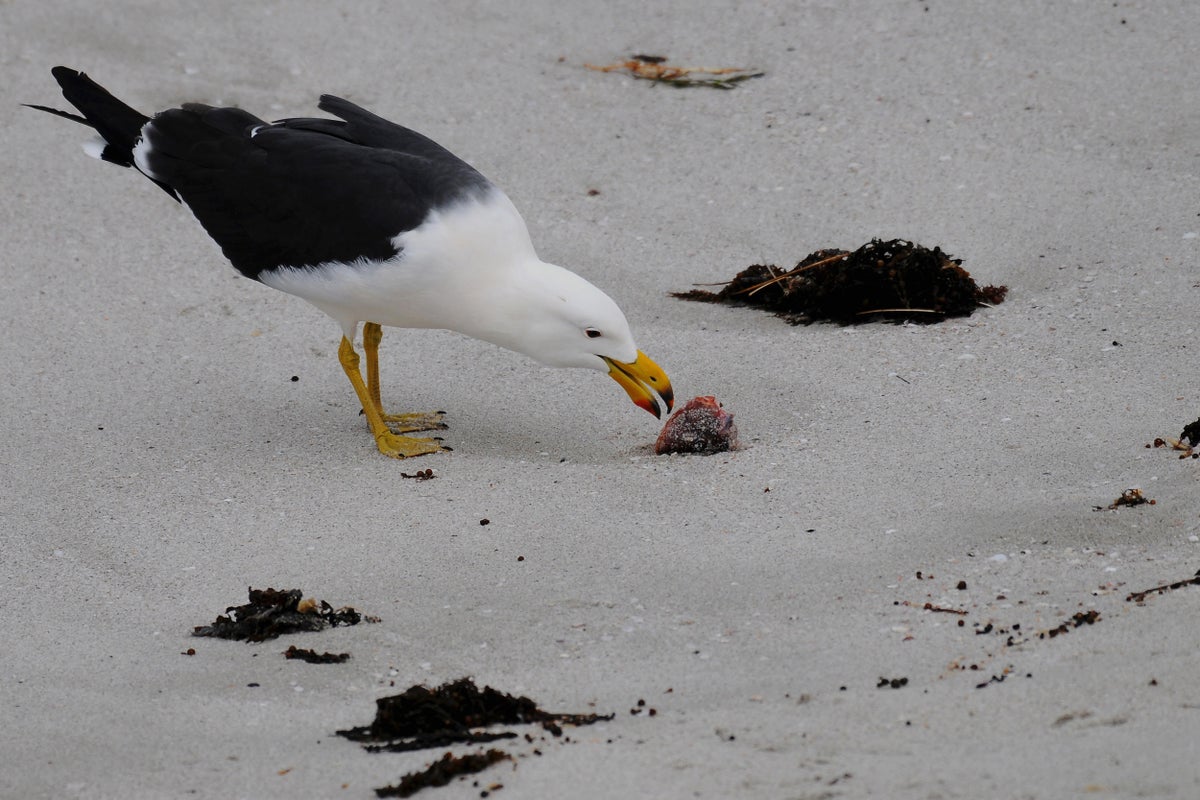
The wind off the Southern Ocean doesn’t just blow; it cuts. On a jagged stretch of the Australian coastline, the air usually tastes of salt, kelp, and the rowdy, chaotic squawk of thousands of seabirds. It is a place of brutal, magnificent life. But a few weeks ago, the rhythm broke. A single bird—a black-browed albatross, built for riding the fiercest gales on Earth—lay crumpled on the rocks. Its wings, which could span eight feet in the air, were tucked awkwardly beneath it.
It was dead.
To the casual observer, a dead bird on a beach is a non-event. Nature is a violent machine. But to the biologists who monitor these shores, that silent heap of feathers was a siren screaming in the dark. Testing later confirmed what everyone in the biosecurity community had been dreading. The bird was positive for High Pathogenicity Avian Influenza (HPAI) H5N1.
This isn't just a headline about wildlife conservation. It is a profound shift in the invisible geography of global disease, and it lands right on our doorstep.
The Long Journey South
For years, Australia sat in a fragile, enviable bubble. While H5N1 ripped through Europe, Asia, the Americas, and even reached the icy fringes of Antarctica, the island continent remained an ecological fortress. The sheer distance of the oceans acted as a natural moat.
We watched from afar as millions of birds were culled in poultry farms across the northern hemisphere. We read about the catastrophic losses of elephant seals in Argentina, where the virus jumped from birds to mammals with terrifying ease. It felt like a distant tragedy, the kind of news you read on your phone before swiping away to check the weather.
Then came the albatross.
These creatures are the ultimate nomads. They spend most of their lives at sea, crossing thousands of miles of open ocean without ever touching land. They trace the winds around the bottom of the globe. Because they travel so far and mingle with different populations on remote islands, they are the perfect, tragic vectors. The virus didn't fly over the ocean moat; it rode in on the wings of a wanderer.
Consider the sheer scale of the mechanism at play here. When a virus enters an entirely naive ecosystem—a place where the local wildlife has zero evolutionary memory of the threat—the results are rarely subtle. It is like dropping a match into a forest that hasn't seen rain in a decade.
The Human Faces on the Shoreline
To understand what happens next, look away from the bird and look at the people who found it.
Imagine a field researcher. Let's call her Sarah. She has spent fifteen years walking these specific beaches, counting nests, banding chicks, and enduring the freezing spray of the southern coast. She knows the individual patterns of the colonies. She knows the precise week the migratory species return.
For fifteen years, her job was about preservation and observation. Now, her job has transformed into something akin to a wartime sentry. When Sarah approaches a dead bird now, she isn't just holding a notebook. She is wearing a respirator, thick nitrile gloves, and a protective suit that crinkles loudly in the sea wind.
The psychological toll on the people on the front lines of this ecological shift is immense. There is a specific, quiet horror in watching the wild places you love turn into a biohazard zone. Sarah used to handle these birds with bare hands, feeling the heat of their bodies and the incredible strength of their muscles. Now, they are treated like toxic waste.
The stakes extend far beyond the researchers. Just a few miles inland from these coastal roosts are the farms.
Australia's agricultural sector is a massive engine, driven by families who have worked the land for generations. For a poultry farmer, the confirmation of H5N1 in a wild seabird is the start of a sleepless season. The virus doesn't care about property lines. A single infected sparrow dropping into a chicken coop, or a breeze carrying contaminated dust from a nearby wetland, can wipe out an entire livelihood overnight.
If the virus breaches a commercial facility, the policy is immediate, total depopulation. Tens of thousands of birds destroyed in a matter of days. The financial ruin is devastating; the emotional trauma of executing your own livestock is something few people talk about, but it lingers for years.
The Viral Engine
Why is this specific strain causing such panic among epidemiologists?
Viruses are essentially tiny packets of genetic instructions looking for a copy machine. Usually, bird flu stays in birds. It adapts to their respiratory and digestive tracts. But H5N1 is a chameleon. Over the past few years, it has shown an unprecedented ability to spill over into mammals.
Foxes, otters, seals, polar bears, and cows have all contracted the virus globally. Every time the virus enters a mammal, it gets a free lesson in mammalian anatomy. It mutters to itself, mutates, and tries to figure out how to bind more effectively to cells that look a lot like ours.
Let's be clear about the uncertainty here. Science cannot predict exactly if or when this virus will make the final, dangerous leap into sustained human-to-human transmission. Right now, humans who catch it almost always get it from direct, intense contact with infected animals. It is rare. But the mortality rate in those rare human cases is agonizingly high, hovering around fifty percent historically.
That is the number that keeps public health officials awake at 3:00 AM. They aren't worried about what the virus is doing today. They are terrified of what it might learn to do tomorrow.
The Illusion of Separation
We live our lives in concrete boxes, staring at glass screens, operating under the grand illusion that human civilization is somehow separate from the natural world. We talk about "the environment" as if it is a park we visit on the weekend.
The albatross on the beach shatters that illusion.
Our health is inextricably linked to the health of the wild. When the ecosystems around us begin to fracture under the weight of a panzootic—a global animal pandemic—the shockwaves travel up the food chain. Food prices spike as poultry supplies dwindle. Biosecurity protocols tighten at borders, slowing down trade and travel. The funding required to monitor, test, and contain the spread is pulled from other public resources.
But the most profound loss is one we can't quantify on a spreadsheet. It is the quiet draining of the world's wildness.
Imagine the southern coast without the chaos of the colonies. Imagine a spring where the skies remain empty because the migratory flocks met a quiet, viral end on some remote island months before.
The response from authorities has been swift, but there is an underlying sense of helplessness. You can quarantine a farm. You can lock down a city. You cannot quarantine the wind. You cannot tell a wild tern to stop flying across the ocean.
The Watchers in the Dark
The strategy now relies entirely on early detection. It is a game of margins. If we know where the virus is hitting, we can implement strict biosecurity zones around agricultural hubs. We can warn the public to keep their dogs on leashes on beaches, preventing the virus from jumping to domestic pets. We can accelerate the development of targeted vaccines for livestock.
But this requires a massive, coordinated effort from people who are already exhausted. It requires citizens to become eyes on the ground, reporting unusual wildlife deaths instead of walking past them.
The black-browed albatross found on that cold Australian beach was a warning shot. The fortress walls have cleared, and the moat has been crossed. The virus is no longer a distant rumor from the northern hemisphere or a horror story from the Antarctic ice shelves. It is here, breathing the same southern air we do.
The true test of our systems, our resilience, and our connection to the world around us has just begun.
A lone researcher walks the shoreline as the sun dips below the horizon, her eyes scanning the high-tide line for the shape of a wing that isn't moving.