Federal Judge Ana Reyes isn't trying to play golf architect, and she definitely isn't auditioning for a Dr. Seuss reboot. She said as much herself in court filings. Yet here we are in late 2026, watching a fierce legal battle over the 106-year-old East Potomac Golf Links in Washington, D.C., stall the Trump administration's ambitious renovation plans at every turn.
If you've only caught the headlines, it's easy to think this fight is just about saving some old trees. It's not. The judge's repeated orders blocking tree removal and halting the course's closure boil down to something much simpler—and far more serious for the White House. Government lawyers told the court one thing under oath, while President Donald Trump posted the exact opposite on social media.
How a Holiday Weekend Chainsaw Spree Triggered the Court's Block
For months, Judge Reyes actually stayed out of the way. Preservation groups, including the D.C. Preservation League and the Cultural Landscape Foundation, alongside local golfers, had been fighting the overhaul since February. They wanted the court to step in early, and Reyes repeatedly said no. She explicitly wrote that she had no desire to referee "Lorax v. Once-ler redux" and hoped both sides would follow standard federal review channels.
Then came Columbus Day weekend in October.
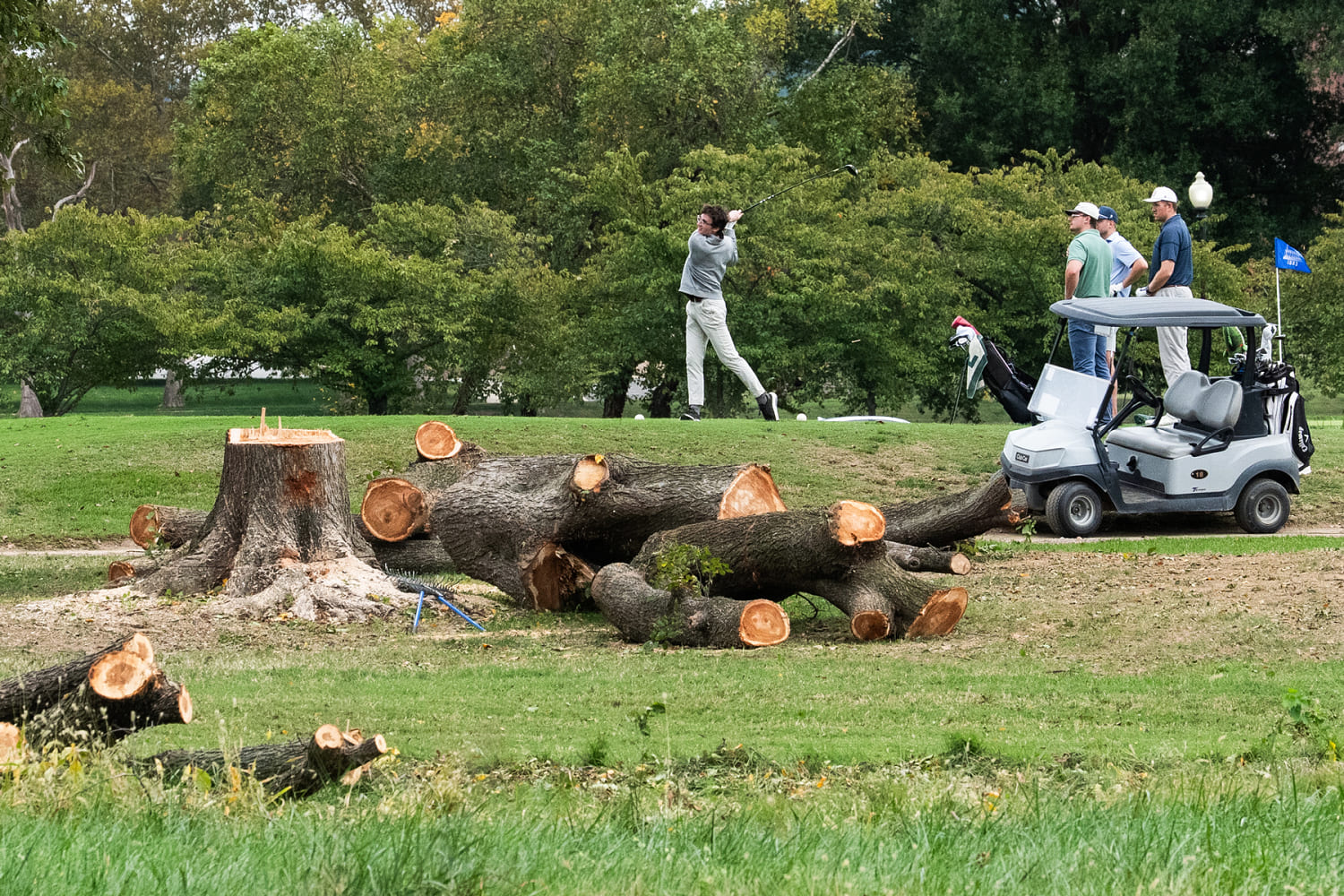
Without giving notice to the plaintiffs or the court, National Park Service crews moved into East Potomac Park and started cutting down trees. Not just a few dead branches. Federal environmental paperwork signed on October 9 by Kevin Griess, superintendent of National Mall and Memorial Parks, estimated that 169 trees would come down in the first work zone. By the time crews stopped, roughly 430 trees were on the ground.
That sudden weekend clearing shattered whatever trust existed between the bench and the Department of Justice. Reyes slapped down an immediate temporary halt, then extended the block into a preliminary injunction barring the administration from removing or damaging any more trees. Under her order, federal officials must give at least 10 days of written notice before making any irreversible changes to the property's forms or features while the lawsuit plays out.
The Credibility Gap Between Truth Social and the Courtroom
Honestly, the tree count alone might have been explained away as an aggressive interpretation of a 2019 cultural landscape report, which is what the National Park Service tried to argue. What really sank the government's courtroom strategy was the president's own keyboard.
In mid-October, Justice Department attorneys assured the court that there were no immediate plans to shut down the course or launch major redevelopment without finishing mandatory reviews. Days later, on October 18, Trump announced on social media that East Potomac Golf Links would close for 15 months starting November 15 for a complete redevelopment. The very next day, he posted that work would start immediately.
Put yourself in a federal judge's shoes. Senior DOJ lawyers are standing in front of you claiming a project isn't happening yet, while the sitting President of the United States is publicly announcing the exact closure date and construction timeline.
Reyes didn't hide her disbelief. She wrote that the case forced her to reconcile sworn testimony from federal officials and arguments from DOJ lawyers with flatly contradictory statements from the president. When government attorneys essentially asked her to ignore Trump's posts, she pushed back hard. By November 14, she issued another block preventing the administration from closing the historic public course on its November 15 target date.
Why East Potomac Park Isn't Just Another Patch of Grass
To understand why preservationists and local D.C. officials are digging in so hard, you have to look at what East Potomac Golf Links actually is. Built between 1917 and 1934 on Hains Point, the facility isn't an abandoned lot. It sits on the National Register of Historic Places.
Trump has repeatedly called the course "decrepit," "terrible," and "very unsafe," pitching a single 18-hole championship redesign capable of hosting massive tournaments like the U.S. Open or the Ryder Cup. That sounds flashy on paper. In practice, tearing up a historic municipal layout to build a championship tournament venue fundamentally alters how everyday residents use public parkland.
Federal Laws the Administration Tried to Sidestep
You can't just bulldoze a National Register property on federal parkland because you want a nicer fairway. Federal agencies have to clear specific legal hurdles first, and Reyes noted in her rulings that the government likely violated at least two major statutes in its rush to hit arbitrary deadlines:
- The National Environmental Policy Act (NEPA): Before federal agencies alter public lands or clear hundreds of mature trees, they have to assess environmental impacts properly rather than stretching narrow "categorical exclusions" past their breaking point.
- The Administrative Procedure Act (APA): Agencies can't act arbitrarily or bypass required public and interagency processes just because a political deadline is looming.
- Section 106 of the National Historic Preservation Act: Because the course is a historic landmark, the National Park Service is legally required to consult with D.C.'s Historic Preservation Office. Back in August, the Park Service asked the District to fast-track and combine those historic review steps. D.C. officials flatly refused, pointing out that unconsulted tree clearing directly triggers Section 106 obligations.
A Misconduct Probe Changes the Stakes Completely
Most administrative lawsuits over land use end with a remand order telling an agency to redo its paperwork. This case has taken a much darker turn for the officials involved.
Because of the discrepancies between what happened on the ground at East Potomac Park and what government lawyers told the bench, Judge Reyes opened a formal misconduct inquiry. She announced plans to appoint Jessie Liu, a former U.S. attorney for the District of Columbia, as a special master to investigate whether officials at the Interior Department, the National Park Service, and the Justice Department intentionally misled the court or violated ethics rules.
Specifically, that investigation looks at whether government attorneys pressured National Park Service acting director Jessica Bowron and park superintendent Kevin Griess to include or leave out key facts in their sworn declarations. Unsurprisingly, the Justice Department is fighting the special master appointment tooth and nail, arguing in mid-November filings that an inquiry is unnecessary. They even tried to get Reyes removed from the case in October over alleged bias, a motion she denied on legal grounds.
What Happens Next in the East Potomac Legal Battle
If you're tracking where this goes from here, watch three specific fronts rather than the daily political back-and-forth on social media.
First, the administration has already vowed to appeal Reyes's injunctions to the D.C. Circuit. Appellate judges will look closely at whether the district court overstepped its authority in freezing park operations, though the paper trail of 430 felled trees versus a 169-tree estimate gives plaintiffs plenty of ammunition.
Second, pay attention to the National Capital Planning Commission (NCPC) meeting scheduled for December 3, alongside ongoing reviews by the Commission of Fine Arts. Even if an appeals court eventually lifts parts of the judicial block, the National Park Service still has to survive formal federal planning and historic preservation reviews before pouring concrete or reshaping fairways.
Third, watch what Jessie Liu uncovers if the ethics probe moves forward. Courts can forgive sloppy administrative paperwork, and they routinely let agencies fix procedural mistakes. They rarely forgive lawyers who get caught shading the truth under oath. Until the administration aligns its legal filings with its actual construction plans—and completes the statutory reviews D.C. preservationists are demanding—East Potomac Golf Links stays open to the public, and the chainsaws stay parked.