Steel has a smell.
If you grew up anywhere near the Monongahela River or the southern shore of Lake Michigan, you know it before you even see the stacks. It is a thick, metallic tang—part wet iron, part scorched coal, part hot grease—that clings to the back of your throat and settles into the fibers of your winter coat. For forty years, the story of American manufacturing has been told as an obituary written in that exact scent. Factories shuttered. Towns hollowed out. The assumption hardened into dogma: heavy industry was dead on American soil, and anyone claiming otherwise was selling nostalgia.
Then came the announcement out of Washington and Des Moines.
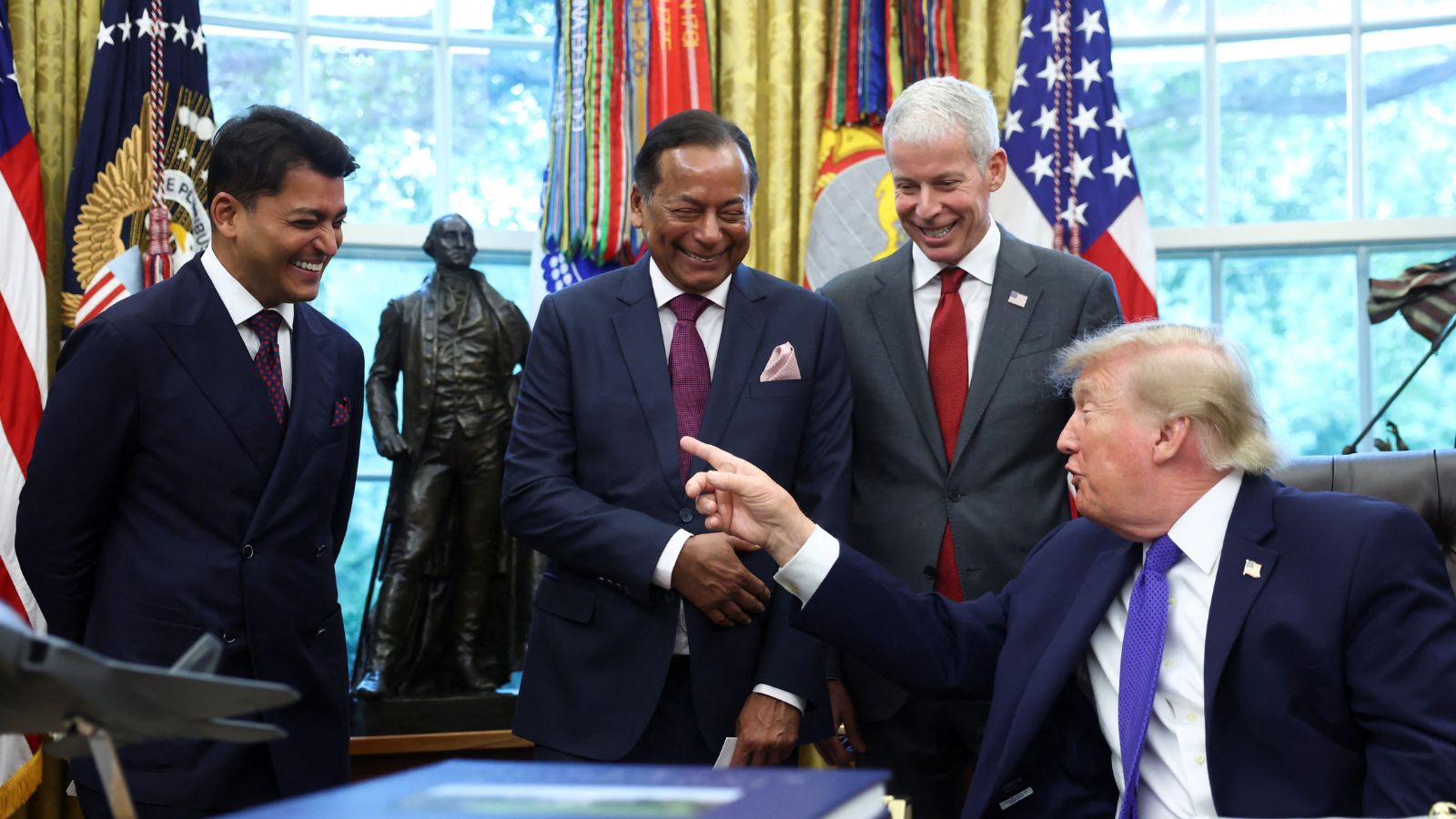
According to official statements from the White House and executives at the Indian multinational conglomerate Essar Group, President Donald Trump announced a commitment from Essar to construct a $15 billion green steel manufacturing facility in Iowa, with initial production slated to begin by 2030.
On paper, it reads like standard political and corporate boilerplate. Billion-dollar pledges happen every news cycle. Press releases get drafted, podiums get draped in flags, and four years later, quietly, plans get scaled back or shelved entirely. To understand whether this announcement represents a genuine industrial turning point or just another mirage on the prairie, you have to look past the podium and examine the soil, the metallurgy, and the quiet desperation of the American heartland.
The Anatomy of a Fifteen-Billion-Dollar Bet
Numbers at the scale of fifteen billion dollars lose their meaning almost immediately. Our brains simply aren't wired to process capital on that level.
Think of it this way. Fifteen billion dollars is roughly the entire annual gross domestic product of a small nation. It is enough to build six state-of-the-art NFL stadiums from scratch, or fund the entire municipal budget of a major American city for years. When Essar Group—a Mumbai-based giant with deep roots in energy, infrastructure, and metals—commits that kind of capital to a single geographic footprint in Iowa, they are not testing the waters. They are betting the house.
To make sense of why an Indian conglomerate would plant its flag in the middle of the American corn belt, consider a hypothetical character. Let's call him Caleb.
Caleb is thirty-two, lives outside Cedar Rapids, and spent the last decade working maintenance at a grain processing facility. His grandfather poured iron in Illinois until the mill closed in 1984. His father spent thirty years driving a semi-truck hauling imported coils from Great Lakes ports to Midwest stamping plants. Caleb knows how to fix hydraulic presses, read schematic diagrams, and weld in tight spaces, yet he has spent his entire adult life watching the highest-paying industrial jobs migrate either to the coasts or overseas.
For people like Caleb, a $15 billion steel complex isn't an abstract macroeconomic indicator. It is the difference between watching his kids pack U-Hauls for Chicago or Denver and watching them buy houses ten miles down the road.
Yet, skepticism is healthy here. Anyone who remembers the splashy Foxconn announcement in Wisconsin during Trump's first term—a $10 billion electronics manufacturing promise that famously shrank to a fraction of its original size—knows that ribbon-cuttings are easy and steel mills are brutally hard. According to industrial analysts and regional economic development records, megaprojects of this magnitude face a gauntlet of permitting battles, labor shortages, and supply chain bottlenecks before a single ton of metal ever rolls off the line.
So why Iowa? And why now?
Why Corn Country Wants Heavy Metal
At first glance, putting a massive steelworks in Iowa sounds like putting a shipyard in Nevada. Iowa is famous for hogs, soybeans, and wind turbines—not iron ore. The Mesabi Range, where America pulls most of its domestic iron ore out of the earth, sits hundreds of miles to the north in Minnesota.
Look closer at the map, though, and the logic snaps into focus.
First, there is the river. The Mississippi River forms Iowa's entire eastern border, acting as a liquid superhighway capable of moving millions of tons of raw material—iron ore pellets from Minnesota, scrap metal from the Midwest, finished coils bound for Gulf Coast ports—at a fraction of the cost of rail or truck freight.
Second, there is the wind.
Modern steelmaking is undergoing its biggest technological shift since Henry Bessemer figured out how to blow air through molten pig iron in the 1850s. Traditional steelmaking relies on coking coal burned in towering blast furnaces—a process so carbon-intensive that the global steel industry accounts for roughly seven to eight percent of all human-caused greenhouse gas emissions.
Essar’s proposed Iowa facility, according to company disclosures and energy sector briefings, is designed around "green steel" architecture. Instead of coal-fired blast furnaces, green steel relies on Direct Reduced Iron (DRI) technology powered by natural gas and, eventually, green hydrogen, paired with Electric Arc Furnaces (EAF).
To run an electric arc furnace at industrial scale without bankrupting yourself, you need massive amounts of cheap, reliable electricity. Iowa happens to generate over sixty percent of its electricity from wind—the highest share in the United States. When the wind howls across the flat plains of northern Iowa at two in the morning, utilities often have more power than the local grid can absorb. A massive steel plant acts like an industrial sponge, soaking up cheap renewable megawatts and turning them into structural beams and automotive sheet metal.
The Invisible War Over Tariffs and Supply Chains
You cannot separate this announcement from the broader geopolitical brawl happening over global trade.
For decades, the prevailing economic orthodoxy in Washington held that it didn't matter where steel was made, so long as it was cheap. If Chinese state-subsidized mills flooded the global market and drove prices down, American automakers and construction firms benefited from cheaper raw materials. Who cared if domestic mills went bankrupt?
The COVID-19 pandemic and subsequent geopolitical shocks shattered that consensus. Suddenly, supply chains stretched across ten thousand miles of ocean didn't look efficient; they looked fragile. When a single blocked canal or a diplomatic flare-up in the South China Sea can halt production lines in Detroit and Davenport, domestic capacity stops being a luxury and becomes a matter of national security.
President Trump’s trade doctrine—centered aggressively on tariffs against foreign steel imports and incentives for domestic capital expenditure—was explicitly built to force foreign producers into a corner: either pay steep duties at the border, or build your factories inside the United States.
Essar’s decision is a textbook response to that pressure, combined with the lucrative federal subsidies for clean energy and domestic manufacturing embedded in recent U.S. industrial policy. By building in Iowa, Essar bypasses tariff walls entirely, gains direct access to North American automotive and heavy machinery manufacturers like John Deere and Caterpillar, and positions itself inside the most protected, lucrative consumer market on earth.
Critics, however, point out the uncomfortable truth beneath the celebratory headlines. Economists across the political spectrum have long warned that while tariffs protect domestic steelmakers and encourage foreign direct investment like Essar's, they also raise baseline steel prices for downstream American manufacturers. Every tractor built in Waterloo and every pickup truck assembled in Michigan costs more when domestic steel prices sit artificially above global averages. It is a deliberate trade-off: higher costs for consumers and downstream factories in exchange for thousands of high-wage industrial jobs and sovereign supply chain security.
What Four Years Actually Looks Like on the Ground
The timeline states that production will begin by 2030. Four years sounds like an eternity in politics, where attention spans barely survive a weekend. In heavy industrial construction, four years is a sprint.
To appreciate the sheer physical violence required to turn an Iowa cornfield into an integrated steel complex by 2030, consider what has to happen before the first furnace sparks to life.
First comes the dirt. Crews will have to move millions of cubic yards of topsoil, grading land flat enough to support equipment weighing thousands of tons. Beneath that soil, engineers must drive thousands of steel pilings deep into the bedrock, pouring hundreds of thousands of cubic yards of reinforced concrete just to keep the vibration of the rolling mills from shaking the facility apart.
Then comes the grid. You cannot plug a steel mill into a standard neighborhood substation. Utility companies will have to construct dedicated high-voltage transmission lines, massive transformers, and water-cooling closed-loop systems capable of circulating millions of gallons of water without poisoning local aquifers.
And finally, there is the human bottleneck.
Let's go back to Caleb, our hypothetical maintenance technician near Cedar Rapids. Even if Essar raises every dime of the $15 billion and clears every environmental review on schedule, who is going to build the plant? And who is going to run it?
The United States is currently facing a severe, structural shortage of skilled tradespeople—pipefitters, industrial electricians, millwrights, and high-voltage technicians. Building a facility of this scale requires a peak construction workforce of several thousand specialized laborers living in temporary housing, working brutal shifts through freezing Iowa winters and humid summers. Once the plant opens, operating modern automated furnaces requires a workforce that looks less like the soot-stained laborers of 1950 and more like aerospace technicians—workers comfortable reading digital telemetry, programming robotics, and managing chemical reduction processes.
If local community colleges, unions, and Essar don't start training that workforce right now, the 2030 deadline won't just slip; it will collide headfirst with reality.
The Gamble on the Prairie
I have walked through abandoned steel mills in Pennsylvania where trees grow up through the cracked concrete floors of the rolling sheds, and the silence feels heavy enough to crush your chest. When a mill dies, it doesn't just take jobs with it. It takes the tax base that funds the high school band, the regulars who keep the local diner open at five in the morning, and the quiet pride of people who make the physical bones of the modern world.
That memory is why announcements like the $15 billion Essar commitment carry such an emotional charge. They promise resurrection. They suggest that the decline of the American industrial interior wasn't an irreversible law of nature, just a series of policy choices that can be unmade.
Yet hope is not a construction schedule.
Between a presidential podium in 2026 and molten steel pouring in Iowa in 2030 lies a brutal gauntlet of capital markets, interest rates, environmental permits, global commodity swings, and sheer engineering complexity. Billion-dollar promises are cheap until the concrete trucks roll onto the mud.
Somewhere in eastern Iowa right now, a farmer is looking out over a flat stretch of black dirt—land that has grown nothing but corn and soybeans since the prairie sod was first broken a hundred and fifty years ago. Within forty-eight months, if the money holds and the steel arrives, that horizon will be jagged with cranes, cooling towers, and high-voltage lines. The smell of wet earth and fertilizer will give way to ozone, hot grease, and scorched iron. And the heartland will find out whether its future can be forged all over again.