The hospitalization of Rudy Giuliani in critical condition marks a grim milestone for a man who once held the title of "America’s Mayor." At 81, the former prosecutor and New York City leader faces a health emergency that arrives during the most turbulent period of his long public life. Reports indicate that Giuliani was admitted to a medical facility following a sharp decline in his physical stability, a situation exacerbated by years of high-profile legal battles and mounting financial ruin. This isn't just a medical update; it is the potential closing chapter of a legacy that shifted from national hero to a symbol of political polarization and personal collapse.
The Physical Toll of Public Defeat
Politics is a blood sport, but the law is a slow grind. For Giuliani, the last five years have been a relentless march through courtrooms, deposition rooms, and bankruptcy filings. Medical professionals often cite chronic stress as a primary catalyst for systemic health failure in the elderly. When you are 81, the body no longer has the luxury of absorbing the shock of $148 million defamation judgments or the threat of disbarment. For an alternative perspective, read: this related article.
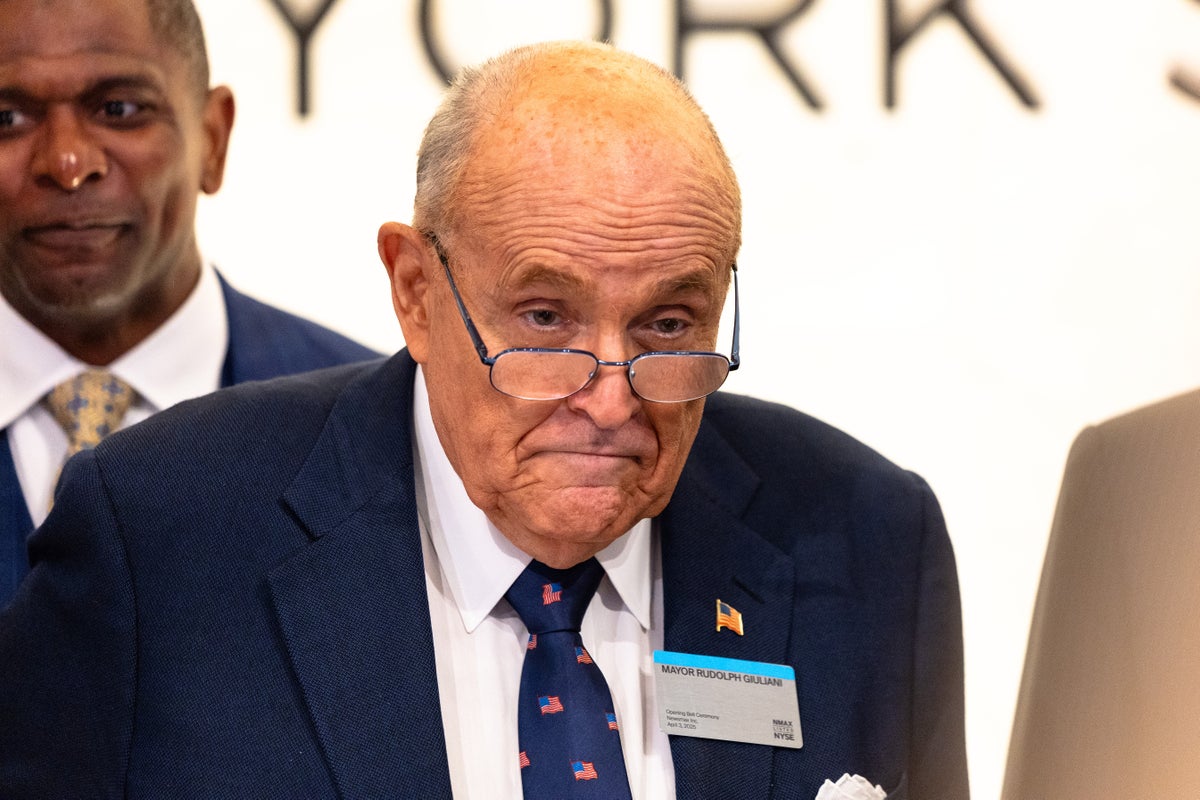
Giuliani’s recent appearances had already suggested a man under immense strain. He looked frail. His movements were deliberate and stiff. The sharp, aggressive posture he maintained while taking down the mob in the 1980s had been replaced by a visible, shaky exhaustion. This hospitalization is the physical manifestation of a decade spent in the crosshairs of federal investigators and the court of public opinion. The human heart can only withstand so much pressure before the valves give way.
The Collapse of the Giuliani Brand
To understand why this medical crisis feels so heavy, you have to look at the height from which he fell. In 2001, Giuliani was the personification of American resilience. He walked through the dust of the Twin Towers while others were still hiding. Today, that image has been paved over by the spectacle of the Four Seasons Total Landscaping press conference and the infamous "hair dye" incident during a 2020 post-election briefing. Related reporting on this matter has been published by NBC News.
The transition from a serious legal mind to a figure of late-night parody took a visible toll on his psyche. Sources close to the former mayor have often whispered about his isolation. Wealthy friends drifted away. The inner circle shrank to a handful of loyalists who remained even as his bank accounts were frozen. Isolation is a silent killer in geriatrics, often leading to a lack of proper nutrition, hydration, and medical oversight until a crisis becomes unavoidable.
A Legal Maze Without an Exit
Giuliani’s health crisis complicates an already tangled web of litigation. He is currently embroiled in multiple legal battles, ranging from election interference cases in Georgia and Arizona to massive civil lawsuits. His bankruptcy filing was meant to be a shield, but it has functioned more like a cage, stripping him of his assets and forcing him to account for every dollar spent on coffee or dry cleaning.
The courts generally do not pause for illness unless it is incapacitating. If Giuliani remains in critical condition, his legal teams will likely file for stays, citing his inability to participate in his own defense. This creates a legal limbo. For the plaintiffs seeking restitution—most notably the Georgia election workers whose lives were upended by his rhetoric—this delay is another hurdle in a long race for justice. For Giuliani, the hospital bed may be the only place where the process servers cannot reach him.
The Financial Skeleton
The sheer scale of Giuliani's debt is staggering. It is not just the defamation awards. It is the mounting legal fees from firms that have represented him over the last decade. Many of these firms have sued him for non-payment. When a person’s entire life becomes a series of liabilities, the motivation to maintain physical health often vanishes.
The narrative of the "fallen titan" is a common trope in New York history, but Giuliani’s version is uniquely visceral. He wasn't just a businessman who went bust; he was the man who defined law and order. Seeing the chief architect of the RICO prosecutions against the Mafia end up as a defendant in a RICO case himself is a narrative irony that few could survive mentally.
The Echoes of 9/11 Resilience
There is a segment of the population that still views Giuliani through the lens of September 11. For them, his current condition is a tragedy of a hero who stayed on the stage too long. They remember the man who calmed a panicked city, not the man who shouted into microphones at rallies. This duality is what makes his current hospitalization a matter of national interest.
New York City, the town he once ruled with an iron fist, has a complicated relationship with its former king. In the hallways of City Hall, the stories of his "Broken Windows" policing still spark debate. While he reduced crime, he also alienated vast swaths of the minority community. His current vulnerability reminds everyone that even the most polarizing figures are eventually leveled by time and biology.
The Fragility of the Elder Statesman
We are currently watching a generation of political leaders reach their natural limits. Whether it is in the halls of Congress or the hospital wards of Manhattan, the "Old Guard" is fading. Giuliani’s predicament highlights the lack of a graceful exit strategy for those who tie their entire identity to power. Once the power is gone, the void is filled by litigation and illness.
The medical team treating Giuliani is likely dealing with a combination of age-related issues exacerbated by the lack of a stable support system. In your eighties, a simple infection or a minor cardiac event can spiral because the body's reserves are depleted. When those reserves have been burned through by years of five-alarm legal fires, the prognosis is rarely optimistic.
The Media Spectacle and the Reality
The news cycle around this hospitalization has been predictably chaotic. Social media is divided between those offering prayers and those viewing his condition as a form of karmic retribution. This binary reaction ignores the reality of a human life in its twilight. Regardless of your politics, the sight of a man who once commanded the world’s attention fighting for his life in a sterile room is a sobering reminder of the temporary nature of influence.
The cameras will stay outside the hospital. The pundits will continue to dissect his choices. But inside that room, there is only a 81-year-old man dealing with the consequences of a life lived at maximum volume.
The Legal Ramifications of Incapacity
If the former mayor is declared medically unfit to stand trial or participate in proceedings, it could trigger a series of "Guardian ad Litem" appointments. This would mean a court-appointed individual would make decisions for him, effectively ending his autonomy. For a man who prided himself on being the ultimate decision-maker, this would be a final, crushing blow.
The bankruptcy court, in particular, is unforgiving. They have already moved to sell his Florida condo and are eyeing his New York apartment. These are not just buildings; they are the last vestiges of his former status. The stress of losing your home while losing your health is a combination that few octogenarians can withstand.
The Legacy in Limbo
What will the obituaries say? This is the question that haunts every public figure in Giuliani's position. Had he retired in 2008, he would have been remembered as one of the most effective mayors in American history. By staying in the fray, he allowed his later actions to overshadow his earlier achievements.
The hospital stay is a forced pause. It is a moment for the public to reflect on the arc of a career that spanned the highest highs and the lowest lows of the American experience. From the courtroom victories over the Commission to the dust of Ground Zero, to the chaotic press conferences of the 2020s, Giuliani’s life has been a mirror of the country's own divisions.
He is a man who lived by the sword of public opinion, and he is currently suffering the wounds inflicted by it. The legal cases won't go away, and the debts won't vanish, but for now, the only thing that matters is the rhythm of a heart monitor. The city he once saved is watching, waiting to see if its most famous fighter has one more recovery in him or if the weight of his own history has finally become too much to carry.