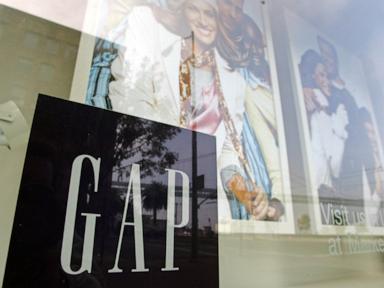
Doris Fisher, the woman who co-founded Gap and fundamentally re-engineered how the American public buys clothing, has died at the age of 94. While modern headlines often frame the retail giant through its recent struggles with floor space and digital relevance, Fisher’s passing marks the end of an era defined by a radical, albeit simple, realization: the middle class wanted a uniform, and they wanted it without the friction of traditional department stores. Along with her late husband, Don Fisher, Doris turned a $63,000 investment into a global empire that once dictated the aesthetic of the suburban world.
Her influence was not merely financial. She was the quiet architect of the brand’s soul, a merchant with a legendary eye for art and inventory who understood that "cool" was a commodity that could be mass-produced if you got the fit and the lighting right.
The San Francisco Gamble
In 1969, the retail world was fragmented. If you wanted jeans, you went to a dusty surplus store or a sprawling department store where the experience was secondary to the transaction. Don Fisher, frustrated by his inability to find a pair of Levi’s that actually fit, saw a gap in the market. Doris saw the potential for a brand. They opened their first shop on Ocean Avenue in San Francisco, selling two things: records and Levi’s.
The records were the bait. The denim was the hook.
It was Doris who insisted on the name "The Generation Gap," eventually shortened to just Gap. This wasn't just a clever play on words. It was an acknowledgment of the massive cultural rift of the late sixties. By positioning the store as a bridge between the old guard and the counterculture, the Fishers did something few retailers ever manage. They sold rebellion in a clean, well-lit environment.
Beyond the Denim Wall
By the 1970s, the Fishers realized that relying on Levi’s was a strategic dead end. They were middle-men in a game where the supplier held all the cards. Doris pushed for the transition to private-label goods. This shift changed everything. It allowed Gap to control its margins, its quality, and its image. It was no longer a store that sold brands; it was the brand.
Doris Fisher’s role as the company’s "merchandise consultant" for decades was not a ceremonial title. She was deeply involved in the tactile reality of the product. She understood that a white t-shirt isn't just a white t-shirt. The weight of the cotton, the curve of the neckline, and the way it hung on a hanger were the variables that determined whether a customer bought one or five. This obsession with the "basics" became the blueprint for the modern specialty retailer.
The math was relentless. They didn't just open stores; they flooded the zone. By the 1980s and 90s, the company was an unstoppable force, acquiring Banana Republic and launching Old Navy. Doris remained the steady hand, ensuring that even as the company scaled to thousands of locations, the visual identity remained cohesive.
The Art of the Inventory
If you want to understand the true steel in Doris Fisher’s character, look at her art collection. She and Don amassed one of the greatest private collections of contemporary art in the world, featuring titans like Andy Warhol, Ellsworth Kelly, and Richard Serra. This wasn't just a hobby for the wealthy. It was a manifestation of the same sensibility she applied to the sales floor.
She had an uncanny ability to spot patterns. In art, it was the progression of minimalism. In retail, it was the realization that consumers were moving away from the loud, psychedelic prints of the seventies toward a more streamlined, utilitarian look. She bet on the "khaki-fication" of America. When Gap launched the "Individuals of Style" campaign in the late eighties, featuring cultural icons in basic Gap staples, it was the pinnacle of this philosophy. It proved that you didn't need a logo to have a look. You just needed the right foundations.
The Family Business in a Corporate World
Doris Fisher’s death also forces a hard look at the decline of the founder-led retail model. For years, the Fishers were the largest shareholders, maintaining a level of control that protected the brand from the short-term whims of Wall Street. However, as the leadership passed to various CEOs—some successful like Mickey Drexler, others less so—the original vision began to blur.
The "gap" they originally filled has since been squeezed by two opposing forces. On one side, ultra-fast fashion like Zara and Shein has undercut their pricing and speed. On the other, boutique labels have reclaimed the "quality basics" niche that Gap once owned. The Fishers built a middle-market juggernaut in an era where the middle market was a stable, growing demographic. That demographic is now fractured.
Despite these headwinds, the Fishers' wealth remained largely tied to the company and their real estate holdings. Doris stayed active on the board until 2009 and remained an honorary director until her death. Her presence was a reminder of a time when retail was about instinct, not just algorithms. She famously preferred walking the stores and touching the fabric over staring at spreadsheets in a boardroom.
A Philanthropic Heavyweight
While the business world focuses on the stock price, Doris Fisher’s legacy in San Francisco is written in stone and canvas. Her decision to house the family’s massive art collection at the San Francisco Museum of Modern Art (SFMOMA) was a transformative moment for the city. It turned the museum into a global destination.
She didn't just sign checks. She was a co-founder of the KIPP Foundation, which supports a national network of charter schools. This was a reflection of her belief in the "American Dream" architecture—that if you provide the right structure and the right basics, people can build their own success. It was the same logic she applied to a pair of blue jeans: give them something reliable, and let them decide how to wear it.
The Reality of the Retail Pivot
We are currently witnessing the slow-motion dismantling of the suburban mall, the very ecosystem that Doris Fisher helped colonize. Every shuttered Gap store is a testament to the fact that the "basics" model is no longer enough to sustain a multi-billion dollar valuation without a massive digital pivot.
The irony is that the current fashion trend—"quiet luxury" and the return of 90s minimalism—is exactly what Doris Fisher pioneered decades ago. The aesthetic is winning, even if the storefronts are struggling. The modern influencer wearing a plain grey sweatshirt and straight-leg denim is essentially a walking tribute to the Fisher era, whether they know it or not.
The problem for Gap isn't that the clothes are wrong; it's that the world is faster. Doris Fisher understood the slow burn of a classic look. She knew that a good product could sit on a shelf for three months and still be relevant. In the age of 24-hour trend cycles, that kind of patience is a luxury few retailers can afford.
The End of the Merchant Prince Era
With Doris Fisher’s passing, the industry loses one of its last true "merchants." The term is rarely used now, replaced by "data-driven brand managers" and "logistics experts." A merchant, in the Fisher sense, was someone who could walk into a room and feel the energy of the consumer.
She was a woman who navigated a male-dominated corporate world by being indispensable. She wasn't just the wife of the founder; she was the co-creator of the company's DNA. Her life story is a refutation of the idea that retail is just about moving boxes. It is about cultural timing.
The Gap will continue, and the Fisher family will continue to be a powerhouse in American philanthropy and art. but the specific alchemy that allowed a single couple to define the wardrobe of a generation has likely vanished. You cannot replicate the conditions of 1969, and you cannot replicate the specific, understated grit of Doris Fisher.
She understood that the most powerful thing a brand can offer is a sense of belonging. In 1969, that meant a pair of jeans that fit. Today, the world is much more complicated, but the fundamental human desire to close the gap between who we are and how we look remains.
Build the foundation, and the world will buy into the vision.