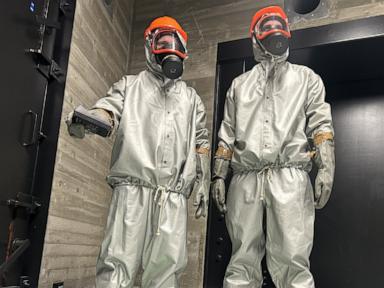
Finland runs Europe's largest civil defense exercise since the Second World War not as a theatrical display of state power, but as a quiet, relentless routine. Every year, thousands of reservists, civil servants, logistics executives, and municipal workers mobilize under gray northern skies. They do not do this for television cameras. They do it because the border three hours east of Helsinki remains a permanent reminder of a neighbor that measures diplomacy in artillery shells.
For decades, foreign policy pundits dismissed the Finnish strategy as an expensive relic of the Cold War. Neutrality required an armed populace, they argued, in a world that had seemingly moved past territorial conquest. Western capitals outsourced their security to globalized supply chains and hoped that economic interdependence would act as a permanent brake on aggression.
That illusion shattered permanently in February 2002. Or rather, it shattered in 2022, though the warning signs were visible long before tanks crossed the Ukrainian frontier. While other European nations hollowed out their barracks, sold off their grain reserves, and outsourced manufacturing to distant continents, Finland quietly engineered a society where civil defense is as ordinary as paying taxes.
Understanding the Finnish model requires looking past the glossy recruitment ads and examining the raw mechanics of comprehensive security. This is not simply a military doctrine. It is an operational philosophy that forces every sector of society to plan for systemic collapse.
The Logistics of Survival Without Global Supply Chains
Modern economies are fragile networks built on absolute efficiency. Just-in-time manufacturing leaves zero room for error, meaning a single bottleneck in the Suez Canal or a regional conflict can empty grocery store shelves within seventy-two hours.
Finland rejected this vulnerability decades ago. Under the National Emergency Supply Agency, the state maintains mandatory stockpiles of imported goods that would make corporate efficiency experts flinch. Warehouses hidden deep inside granite bedrock house months of grain, medical supplies, imported fertilizers, and crucially, liquid fuels.
The mechanism relies on statutory obligations rather than voluntary goodwill. Private companies operating within critical sectors—telecommunications, energy, food distribution, and logistics—must maintain secure reserve capacities and operational continuity plans. They receive tax incentives and structural support in return, creating a baked-in alignment between profit margins and state survival.
When a global crisis hits, Finnish supermarkets do not experience panic buying because the public knows the subterranean depots contain enough baseline commodities to sustain the population through protracted disruptions. The psychological stabilizing effect of these stockpiles is just as valuable as their caloric content. Citizens who trust that basic survival needs are met do not hoard, riot, or clog evacuation routes. They stay calm and perform their assigned roles.
The Architectural Reality of Subterranean Helsinki
Walk beneath the streets of the Finnish capital on any given Tuesday, and you might stumble upon an underground ice hockey rink, a massive parking garage, or a sprawling swimming complex. These are not recreational spaces built with municipal funds alone. They are dual-use civil defense shelters engineered to transform into pressurized, radiation-sealed habitats within hours.
By law, any commercial or residential building exceeding a specific square footage must incorporate an industrial-grade shelter. These bunkers feature heavy steel blast doors, independent air filtration systems capable of neutralizing chemical and biological agents, and autonomous water generators.
Foreign delegations frequently visit these sites, marveling at the concrete thickness and the logistical foresight. Yet the real triumph is not the concrete. It is the maintenance culture. Every shelter must be inspected, certified, and stocked according to rigorous municipal oversight. The janitor maintaining a downtown office building is also trained in emergency air-scrubber maintenance.
This infrastructure acknowledges an uncomfortable truth that modern urban planners prefer to ignore. Conventional warfare in the twenty-first century does not respect the distinction between combatants and civilians. Power grids, water treatment plants, and hospitals are primary targets. By burying critical infrastructure and civilian sanctuaries beneath solid rock, Finland removes the primary lever of terror bombing.
The Reservist Economy and Social Cohesion
The backbone of Finnish defense is not professional standing infantry. It is the conscript and reservist system. A massive percentage of the adult male population—and a rapidly growing cohort of female volunteers—completes mandatory military service before transitioning into an active reserve liability that lasts well into middle age.
What separates the Finnish model from historical drafts is the societal attitude toward service. It is viewed as an civic duty rather than an administrative burden. Employers are legally mandated to hold jobs open for reservists called up for periodic refresher training, and the cultural stigma attached to evading service is substantial.
This creates a unique psychological profile across the labor market. Your corporate lawyer, your local barista, and your municipal water engineer likely spent two weeks last autumn sleeping in freezing mud practicing forest skirmishes or cyber defense triage.
Trust is the ultimate currency of this system. If citizens do not trust their government, a mass mobilization model collapses into civil unrest. Finland maintains exceptionally high levels of domestic institutional trust through radical transparency, low corruption indices, and a robust welfare state that gives every citizen a stake in the preservation of the republic.
People do not fight to defend abstract geopolitical theories. They fight to protect a society that has historically treated them with dignity, fairness, and reliable social support.
The Blind Spots of Total Defense
No system is infallible, and treating the Finnish framework as an unblemished utopia is a analytical error. Total defense faces severe contemporary pressures that traditional doctrine struggles to address.
Hybrid warfare complicates the neat binary of peace and war. When hostile state actors deploy coordinated waves of engineered migration across the eastern frontier, or cut undersea data cables with plausible deniability, conventional military deterrence is largely useless. The threshold for triggering a kinetic response is rarely crossed, leaving society exposed to a death-by-a-thousand-cuts strategy of economic and social destabilization.
Furthermore, the integration of foreign supply chains into critical defense manufacturing remains a vulnerability. While the state hoards grain and fuel, advanced microelectronics, rare earth minerals, and specialized software components rely on global networks that Finland cannot unilaterally control.
The mental toll of perpetual readiness also merits scrutiny. Living next to an aggressive nuclear-armed power requires a psychological armor that wears down even the most stoic populations over decades. Normalizing the presence of reservist drills, bomb shelters, and constant civil defense bulletins creates an atmosphere of low-grade anxiety, even if the national temperament leans heavily toward stoicism.
What the West Refuses to Learn
The rest of Europe watches these massive exercises with a mixture of academic interest and profound inertia. Pundits write analytical papers praising the Nordic model, politicians issue solemn communiques about resilience, and then budgetary committees quietly slash defense infrastructure funding to pay for short-term domestic programs.
Building a total defense network requires a generational commitment of capital and political capital that cannot be achieved during an active crisis. You cannot construct concrete shelters beneath your cities when cruise missiles are already incoming. You cannot legislate social trust and institutional integrity overnight when polarization has hollowed out the fabric of public life.
Finland survived the turbulence of the twentieth century by accepting a brutal geopolitical reality and preparing for the worst possible outcome while hoping for the best. As the security architecture of the continent continues to unravel, the rest of the world is running out of time to copy their homework.