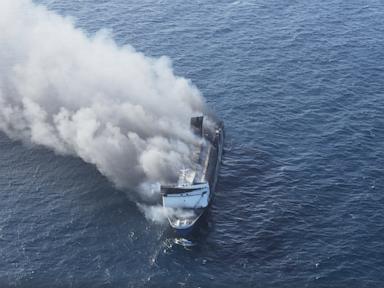
Maritime tragedies rarely arrive as sudden bolts from the blue. They are typically the accumulated product of institutional complacency, regulatory oversight gaps, and systemic vulnerabilities that stretch across decades. When the passenger ferry Mutiara Sentosa 2 caught fire in the waters north of Madura Island, traveling from Surabaya to Makassar, the immediate aftermath exposed a grimly familiar script. Five bodies were recovered. Scores of passengers were initially listed as missing. Hundreds were plucked from the sea by passing commercial vessels and naval assets.
Yet behind the breaking news headlines lies an uncomfortable reality. This disaster is not an isolated anomaly. It is a symptom of an archipelago-wide crisis in maritime safety that persists despite repeated warnings from marine safety analysts.
The Manifest Discrepancy Problem
One of the most persistent hurdles in maritime search and rescue operations across developing archipelagic nations is the chronic inaccuracy of passenger manifests.
When the Mutiara Sentosa 2 sent out its distress signal, official documentation indicated a specific complement of passengers and crew. Within hours, rescue coordinators discovered a stark discrepancy. More people were onboard than the paper trail suggested. This administrative failure transforms a standard emergency response into a guessing game.
Rescuers cannot accurately calculate how many souls remain trapped in compartments, floating in open water, or lost beneath the waves if the baseline data is fundamentally flawed. In the frantic hours following a disaster, emergency response teams are forced to rely on frantic phone calls from grieving relatives reporting missing family members. This reactive tracking mechanism wastes precious minutes during the golden hour of survival.
Why do these discrepancies persist? Port security and ticketing systems in many regional hubs often suffer from lax enforcement. Unregulated ticket scalping, informal passenger boarding, and the casual inclusion of extra travelers—particularly truck drivers accompanying commercial cargo loads—routinely bypass formal electronic registries.
The Cargo Hazard Equation
Modern passenger ferries in inter-island service are rarely passenger liners in the traditional sense. They are hybrid beasts designed to haul both human cargo and heavy commercial freight.
The Mutiara Sentosa 2 was carrying roughly 180 vehicles, predominantly heavy transport trucks and an excavator, packed tightly onto its lower vehicle decks. According to survivor accounts, the catastrophic blaze originated precisely in this vehicular zone.
[Vehicle Deck: Heavy Trucks & Cargo] ---> Initial Ignition Source
       |
       v
[Rapid Ventilation & Wind Tunnel Effect] ---> Sweeps Flames Across Open Deck
       |
       v
[Superstructure Ignition] ---> Passenger Evacuation Forced to Bow
Commercial transport trucks present distinct fire risks. They often carry combustible fuels, unregulated cargo loads, and heavy machinery with mechanical faults. When a fire breaks out on a confined vehicle deck, standard suppression systems are frequently overwhelmed by the sheer volume of combustible material.
Furthermore, open-deck designs common on roll-on/roll-off vessels create a wind-tunnel effect. Once a spark ignites on the vehicle deck, maritime breezes fan the flames with oxygen-rich air. The fire transforms into an inferno within minutes. Crew members face an impossible defensive battle before they can even organize an orderly evacuation of the passenger quarters above.
The Anatomy of Evacuation Under Pressure
Human behavior during a sudden maritime fire defies theoretical models. Survivors from the Madura Island incident described waking up to blinding smoke and having less than half an hour to scramble toward the bow of the vessel.
When panic sets in, evacuation bottlenecks form instantly. Stairwells become jammed. Emergency exits are obscured by smoke. Passengers are forced to make split-second choices between staying aboard a burning hulk or leaping into open water.
The availability of life-saving equipment—and more importantly, the training of passengers to use it—remains uneven across domestic routes. While international routes governed by strict safety conventions undergo rigorous audits, domestic inter-island operations often run on tighter economic margins. Vessel owners face intense economic pressures to maximize turnaround times. Thorough safety briefings and passenger drill participation are frequently treated as administrative inconveniences rather than life-saving prerequisites.
Regulatory Labyrinth and Enforcement Gaps
Fixing maritime safety is rarely a matter of writing new laws. The regulatory architecture already exists. International conventions and national maritime codes dictate fire suppression standards, hull integrity requirements, and maximum passenger capacities.
The failure lies in enforcement consistency.
Consider the vessel itself. Built decades prior and transferred between operating jurisdictions, older hulls require intensive, uncompromising structural maintenance. As ships age, wiring degrades, bulkhead fire doors suffer from mechanical fatigue, and modern fire-retardant upgrades are frequently deferred due to capital costs.
When port state control inspections are treated as bureaucratic checkboxes rather than adversarial audits of safety readiness, unviable ships continue to ply high-risk routes. Regulators often find themselves caught between enforcing strict safety mandates that halt vital regional commerce and allowing sub-optimally prepared vessels to sail to maintain economic lifelines between islands.
Shifting the Paradigm of Accountability
Preventing future disasters requires moving past the ritualistic cycle of post-crisis investigations followed by temporary crackdowns.
True reform demands structural transparency. Port authorities must implement mandatory biometric or digital boarding gates that link every passenger directly to a verified digital manifest before a vessel casts off. If the electronic count does not match the hard limit, the ship stays docked.
Additionally, vehicle deck safety protocols require a complete overhaul. Mandatory thermal imaging inspections for commercial trucks before loading, automated foam deluge systems triggered instantly by optical flame detectors, and strict segregation of hazardous cargo from passenger thoroughfares are not radical concepts. They are standard industrial safety practices that should be non-negotiable on any vessel carrying human lives across open water.
Until port authorities, operators, and regulatory bodies treat passenger safety with the same financial and operational gravity as cargo delivery, families living across archipelagic regions will continue to pay the ultimate price for systemic inaction.
The sea does not forgive shortcuts, and the current framework of oversight leaves too many doors open to disaster.
5 dead, 41 missing after ferry catches fire off northeastern Java
This video provides on-the-ground news coverage and visual context regarding the ferry fire incident off Java and Madura Island.
http://googleusercontent.com/youtube_content/1