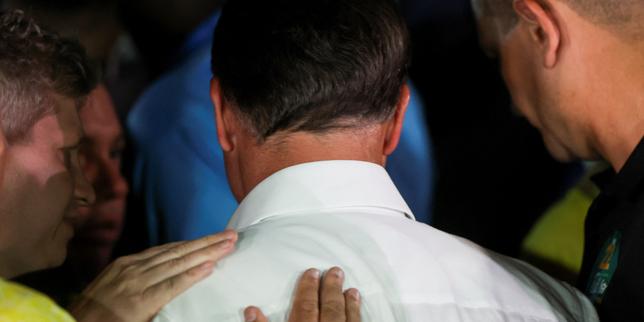
Flavio Bolsonaro spent weeks hinting at a political earthquake that never came. After Luiz Inacio Lula da Silva won Brazil's presidential election, the eldest son of outgoing President Jair Bolsonaro found himself staring at a wall of institutional rejection, silent allies, and cold political math. So he folded.
You don't need to be a Brasilia insider to see why the move happened, though watching how quickly the Bolsonarista front fractured makes the story far more interesting than a simple concession. Flavio Bolsonaro, a sitting senator for Rio de Janeiro and one of his father's closest political strategists, abandoned the push to annul the election results because he was completely isolated. Neither the courts, the military high command, nor the powerful congressional bloc known as the Centrao wanted any part of a constitutional crisis that would tank their own power. For a more detailed analysis into this area, we recommend: this related article.
The Reality Behind Flavio Bolsonaro Stepping Back
Let's be clear about what was actually at stake. Following the razor-thin runoff vote in October 2022, segments of the Bolsonaro base demanded that the Superior Electoral Court (TSE) invalidate ballots cast on older electronic voting machines. Valdemar Costa Neto, president of Jair Bolsonaro's Liberal Party (PL), actually filed a formal challenge along those lines.
It blew up in their faces within hours. For broader background on this development, detailed analysis can also be found on BBC News.
Alexandre de Moraes, the head of the TSE, didn't just reject the petition—he slapped the Liberal Party with a massive fine of 22.9 million reais (roughly $4.3 million at the time) for bad-faith litigation, noting that the party wanted to throw out runoff votes while keeping the first-round results from the exact same machines that had elected their own senators and governors. That included Flavio's allies. You can't argue a voting machine is broken on Sunday afternoon when it worked just fine for your own party three weeks earlier.
Flavio saw the writing on the wall faster than the street protesters camped outside army barracks across the country. Pushing further meant risking personal legal blowback, frozen party funds, and total exile from legislative deals in the Senate. Stepping back wasn't a change of heart. It was self-preservation.
How Isolation Broke the Post-Election Strategy
In Brazilian politics, nobody survives alone for long, especially not in the Federal Senate where legislation lives and dies by backroom consensus. During his father's presidency, Flavio operated as a key bridge between the Planalto Palace and traditional power brokers in Congress. Once Lula secured the presidency, those same power brokers immediately pivoted toward the incoming administration.
Arthur Lira, the immensely powerful Speaker of the Chamber of Deputies and a crucial Bolsonaro ally during the campaign, recognized Lula's victory almost immediately after the TSE certified the results. Rodrigo Pacheco, President of the Senate, did the exact same thing. International leaders—from Joe Biden in Washington to Emmanuel Macron in Paris—congratulated Lula within minutes of the official tally.
Suddenly, the narrative of a stolen election had zero oxygen left in the rooms that actually mattered.
I've watched plenty of post-election standoffs in Latin America, and they almost always follow the same rule: a challenge only gains traction if at least one major institutional pillar fractures. In Brazil, none of them did.
- The Electoral Courts moved at lightning speed to certify the vote and punish frivolous legal filings.
- The Armed Forces submitted their own technical audit of the electronic voting system to the Defense Ministry and found zero evidence of fraud, deflating the hopes of hardliners begging for military intervention.
- The Business Elite in Sao Paulo, including major agribusiness and banking associations, urged an immediate, peaceful transition to avoid currency panic and market instability.
- The Centrao started negotiating ministerial posts and budget amendments with Lula's transition team before Jair Bolsonaro had even broken his post-election silence.
When you're a senator facing investigations of your own—including the long-running rachadinha salary-kickback probe from his time in Rio's state legislature—picking a losing fight with the Supreme Federal Court (STF) is political suicide. Flavio understood that staying relevant in 2023 and beyond meant acting like a normal opposition senator, not an insurgent.
What Most Observers Miss About the Bolsonaro Family Dynamic
People outside Brazil often treat the Bolsonaro family as a single hive mind. That's a mistake. While Carlos Bolsonaro runs the aggressive social media machine and Eduardo Bolsonaro courts international conservative networks, Flavio has always been the pragmatist of the trio.
He's the one who prefers quiet dinners with Supreme Court justices and Centrao party bosses over shouting matches on Twitter. When Jair Bolsonaro retreated into weeks of near-total public silence at the Alvorada Palace after losing to Lula, a power vacuum opened inside the movement. Hardline supporters blocked highways and camped outside military bases in cities like Brasilia, Sao Paulo, and Rio de Janeiro, waiting for a signal from the family.
Flavio briefly tried to straddle both worlds. He defended the protesters' right to demonstrate while avoiding an explicit call to overturn the constitutional order. Yet as days turned into weeks, the cost of ambiguity skyrocketed. The Liberal Party needed its bank accounts unfrozen to pay staff and prepare for the 2024 municipal elections. Senators needed committee assignments.
By dropping the demand to annul the election and shifting his rhetoric toward "defending conservative values in Congress," Flavio essentially admitted that the Lula presidency was an irreversible fact. He didn't apologize to voters who genuinely believed the election would be overturned. He simply changed the subject to fiscal policy, Senate leadership elections, and opposing Lula's legislative agenda.
Why Electronic Voting Challenges Always Hit a Dead End in Brazil
If you're trying to understand why the legal challenges collapsed so fast, you have to look at how Brazil's electoral system actually works. Brazil introduced electronic voting machines (urnas eletronicas) back in 1996 to eliminate the rampant paper-ballot fraud that plagued the country's early democracy. Every single ballot box is offline, air-gapped from the internet, and tested publicly before and after the vote.
Political parties, the Federal Police, the Brazilian Bar Association, and the military all have access to the source code months before election day. On the day of the vote, every machine prints out a physical paper tape—called the Boletim de Urna—right at the polling station before the data is transmitted to the TSE. Party observers take photos of those tapes and compare them against the official website tallies.
To pull off the kind of widespread fraud that Flavio's allies hinted at, thousands of poll workers, international observers, military auditors, and rival party monitors would all have to miss discrepancies across hundreds of thousands of machines simultaneously. Nobody ever produced a shred of verifiable evidence showing a mismatch between the printed polling-station tapes and the final TSE count.
That lack of hard proof is precisely why Valdemar Costa Neto's legal team resorted to citing software bug reports on older machine models rather than actual vote discrepancies. When Alexandre de Moraes pointed out that those same machines elected PL lawmakers, the argument fell apart completely. Flavio wasn't going to sink his own Senate career defending a legal theory that couldn't survive five minutes in front of a judge.
The Shift From Street Protests to Senate Opposition
Walking away from the annulment push didn't mean Flavio Bolsonaro surrendered his political influence. Honestly, it saved it.
Brazil's Congress remained overwhelmingly conservative even after Lula's victory. The Liberal Party emerged from the October elections with the largest caucus in both the Chamber of Deputies and the Senate. Had Flavio and his allies continued pushing for an annulment, they would have handed Lula a massive moral victory and alienated moderate conservatives who wanted nothing to do with an institutional rupture.
Instead, Flavio pivoted toward organizing the parliamentary opposition. The goal shifted from stopping Lula from taking office to making his life miserable once he got there. By keeping his Senate seat secure and maintaining working relationships with centrist lawmakers, Flavio positioned himself to block progressive legislation, scrutinize government spending, and protect his family's political flank during Lula's third term.
It's a classic lesson in political survival. When the coup talk dies down and the reality of a four-year presidential term sets in, leverage comes from committee votes and budget negotiations, not hashtags or highway blockades.
How to Read Brazilian Political Signals Moving Forward
If you follow Latin American politics, invest in Brazilian markets, or just want to avoid getting misled by sensational headlines from Brasilia, use a simple checklist whenever a major political standoff erupts in Brazil:
- Watch the Centrao, not social media. Twitter trends in Brazil are noisy and misleading. When party bosses like Arthur Lira or Valdemar Costa Neto start cutting deals, the real decision has already been made.
- Track TSE and STF rulings immediately. Brazil's superior courts wield extraordinary institutional power compared to their counterparts in many other democracies. Once Alexandre de Moraes or the Supreme Federal Court issues a unanimous ruling, reversal is virtually impossible.
- Separate rhetoric for the base from actions in Congress. Politicians like Flavio Bolsonaro frequently use combative language to keep grassroots voters energized while quietly cooperating on procedural votes behind closed doors.
- Follow the money and party funds. In Brazil, political parties rely heavily on public campaign and operational funds (Fundo Partidario). Any move that threatens a party's access to those funds will be abandoned the moment the treasury freezes.
Flavio Bolsonaro didn't give up on challenging Lula's victory because he suddenly became a fan of the Workers' Party. He backed down because every institution with real power in Brazil closed the door in his face, leaving him with a stark choice between pragmatic opposition in the Senate or total political irrelevance.