The air in the luxury suite was thick with the scent of salt and expensive linens, but Elias couldn’t stop shivering. Outside his balcony window, the Atlantic Ocean stretched toward an infinite, sapphire horizon, beautiful and indifferent. This was supposed to be the "Grand Escape," a fourteen-day voyage across the open sea. Now, it felt like a gilded cage.
He gripped the edge of the mahogany desk, his knuckles white. His joints throbbed with a dull, heavy heat. It felt as though his bones had been replaced with lead. Just two days ago, he’d been laughing over aged Scotch in the lounge. Today, the simple act of breathing felt like pulling thick wool through his lungs.
Elias represents a terrifying reality now unfolding in the mid-Atlantic. He is a hypothetical composite of the terror currently gripping a premier cruise liner, but the facts behind his fictional fever are chillingly real. The World Health Organization (WHO) has confirmed a nightmare scenario: a suspected hantavirus outbreak on a cruise ship that has already claimed three lives.
The Invisible Stowaway
We tend to think of the ocean as a barrier. We assume that once the gangplank is raised and the shore recedes into a hazy line, the terrestrial world’s problems stay behind. We are wrong.
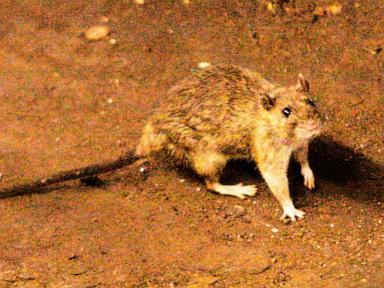
Hantavirus is not a seafaring pathogen. It is a creature of the earth, specifically the dust and the dark corners where rodents thrive. Under normal circumstances, you contract it by inhaling aerosolized particles of droppings or urine from infected mice or rats. It is a disease of rural cabins and dusty barns.
How does a "land-locked" virus find its way onto a multi-million-dollar vessel in the middle of the Atlantic?
The answer is as old as seafaring itself. Provisions. Crates of fresh produce, linens, and supplies are winched aboard at every port of call. Somewhere, in a warehouse or a shipping container, a single infected rodent likely left behind a microscopic inheritance. Once that crate was cracked open in the ship’s galley or storage deck, the virus was liberated. It didn’t need a passport. It just needed a draft of air.
The Speed of the Shiver
The transition from "vacationer" to "patient" is deceptively slow. It begins with a fatigue so profound it mimics simple seasickness. You write it off. You take a nap. You assume the rocking of the boat is finally catching up to you.
Then comes the fever.
In the three confirmed fatalities reported by the WHO, the progression followed a devastatingly familiar arc. Hantavirus Pulmonary Syndrome (HPS) is a predatory condition. Once the initial flu-like symptoms pass, the virus launches a full-scale assault on the capillaries in the lungs. They begin to leak. Fluid floods the air sacs.
It is, quite literally, drowning on dry land.
Consider the isolation of the setting. On a cruise ship, medical facilities are designed for stabilized care—setting a broken limb, treating a minor infection, or managing a cardiac event until the ship reaches port. They are not bio-containment units. They are not equipped with the rows of ventilators required to combat a viral respiratory surge.
When the news broke to the passengers, the atmosphere changed instantly. The buffet lines, once bustling with the clink of silverware and the hum of a thousand conversations, fell silent. The staff, usually the paragons of "the customer is always right" hospitality, began wearing N95 masks. The illusion of the cruise—the idea that you are in a separate, safer world—shattered.
The Weight of the Protocol
The WHO does not issue these reports lightly. When a suspected outbreak hits the wires, it triggers a cascade of international health regulations that transform a vacation into a geopolitical standoff.
The ship becomes a pariah.
Countries that were once eager to welcome tourist dollars suddenly see the vessel as a floating biological hazard. Port authorities deny docking rights. The ship is forced to remain in international waters, a steel island pulsing with anxiety. This is the "invisible stake" of the modern traveler. We rely on a global infrastructure that is incredibly efficient at moving people, but that same efficiency makes us more vulnerable than ever to the hitchhikers of the microbial world.
Statistics tell us that HPS has a mortality rate of around 38%. Think about that number. It’s not just a digit on a page. It means that for every ten people who find themselves in the ship’s infirmary with these symptoms, four of them may never see the shore again.
The Human Cost of Contact
Imagine being the family member of one of the deceased. You are thousands of miles away. You receive a satellite call that your loved one has passed away from a virus usually found in the American Southwest or the rural stretches of Asia, while they were supposed to be sipping cocktails in the Atlantic.
There is a profound sense of betrayal in that.
We pay for the "all-inclusive" experience because it promises the removal of risk. We want our food handled, our rooms cleaned, and our safety guaranteed. But the natural world doesn't respect a ticket stub. The vulnerability is the point. We are biological entities moving through a world of other, more resilient biological entities.
The investigation is currently focused on the ship's ventilation system. On a modern cruise ship, air is often recirculated to maintain climate control. If the virus was introduced into the central ducts, the entire vessel becomes a delivery system. Every breath taken in a cabin, every sigh in the theater, becomes a roll of the dice.
The Silence After the Storm
There is a specific kind of silence that happens when a ship is under quarantine. The engines still hum, a low-frequency vibration that you feel in your teeth, but the human noise vanishes. No splashing in the pool. No late-night music. Just the sound of the wind whipping against the hull.
The WHO is working with the cruise line to track every passenger who has disembarked in the last twenty-one days. The "incubation window" is the new clock by which these people live. They go home, hug their children, and then they wait. They watch for the first sign of a cough. They check their temperature three times a day.
This outbreak is a reminder that our reach often exceeds our grasp. We can build ships that dwarf cities, but we are still at the mercy of a pathogen so small it can't be seen without an electron microscope.
Elias, still shaking in his suite, looks out at the water. He realizes that the horizon isn't a destination anymore. It’s a boundary. He waits for the medical team to knock on his door. He waits for the air in his lungs to feel like air again.
The Atlantic remains blue, vast, and completely indifferent to the three empty chairs at the captain’s table.