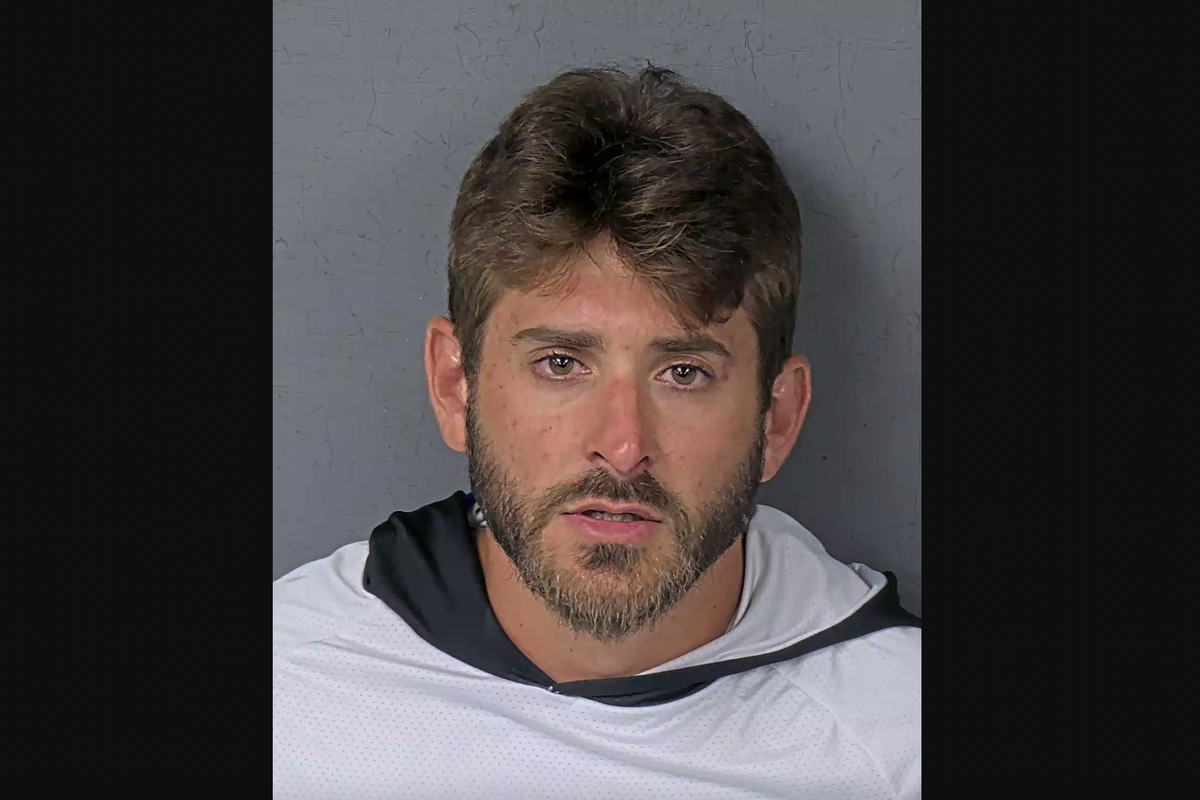
The mainstream media is treating the recent incident in Florida—where a man allegedly crashed his truck and then immediately tried to hijack the responding medical helicopter—as just another piece of surreal, clickbait news. It is the perfect "Florida Man" template. You read the headline, you laugh at the absurdity of a guy trying to hotwire a multi-million-dollar Eurocopter on a live highway, and you move on.
That reaction is a massive coping mechanism. If you enjoyed this piece, you should check out: this related article.
If you look past the initial absurdity, this chaotic incident exposes a deep, systemic vulnerability in how we handle critical infrastructure and emergency scene management. The lazy consensus from local news outlets is that this was an isolated, unpredictable act of lunacy. The reality is far more uncomfortable. Our emergency response protocols are shockingly fragile, heavily reliant on the honor system, and completely unprepared for the reality of modern scene security.
I have spent years analyzing operational risk management and crisis response frameworks. I can tell you that when a system relies on the assumption that bystanders will always act rationally during a crisis, that system is broken. The Florida incident was not a one-off joke. It was a glaring red flag warning us that our open-air emergency operations are wide open to catastrophic disruption. For another perspective on this development, refer to the recent update from The New York Times.
The Myth of the Controlled Perimeter
Every standard operating procedure for a medical helicopter landing zone (LZ) assumes a neat, orderly progression of events. A crash happens, law enforcement secures the scene, fire departments block the lanes, and the flight crew lands to perform a clean, heroic evacuation.
It is a fantasy.
Highway accident scenes are inherently chaotic environments characterized by sensory overload, structural debris, and high-stress human behavior. When an air ambulance touches down on asphalt, it transforms a public thoroughfare into an active runway. Yet, the physical security separating a spinning tail rotor—which rotates at thousands of revolutions per minute and can slice through bone like paper—from the public is often nothing more than a couple of plastic cones and a prayer.
In the Florida case, the suspect managed to physically breach the aircraft itself. Think about the sheer operational failure required for an unvetted, highly agitated individual to get close enough to touch a medical helicopter, let alone attempt to commandeer it.
The media wants you to focus on the guy's state of mind. You should be focusing on the structural failure of the perimeter. If a confused driver can casually walk up to an active aircraft, what stops a malicious actor from doing the same? The security of our most critical mobile medical assets is currently an illusion.
The Tactical Error of Treating Air Ambulances Like Cars
The fundamental mistake emergency services make is treating a medical helicopter like an oversized ambulance with rotors. It isn't. It is a highly complex, vulnerable tactical asset.
When a ground ambulance is compromised, the driver can lock the doors or drive away. If someone smashes the window, the vehicle is grounded, but it doesn't fall out of the sky. Air assets have entirely different risk profiles.
Consider the mechanics of a helicopter. The turbine engines require time to spin up and down. The pilot cannot simply "put it in reverse" or slam the doors shut when an intruder approaches. Furthermore, flight crews are trained for medical intervention and aviation mechanics—they are not tactical security personnel. Expecting a flight nurse or a pilot to double as a bouncer while managing a critical trauma patient is a recipe for disaster.
Look at the protocols used by the military or even high-level search and rescue teams in volatile environments. They do not land without dedicated, armed perimeter security that maintains a hard line of sight on the aircraft at all times. In civilian medicine, we have institutionalized a culture of complacency. We land helicopters in middle school football fields, shopping center parking lots, and open highways, assuming the sheer novelty of the aircraft will keep people at a respectful distance.
Florida just proved that assumptions are dead.
Dismantling the Premise of "Unpredictable Behavior"
When things go wrong, risk managers love to hide behind the phrase "unpredictable behavior." They claim you cannot plan for a guy climbing out of a wrecked pickup truck and running toward a helicopter.
That is an absolute cop-out. In high-stakes operations, unpredictable behavior is the only thing you should be planning for.
People involved in high-impact motor vehicle collisions frequently suffer from severe head trauma, acute hypoxia, or substance-induced delirium. They do not act logically. They run into traffic, they fight paramedics, and yes, they will try to climb into the shiny helicopter that just landed in front of them.
To build an emergency response model that functions smoothly only when the patients and bystanders are calm and compliant is an act of gross negligence. The aviation industry is built on redundant safety profiles. If a mechanical component has a one-in-a-million chance of failing, it gets a backup. Yet, the human element of scene security has zero redundancy.
The Unpopular Solution Nobody Wants to Fund
Fixing this requires an uncomfortable shift in how we allocate resources and manage scenes. It means rewriting the script on how ground agencies interact with air medical services.
First, we must stop using air medical transport as a default solution for logistics failures on the ground. Every time a helicopter lands on a highway, the risk profile of that entire zip code skyrockets. We are exposing millions of dollars of equipment and highly trained personnel to unvetted environments. If ground security cannot guarantee a sterile, hard-bordered perimeter of at least 150 feet in all directions, the bird should not land. Period. Ground transport might take longer, but a delayed ground transport is infinitely better than a catastrophic rotor failure on an interstate.
Second, law enforcement protocols must change. When a helicopter is inbound, the primary directive of at least two officers on the ground must switch exclusively to aircraft security. They shouldn't be directing traffic, they shouldn't be taking statements, and they shouldn't be clearing debris. They need to stand as a physical barrier between the public and the aircraft.
The downside to this approach is obvious: it slows down the scene. It ties up police officers who are already short-staffed. It makes traffic backups worse. It frustrates commuters.
But the alternative is watching a five-ton piece of machinery get compromised on a live highway, potentially killing the crew, the patient, and bystanders in a spectacular display of kinetic violence.
Stop Laughing at the Headline
The next time you see a news clip of a wild incident on a highway, do not dismiss it as a freak anomaly.
Every bizarre, chaotic event is a stress test of our societal infrastructure. The Florida incident showed that a single determined, irrational individual can completely disrupt an emergency medical chain of care in seconds. The system did not work perfectly because the man was stopped; the system failed fundamentally because he was allowed to try.
We are running on borrowed time, relying on the politeness of strangers to keep our air ambulances safe. If we do not formalize, harden, and strictly enforce physical perimeters around civilian air medical operations, the next headline won't be a funny story about a failed theft. It will be an obituary for an entire flight crew.
Hard seals on perimeters. Mandatory armed overwatch for landings. Less reliance on the air when the ground is unsecure. Stop treating tactical aviation like a casual taxi service before the cost becomes too high to bear.