Two thousand six. The air smelled like hot pine, salt water, and cheap sunscreen. Across the country, real estate fever was spiking into a collective delirium. People were buying futures on scraps of earth they had never touched, pointing to squares on a map and whispering about retirement, sunshine, and a slice of the Florida dream.
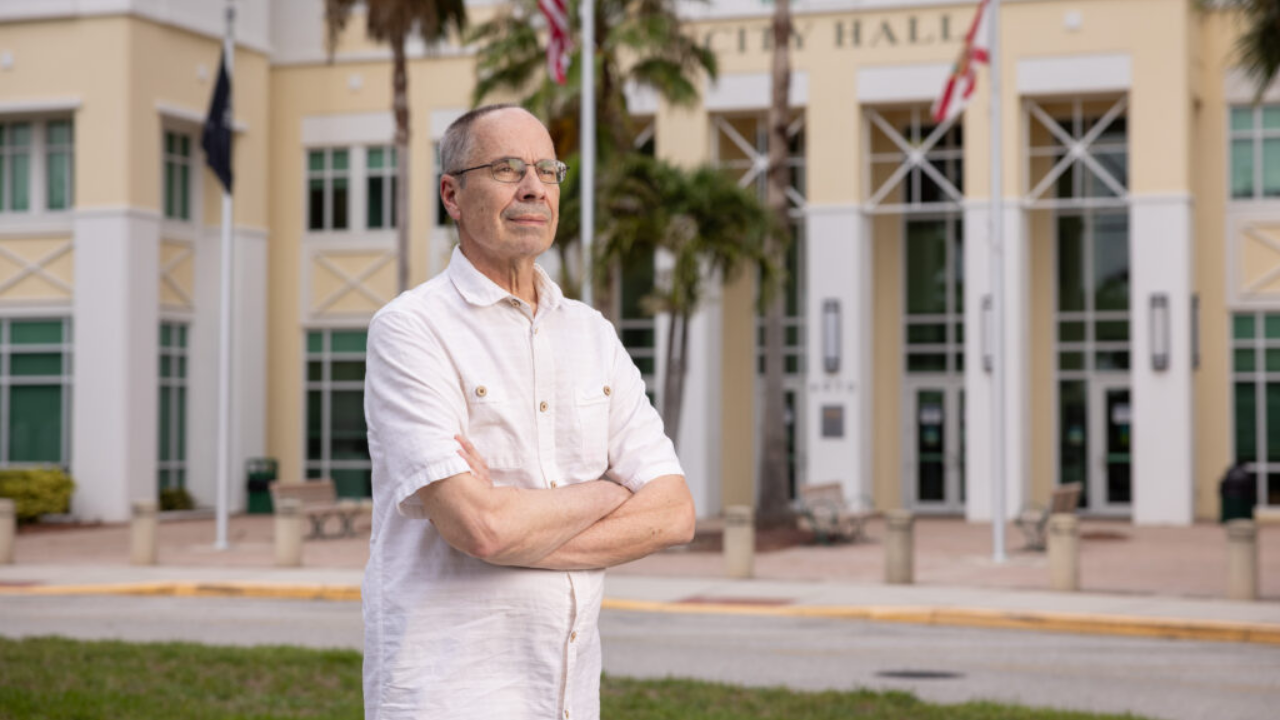
A man from Rhode Island pinned his hopes to North Port, Florida. He handed over his money for a vacant lot. It was an unremarkable patch of dirt in Sarasota County, flat and scrubby, save for the palmettos and the occasional pine. But to him, it wasn't dirt. It was an anchor. It was the place where he would eventually park his bones when the northern winters grew too sharp to bear.
He didn’t build immediately. Life happened. Jobs, bills, aging parents, the quiet accumulation of decades. He let the taxes clear every year, keeping the property like a distant promise to his future self.
Eighteen years slipped through the hourglass.
When he finally returned with blueprints and a contractor's handshake, expecting to lay down concrete and drive a few framing nails, he found a locked door. Not a physical door—a bureaucratic wall. North Port had changed the rules of the game while he wasn't looking. The city had effectively banned new homes in his neighborhood, locking the gates on his investment under the banner of environmental preservation and growth management.
He didn't get a grand apology. He got a closed sign. So, he sued.
We treat land like an immutable truth. We draw lines on parchment, stamp deeds with gold seals, and assume that ownership is a fortress.
It is not. Ownership is a permission slip issued by the state, and the state can revoke the ink whenever the political wind shifts.
Consider what happens next in a municipality choking on its own expansion. North Port wasn't always a flashpoint. For decades, it was a sprawling, master-planned expanse laid out with grid-like ambition during the mid-century boom. Thousands of lots were carved into the scrub, sold to northern dreamers, and left empty. They sat there for generations, waiting for roads, water lines, and people.
When the modern population explosion hit Southwest Florida, these dormant subdivisions woke up all at once. Schools strained. Drainage systems overwhelmed. Roads clogged with commuters. The infrastructure couldn't keep pace with the paper map.
Faced with a crisis of its own making, the city council did what governments do when they are backed into a corner. They hit the brakes. They enacted sweeping environmental and growth restrictions, halting the issuance of building permits in vast swaths of platted subdivisions.
Suddenly, holding a deed was like holding a ticket to a theater where the show had been canceled.
The Rhode Island man found himself trapped in a Kafkaesque loop. He had paid taxes for nearly two decades. He had followed every municipal ordinance in place when he bought the land. Yet, by the stroke of a legislative pen, his property had been rendered economically sterile. It was a classic regulatory taking—a legal term for when the government doesn't physically seize your land, but strips away its value so thoroughly that it might as well have taken the deed and burned it in the street.
We have all felt the vertigo of the moving target.
You buy a car, only to find the city bans combustion engines from certain streets. You build a business, only to watch zoning laws shift to favor corporate conglomerates. You follow the rules, play the long game, and trust the system, only to discover that the rules were written in pencil and erased the moment things got inconvenient.
When the lawsuit dropped, it wasn't just about one man’s retirement plot. It was a proxy war between individual property rights and the crushing weight of collective survival.
On one side stand the landowners. They are ordinary people—retirees, working-class families, small-time investors—who bought into the American promise that private property is sacrosanct. They sacrificed, saved, and paid their annual tribute to the county tax collector. To them, the city's sudden about-face is theft by bureaucracy. If the government decides a neighborhood can't be built upon, fairness dictates that the government should buy the land back at market rate, not leave citizens holding a worthless piece of paper.
On the other side stand the planners, the ecologists, and the local officials staring down the barrel of ecological collapse. Florida is sinking under the weight of its own popularity. Wetlands are disappearing. Scrub-jay habitats are fragmenting. Flood insurance markets are fracturing. If every single platted lot in North Port gets built out, the city risks turning into an asphalt sponge that drowns in the next major hurricane. The public infrastructure bill to service all those remote lots would bankrupt the municipal government.
Both sides are telling the truth. And that is what makes the tragedy so sharp.
You cannot easily dismiss the city's need to protect its water supply and manage growth. You also cannot easily forgive the state for taking a man's life savings and turning it into a protected marshland without offering a dime of compensation.
The legal battle winds its way through courts, slow and grinding like tectonic plates. Millions of dollars in legal fees, years of depositions, expert witnesses arguing over scrub-jay nesting patterns and constitutional amendments.
Meanwhile, the lot in North Port remains untouched.
The palmettos grow a little taller. The pine needles fall and turn to mulch. A hawk circles lazily overhead, indifferent to the lawsuits, the zoning boards, and the ghost of a dream bought in 2006.
The man from Rhode Island watches the calendar turn. He is older now. The energy he once had for pouring concrete and pounding nails has been replaced by the quiet exhaustion of a protracted fight. Whether he wins or loses in court, the years are gone. You can win a settlement, but you cannot claw back the sunrise of a morning you spent waiting for permission to live your life.
We built a society on the promise of stability, yet we live in a permanent state of triage. We trade our futures for zoning codes, and we sacrifice individual dreams on the altar of systemic survival.
The sun sets over North Port, casting long shadows across the empty lots. Somewhere out there, hidden beneath the scrub and the palmettos, is a wooden stake with a rusted metal tag. It marks the corner of a property that belongs to a man three states away—a monument to the day we realized that owning a piece of the earth doesn't mean the world has to let you use it.