The Cold Wind at Elmira
The wind off the hills in upstate New York does not care about engineering elegance. It bites. It shakes equipment. It turns routine test flights into tense, white-knuckled waiting games.
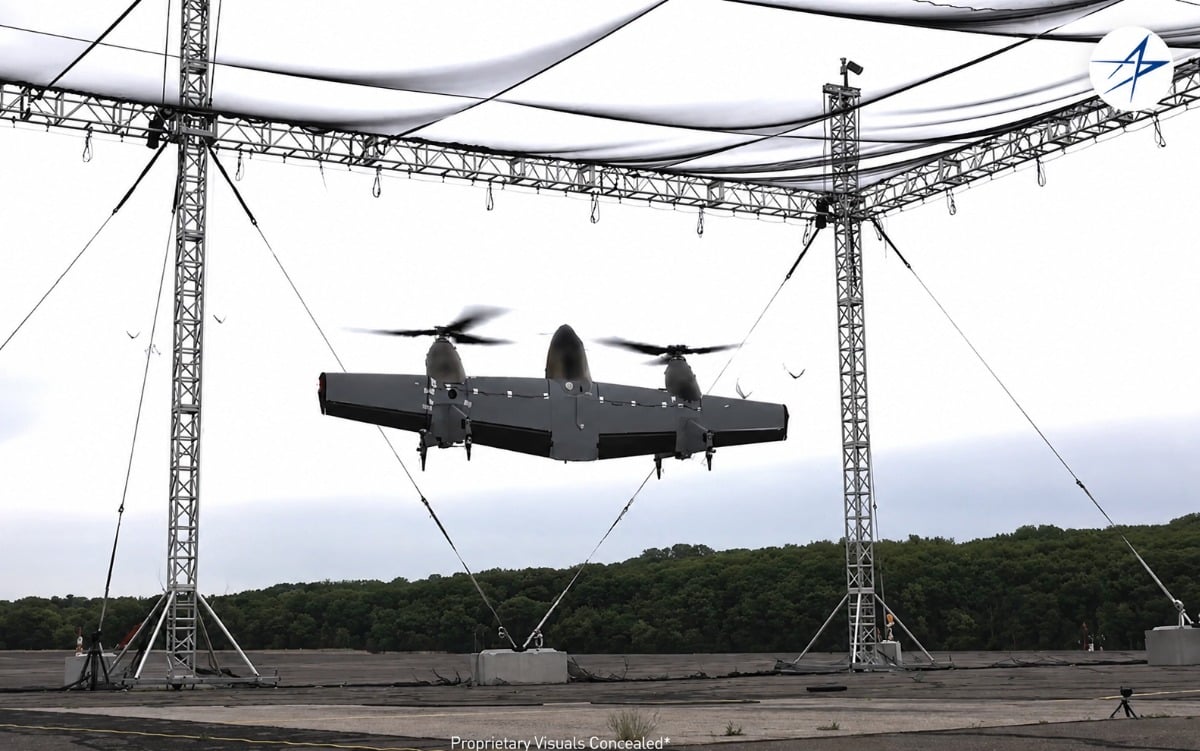
On a gray afternoon at Sikorsky’s Innovation Proving Ground in Elmira, a small group of engineers stood on frozen tarmac, watching a strange piece of composite material and wire prepare to do something aircraft generally aren't supposed to do.
It didn't look like a traditional helicopter. It didn't look like a plane either.
It sat flat on its tail, pointing straight up at the overcast sky like a miniature rocket. Then the rotors spun. The machine lifted vertically, hovering effortlessly in the freezing air. Moments later, without landing or altering its core structure, it pitched forward ninety degrees. The wing caught the wind, the rotors shifted their burden to the airframe, and the machine surged forward into winged, high-speed horizontal flight.
Silence fell over the ground crew. A quiet sigh of relief passed through the team.
Sikorsky had just proven that its rotor-blown wing tail-sitter drone could fly. But the real story isn't just about a successful flight test. It is about solving a century-old design headache that has cost billions of dollars and countless human hours.
The Eternal Compromise of Flight
To understand why a drone tilting in the wind matters, you have to understand the fundamental tragedy of aviation design.
For over a hundred years, flight engineers have been trapped in a zero-sum game. You can have speed and range, or you can have vertical takeoff and landing. Pick one.
[Image of hydrogen fuel cell]
If you choose speed, you build a fixed-wing airplane. You get long range, efficiency, and swift travel. But you need thousands of feet of flat, paved runway to get airborne. If the runway is destroyed, flooded, or nonexistent, your multi-million-dollar aircraft is nothing more than a very expensive lawn ornament.
If you choose versatility, you build a helicopter. You can land on a clearing in the jungle, a hospital roof, or the back of a ship. But helicopters are slow. They are mechanically complex, thirsty for fuel, and capped by physics from ever flying truly fast over long distances.
For decades, the dream has been simple: eliminate the runway without sacrificing the speed.
Enter vertical takeoff and landing technology. Many have tried to bridge the gap. Tiltrotors like the V-22 Osprey swivel massive engines on the ends of wings. Others use dozens of small electric propellers scattered across a frame. These designs work, but they pay a steep price in mechanical complexity, heavy weight, and fragile moving parts.
Sikorsky took a different path. Instead of making complex mechanical joints that pivot heavy engines, why not tilt the entire aircraft?
How Rotor-Blown Physics Flips the Script
Imagine holding a heavy blow-dryer aimed straight at a toy paper airplane. The force of the air moving over the paper wings creates lift, even if the room itself is still.
That is the basic magic behind a "rotor-blown wing."
Instead of relying purely on forward movement through the air to generate lift over the wings, Sikorsky’s design places its proproters directly in front of the wing surfaces. When the rotors spin, they blow high-speed air directly across the wings. This airflow creates massive aerodynamic lift instantly, even while the aircraft is hovering dead still in mid-air.
By blowing air over the wing continuously, the control surfaces stay active and responsive at zero forward airspeed.
When the drone needs to transition from hovering to cruising, it simply leans forward. As it moves into horizontal flight, the wings take over the heavy lifting from the rotors. The craft transforms from a hovering tail-sitter into a swift, long-range winged aircraft.
No heavy tilting mechanisms. No complex swiveling gearboxes at the wingtips. Fewer moving parts to break in the field.
Just clever physics doing the work of heavy machinery.
Why the Ground Matters More Than the Sky
It is easy to view aerospace developments through a lens of abstract technology. But aircraft exist to serve humans on the ground, often in the worst conditions imaginable.
Consider a hypothetical search-and-rescue team stranded in a remote mountainous river valley after a major flash flood. Roads are washed out. The nearest functional airport is two hundred miles away. Traditional helicopters can reach the valley, but their limited speed and payload range mean fewer trips and longer wait times for medical supplies. A fast fixed-wing cargo plane could deliver hundreds of pounds of aid in minutes, but it has nowhere to land.
This is the exact operational gap a rotor-blown tail-sitter bridges.
Because it launches vertically straight off its tail, it requires no runway, no launch catapult, and no retrieval net. It can take off from a tiny dirt patch, a clearing in a dense forest, or the cramped deck of a small patrol vessel. Once in the air, it flattens out and flies with the speed and efficiency of a traditional airplane, carrying critical cargo or sensor gear far beyond the reach of standard drones.
It offers field teams something far more valuable than neat tech: time and accessibility.
The Mechanical Elegance of Simplicity
In modern engineering, adding features is easy. Removing parts while keeping functionality is the true mark of mastery.
Every moving part on an aircraft is a potential point of failure. Every joint requires maintenance, adds dead weight, and demands extra fuel. Traditional tilt-wing designs are notorious maintenance hogs because the machinery required to pivot a wing under full flight loads is extraordinarily complex.
Sikorsky’s approach sidesteps this complexity entirely. The frame is rigid. The wings don't pivot. The engines don't swivel. The entire airframe rotates as a single unit.
Is it easy to control? Absolutely not.
Hovering a tall, thin aircraft on its tail in a crosswind is like trying to balance a broomstick on the palm of your hand during a storm. The flight control software has to make thousands of micro-adjustments every second to keep the craft stable. A decade ago, the computing power required to run those flight algorithms smoothly in a lightweight onboard computer simply didn't exist.
The hardware is simple because the software is brilliant.
The Road Ahead for Unmanned Aviation
The successful first flight in Elmira was a proof-of-concept step, but the path from a working flight test to widespread operational deployment is long and unforgiving.
Future tests will push the airframe into harsher environments. Engineers will force the machine to tackle blinding crosswinds, heavy payloads, and simulated system failures. They will test how well the autonomous flight software handles the tricky transition phase—that precise moment when the drone switches from balancing on its tail to riding the wind on its wings.
Yet, walking away from the test field in upstate New York, one thing is overwhelmingly clear. The century-old line between fixed-wing planes and rotary helicopters is blurring faster than ever.
We are moving away from massive, fuel-thirsty machines that depend on miles of concrete runways. The future of flight belongs to adaptable, resilient systems that can operate anywhere, land on anything, and adapt to the mission in real-time.
As the quiet drone settled back down on its tail at the end of its flight, landing softly on the cold tarmac without needing a single foot of runway, it didn't just complete a test. It gave us a glimpse of a sky where boundaries no longer apply.