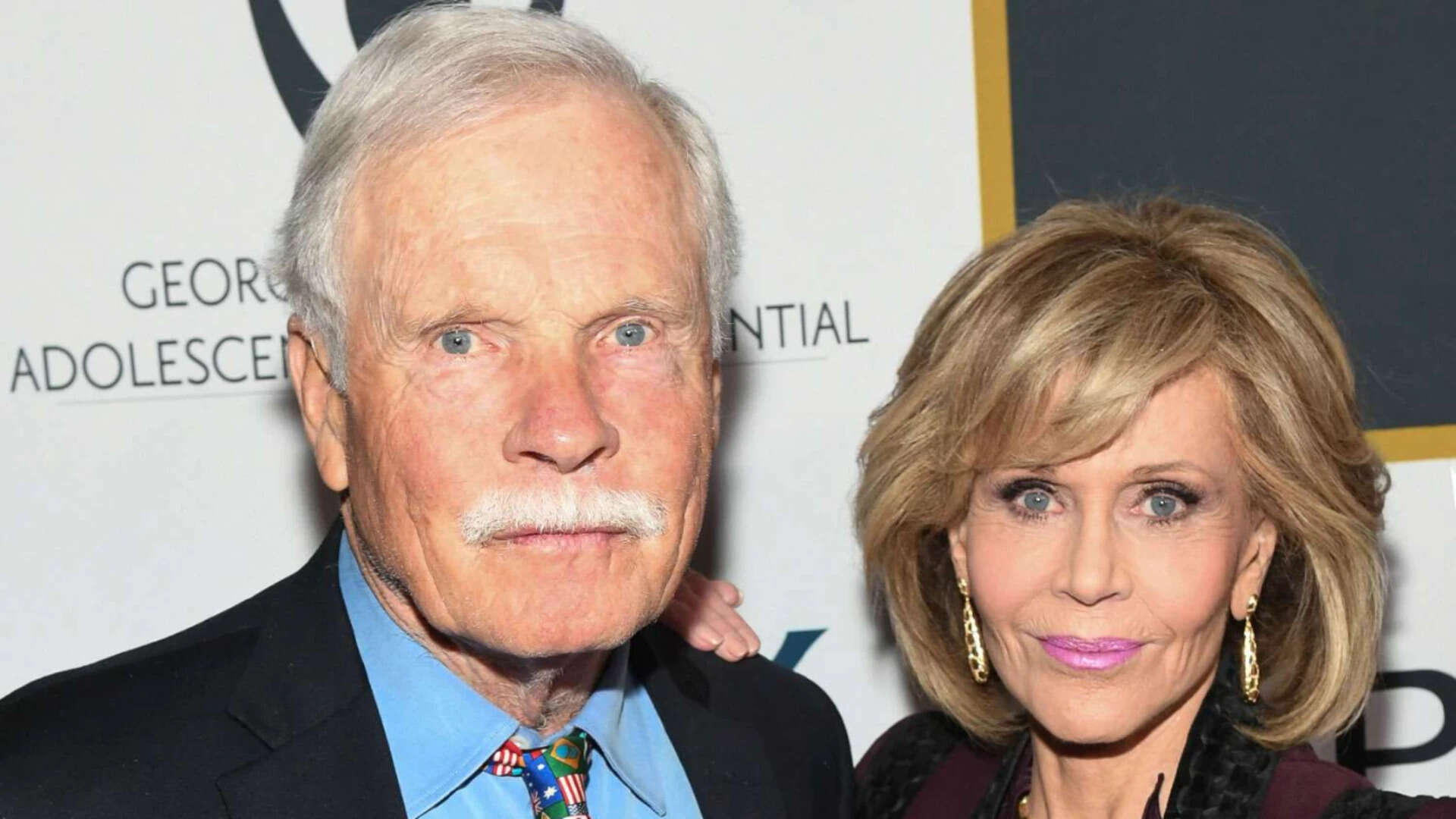
Jane Fonda and Ted Turner never did anything small. When the "Hanoi Jane" of the 1970s married the "Mouth of the South" in 1991, the union was less of a celebrity wedding and more of a corporate and cultural consolidation. It bridged the gap between Old Hollywood’s political fire and the New Media’s global reach. While the tabloid press focused on the glitz of their ten-year marriage, the real story lies in how their partnership redefined the public figure's role in a globalized economy. Fonda was not merely a spouse; she was a strategic advisor who helped shape the ethos of a man controlling the world's first 24-hour news cycle.
The relationship ended in 2001, but the legacy of their decade together remains a blueprint for how high-profile figures use personal brands to drive international agendas. To understand Jane Fonda today, one must look past the "fitness guru" or "Oscar winner" labels and see the woman who helped steer the founder of CNN through the most influential decade of his life.
The Business of Being Jane
By the time Fonda met Turner, she had already cycled through several identities. She was the daughter of Hollywood royalty, a French cinema sex symbol, a polarizing anti-war activist, and the woman who single-handedly launched the home video industry. Her workout tapes weren't just about aerobics. They were a massive financial engine. Fonda used the profits from those videos to fund the Campaign for Economic Democracy, a political organization led by her then-husband Tom Hayden.
This established a pattern that would define her life. Every commercial success was a means to a political end. When she pivoted toward Turner, she wasn't just looking for a third husband. She was looking for a bigger platform. Turner provided a direct line to the global consciousness through his cable empire.
The Turner Transformation
Before Fonda, Ted Turner was a wild-card billionaire known for winning the America’s Cup and buying sports teams. He was impulsive and often lacked a filter. Fonda brought a different kind of discipline to his world. During their marriage, Turner’s philanthropy shifted toward the existential. He donated $1 billion to the United Nations, a move that was unheard of at the time and initially mocked by his peers in the billionaire class.
Fonda’s influence on Turner’s environmentalism and his focus on population control was palpable. She didn't just sit in the background of his boardrooms. She traveled with him, researched for him, and challenged his perspectives. This was a partnership of intellectual equals who viewed the world as a project to be managed. They spent their time on vast ranches, yet their eyes were always on the data coming out of Atlanta and New York.
The Cost of Quiet
The marriage required Fonda to do something she had never done before: step back. For a decade, she essentially quit acting. She traded the spotlight of the silver screen for the private influence of the billionaire’s wife. Critics at the time suggested she had finally been "tamed" by Turner’s wealth, but the reality was more complex. She was learning the mechanics of power from the inside of a media conglomerate.
The CNN Factor
Ted Turner changed the way the world consumed information. By creating CNN, he removed the "appointment" aspect of news. It was always there, always running. Fonda understood the power of this better than most. She saw how a 24-hour cycle could be used to keep specific issues—like women's rights and climate change—in the public eye indefinitely.
The couple’s social circles were a mix of world leaders and media titans. This wasn't the Hollywood parties of the '60s. This was the birth of the global elite Davos culture. In this environment, Fonda wasn't an actress; she was a diplomat without a portfolio.
Why the Merger Dissolved
The end of the marriage in 2001 coincided with the disastrous AOL-Time Warner merger, which saw Turner lose a staggering amount of his personal fortune and his control over the company he built. As Turner’s professional world crumbled, the personal foundation of the marriage gave way. Fonda has since spoken about her need for "attonement" and her return to her own voice.
She realized that being a partner to a titan meant suppressing her own growth. Turner famously required a lot of attention—a 24/7 commitment that mirrored his news network. Fonda, entering her 60s, decided she no longer wanted to be a supporting character in someone else’s epic.
The Favorite Ex Husband Paradox
Fonda often refers to Turner as her "favorite ex-husband," a phrase that sounds like a witty soundbite but carries significant weight. It acknowledges that of all her partners, Turner was the one who matched her scale of ambition. They were both "big" people who lived "big" lives.
Unlike her previous marriages, the split from Turner was not a rejection of his ideals. It was a reclamation of her own agency. She took the lessons learned in the Turner years—the understanding of global media, the billionaire’s approach to philanthropy, and the importance of optics—and applied them to the final act of her career.
The Modern Activist Blueprint
Today, Fonda’s "Fire Drill Fridays" and her relentless focus on the climate crisis are a direct evolution of the Turner years. She is no longer just a protester standing outside the gates. She is a seasoned strategist who knows how to leverage the media because she helped run the man who owned it.
She understands that to change a system, you have to understand its financial and communicative heart. Her time with Turner was her graduate school in global power. She didn't just spend a decade on a ranch; she spent a decade in a war room.
The Turner Legacy in the Fonda Brand
If you look at Fonda’s current projects, you see the fingerprints of the Turner era everywhere. There is a focus on scalability. She doesn't just want to talk about a problem; she wants to move the needle on a global level. This is the "Turner Way."
- Globalism: Moving beyond local politics to address worldwide threats.
- Media Saturation: Using every available channel to hammer home a single message.
- Strategic Philanthropy: Using wealth not just for charity, but for systemic change.
Turner, for his part, has remained a staunch defender of Fonda. Even after the divorce, he praised her intellect and her commitment to the planet. Their mutual respect is a rarity in the world of high-stakes divorce, largely because they both recognize that they were more effective as a duo than they were as individuals.
The Reality of Post-Turner Fonda
The Jane Fonda we see now—the one being arrested in front of the Capitol—is a composite of all her past selves, but with a hard edge of corporate pragmatism. She knows how the newsrooms she is appearing on actually function. She knows the pressure points of the executives running the show.
This isn't the radicalism of a young woman trying to find her place. This is the calculated activism of a woman who has seen the world from the top of the mountain and decided she’d rather be in the trenches with the knowledge of how the mountain is built.
Analyzing the Power Dynamic
The Fonda-Turner era was a bridge between the old world of Hollywood and the new world of tech-adjacent media power. It showed that a celebrity could be more than a face; they could be a force of nature when paired with the right infrastructure.
Turner provided the infrastructure; Fonda provided the soul and the focus. Without Fonda, Turner might have remained a provincial billionaire with a loud mouth. With her, he became a global statesman. Without Turner, Fonda might have remained a legendary actress with a penchant for controversy. With him, she became a student of the global machine.
The marriage didn't fail so much as it completed its objective. They changed each other, and in doing so, they changed the way we view the intersection of celebrity, wealth, and activism. When she calls him her favorite ex-husband, she isn't just being kind. She is acknowledging the man who helped her see the world as a singular, interconnected organism that needed saving.
The lesson for the modern analyst is clear. Don't look at celebrity marriages as mere gossip. Look at them as mergers and acquisitions. In the case of Fonda and Turner, the intellectual property they created together—a model for global, media-savvy activism—is still paying dividends today.
Fonda’s return to Hollywood in the 2000s and 2010s was not a retreat. It was a diversification of her portfolio. She used the "older woman" roles to maintain relevance and funding, ensuring that when she spoke on the climate, the cameras were already there, waiting for her. She had learned from the master of the 24-hour cycle that the most important thing is to never let the screen go dark.
Every arrest, every speech, and every "favorite ex-husband" quote is a piece of a larger narrative. Fonda is no longer just Jane. She is a legacy brand that survived the 20th century and mastered the 21st by learning exactly how the world’s most powerful men think. She didn't just marry Ted Turner; she studied him. And the world is still feeling the impact of that decade-long seminar.
Stop looking for the "ex-wife" in the headlines and start looking for the strategist who outlasted the empire. Fonda didn't just survive the Turner years; she absorbed them. The result is a woman who is perhaps the most effective, and certainly the most experienced, political operator in the history of the entertainment industry. She knows how the money moves, how the cameras tilt, and how the story ends.