Adam Hayward stands in a field in East Yorkshire just as the dusk turns to a bruised, heavy purple. The air smells of damp earth and the sharp, green promise of emerging wheat. To the casual observer, this is a picture of pastoral peace. To Adam, it is a battlefield. He looks down at a shoot of wheat no taller than his thumb. The leaf is frayed, ragged, and hollowed out.
The enemy is already here. It does not march with boots. It does not announce itself with a roar. It glides on a ribbon of slime, consuming up to forty times its own body weight in a single night. Meanwhile, you can find other events here: Why AI and Healthy Habits Are Actually Ruining Your IB Score.
For generations, arable farmers have fought the grey field slug with a kind of desperate blind faith. They scattered blue chemical pellets across entire fields, blanket-bombing hectares of land to kill an invisible adversary. It was expensive, exhausting, and rough on the environment. But a quiet rebellion is taking place across the British countryside. A small band of growers, nicknamed the slug sleuths, have stopped guessing. They are using artificial intelligence, multi-spectral cameras, and a deep understanding of behavioral ecology to track a creature that has baffled agriculture for centuries.
The Economics of a Master Glutton
It is easy to dismiss the slug as a minor garden nuisance, the sort of creature you salt on a driveway out of mild irritation. But scale that nuisance up to hundreds of thousands of hectares of commercial farmland, and the problem becomes a financial catastrophe. In the UK alone, slug damage costs arable farmers an estimated £44 million every single year. To explore the bigger picture, check out the excellent analysis by Gizmodo.
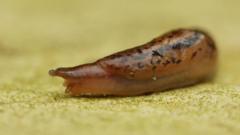
Consider the life of a single grey field slug. It is small, rarely exceeding five centimeters in length, but its appetite is monstrous. It does not just eat the leaves of young cereal crops, barley, oats, and oilseed rape; it slithers underground to hollow out the seeds before they even have a chance to germinate. A single bad infestation can force a farmer to abandon an entire field, wiping out months of investment and labor in a matter of days.
The traditional defense was a heavy hand with pesticides. But blanket spraying is an outdated tool for a modern problem. It costs thousands of pounds per farm, and chemical runoff is a constant anxiety for anyone trying to protect local water systems.
The real breakthrough came when scientists and farmers stopped looking at fields as uniform grids. They realized that slugs are not everywhere. They are highly localized, congregating in tight, predictable neighborhoods within the soil.
Mapping the Underworld
Professor Keith Walters, a researcher at Harper Adams University, spent years tracking these patterns. His work formed the backbone of the SLIMERS project—a £2.6 million initiative funded by the Department for Environment, Food and Rural Affairs.
Slugs form distinct patches based on soil type and microclimatic conditions. They love heavy, moisture-retaining clay, and they despise dry, sandy loam. But until recently, knowing that these patches existed was useless because nobody could see where they began and ended.
Enter the slug sleuths. A network of twenty-eight farmers across England agreed to turn their land into living laboratories. They set down large plastic saucers across their fields to trap the pests, counting the populations every week and logging the data into a smartphone app.
Then, the weather threw a wrench into the science. Heavy rains caused massive waterlogging across the test sites. To the surprise of the researchers, the established slug neighborhoods dissolved.
The data looked chaotic. But as the soil dried, the computer algorithms noticed something fascinating. The slugs did not just wander randomly after a flood. They temporarily formed new, unexpected colonies in specific survival pockets before migrating right back to their original hotspots once normal soil conditions returned.
By feeding this behavioral data into a predictive AI model, scientists created highly detailed risk maps. Suddenly, farmers could see the invisible boundaries of the infestation. When sixteen growers tested these prediction maps over a single autumn and winter, the results were staggering. They cut their pesticide use exactly in half. They didn't lose a single crop to do it.
Midnight with the Multi-Spectral Cameras
But predictive maps are only the first phase of this agricultural shift. The ultimate goal is total automation—replacing broad chemical applications with targeted biological interventions.
To achieve this, researchers had to teach machines how to see in the dark. Slugs are nocturnal, emerging from the cracks in the soil only when the sun goes down and the humidity rises. This required scientists like Dr. Kerry McDonald-Howard to spend their nights walking through freezing, pitch-black fields, carrying advanced imaging equipment.
Using multi-spectral cameras, engineers isolated five specific wavelengths of light—including ultraviolet and near-infrared—that bounce off a slug’s skin in a unique way. The creature might be perfectly camouflaged to the human eye against a backdrop of wet mud, but under these specific wavelengths, it glows like a neon sign.
This spectral signature is currently being used to train autonomous farm vehicles. Engineers are building lightweight, robotic rigs that glide through crops at night. As the robot moves, its onboard AI analyzes the ground in real-time. The moment it spots a grey field slug, it deploys a microscopic dose of nematodes—a natural, biological parasite that hunts and kills slugs without harming a single other organism in the ecosystem.
It is precision warfare at a microscopic scale. Instead of treating a twenty-hectare field with chemicals, a robot can treat twenty individual square meters with nature’s own predators.
A New Philosophy for the Land
Back in Bedfordshire, farmer Charles Paynter has changed the way he looks at his daily rounds. He admits that changing long-held habits is difficult. Farmers are conditioned by years of risk management to see a single pest and reach for a chemical tank.
His personal threshold for taking control measures is much higher now. By using the predictive models, he proved to himself that he could evaluate the risk accurately rather than reacting out of fear. There is a profound peace of mind that comes from knowing exactly what is happening beneath the surface of your own land.
The future of farming is not found in bigger tractors or stronger chemicals. It is found in the quiet accumulation of data, the clever application of algorithms, and the willingness of people who work the land to cooperate with the scientists who study it.
As the mist settles over the fields of East Yorkshire, the robots are learning, the algorithms are sharpening, and the grey field slug is finally running out of places to hide.