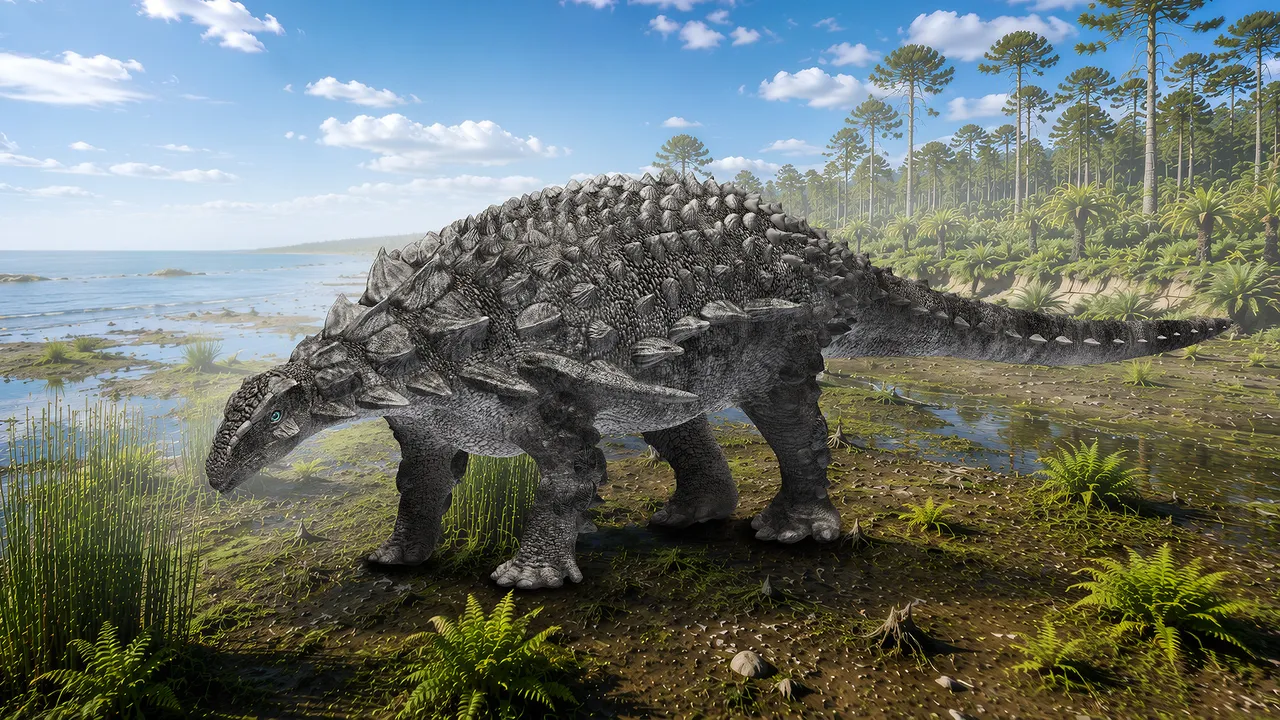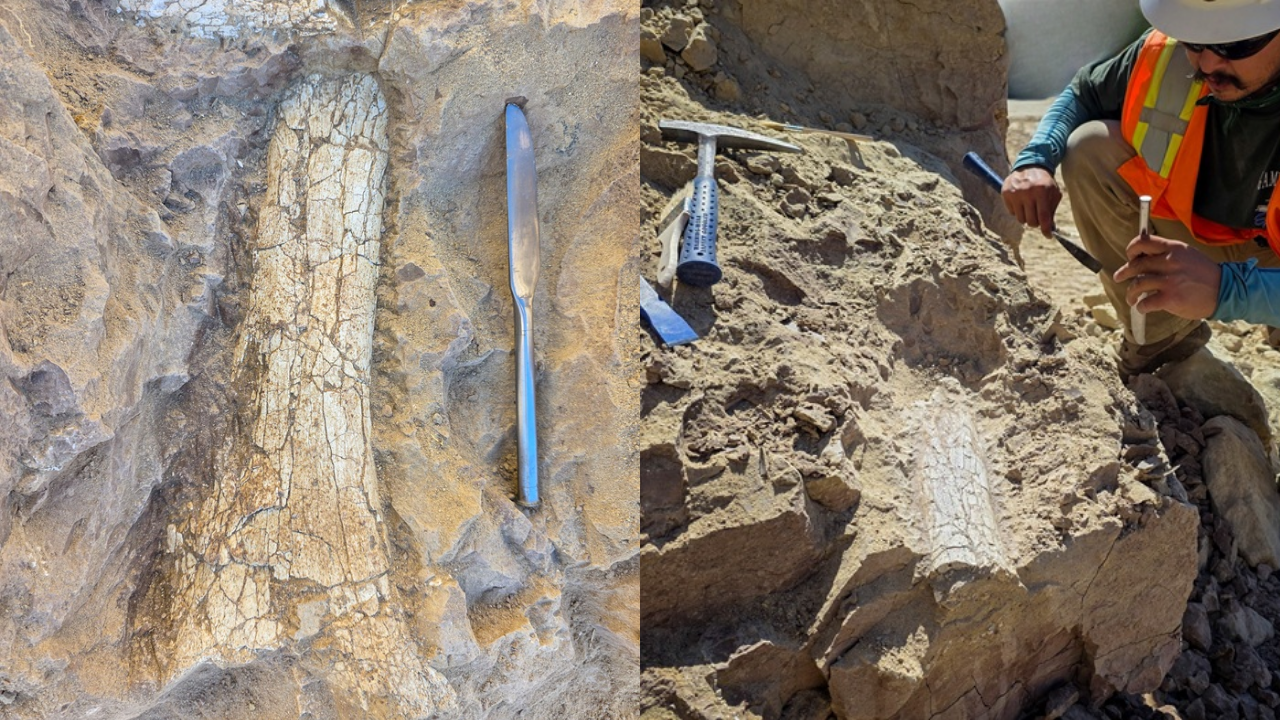
Construction crews in Oceanside, California, recently unearthed a massive prehistoric deposit containing what researchers believe are 45-million-year-old brontothere fossils, offering a rare glimpse into an epoch when North America looked nothing like the arid scrubland we know today. Beneath layers of modern topsoil and urban development, paleontologists recovered heavy bone fragments belonging to an extinct family of large, mammal herbivores often called "thunder beasts." These fossils provide crucial physical evidence about the Eocene epoch in coastal Southern California, a time when the region featured lush subtropical forests and swampy environments far removed from today's Mediterranean climate.
Paleontological discoveries during urban grading operations are rarely quiet affairs. When massive earthmoving equipment scrapes through ancient sedimentary layers, the financial friction between commercial real estate development and historical preservation immediately flares up. Municipal codes require construction to halt the moment unusual bones or fossils appear, triggering a scramble among field scientists, property developers, and state regulatory agencies. This recent discovery in Oceanside underscores a tension that has defined California's booming infrastructure expansion for decades. Beneath every strip mall, highway interchange, and suburban housing tract lies a remarkably rich, largely hidden graveyard of prehistoric life.
The Eocene World Beneath the Pavement
To understand why a 45-million-year-old fossil matters in modern Oceanside, you have to mentally strip away the concrete, asphalt, and manicured lawns to reveal an entirely different continent. During the middle Eocene epoch, the geography of western North America was shifting dramatically. The climate was globally much warmer, blanketed by dense tropical and subtropical canopies that stretched far up into higher latitudes. Oceanside and the broader San Diego County area sat within a depositional basin where rivers and streams washed sediment down from nascent highland areas, burying organic remains in fine-grained mud and sandstone.
Enter the brontotheres. These formidable mammals, whose name literally translates to "thunder beasts," resembled heavy-set rhinoceroses, though they were actually more closely related to horses and tapirs. Early Eocene brontotheres were relatively modest in size, but as millions of years progressed, they evolved into massive creatures weighing several tons, sporting heavy, bifurcated nasal horns. Finding their remains in Southern California allows researchers to map out ancient migration paths, ecological adaptations, and the evolutionary pressures of a warming planet. The strata in Oceanside, primarily consisting of the Santiago Formation, serve as a geologic archive. Every preserved tooth fragment or limb bone acts as a single data point in a vast puzzle tracking how ancient megafauna responded to shifting tectonic plates and climate cycles long before human industrialization ever began.
The High Stakes of Construction Mitigation
Discovering fossils on a private or municipal construction site is a mixed blessing for the scientific community. On one hand, urban expansion acts as an involuntary excavation engine, exposing layers of earth that scientists could never afford to dig up systematically on their own. On the other hand, commercial deadlines collide head-on with meticulous scientific recovery.
When bones turn up beneath a bulldozer blade, state and federal environmental protection laws—such as the California Environmental Quality Act (CEQA)—mandate that construction must pause in the immediate area. Qualified paleontological monitors must step in to assess the find, map the stratigraphic context, and carefully jacket the fragile bones in plaster and burlap before transporting them to a secure curation facility, such as the San Diego Natural History Museum.
This process costs money, and it takes time. Developers face the nightmare scenario of stalled machinery, mounting interest on construction loans, and delayed project completion dates. Yet, experienced project managers in Southern California now factor paleontology into their initial feasibility studies. They know that ignoring the region's geological sensitivity is a recipe for costly litigation and halted work. The Oceanside site serves as a prime example of why pre-planned mitigation protocols matter. When scientists and commercial crews maintain open communication channels, valuable scientific treasures can be rescued without bankrupting the entities paying for the concrete.
Reconstructing the Fragmentary Record
Public reports often sensationalize fossil discoveries, painting a picture of intact skeletons waiting just beneath the surface like buried pirate treasure. The reality on the ground is far messier and infinitely more technical. Fossilization is an extraordinarily rare geochemical lottery. Most bones scatter, fragment, or weather away entirely before minerals can replace the organic material.
The fossils uncovered in Oceanside typically arrive in the lab as fractured, cemented clusters embedded in dense rock matrix. Paleontologists do not simply brush away dirt with a toothbrush; they use pneumatic air scribes, chemical consolidants, and microscopic imaging to slowly liberate the fossil from its stony prison. A 45-million-year-old tooth or jaw fragment requires months of careful preparation work by skilled technicians before it can yield reliable anatomical data.
This meticulous labor is essential because these fragments hold the key to answering broader evolutionary questions. By analyzing the wear patterns on fossilized teeth, researchers can reconstruct the exact diet of these ancient herbivores, determining whether they grazed on soft leaves, ferns, or tough forest undergrowth. Chemical isotope analysis of the bone enamel can reveal water sources and seasonal temperature fluctuations during the Eocene. Every microscopic crack and mineral deposit tells a story about an ancient ecosystem collapsing and adapting over millions of years.
The Hidden Archives of Coastal California
Oceanside is far from an isolated anomaly. The entire coastal strip from Orange County down through San Diego is a veritable goldmine for paleontologists. Formations like the Sespe, Santiago, and San Diego formations continuously yield remarkable terrestrial and marine fossils whenever deep grading occurs for new housing developments, pipeline installations, or highway expansions.
As urban centers continue to expand outward, the collision between our hyper-modern infrastructure and deep geologic history will only accelerate. Every new trench dug for fiber-optic cables or sewer mains is a potential window into a vanished world. The challenge for modern resource managers is balancing the urgent demand for housing and commercial development with the preservation of irreplaceable scientific heritage.
The thunder beasts that once roamed the ancient subtropical river valleys of Oceanside left their final resting place deep in the earth, completely unaware that millions of years later, creatures walking on two legs would carve highways directly above their bones. As long as the earth beneath California continues to shift and yield its ancient secrets, the physical remnants of these vanished ecosystems will demand our attention, forcing us to look past the asphalt and remember the deep, dynamic history carved into the very dirt we build upon.