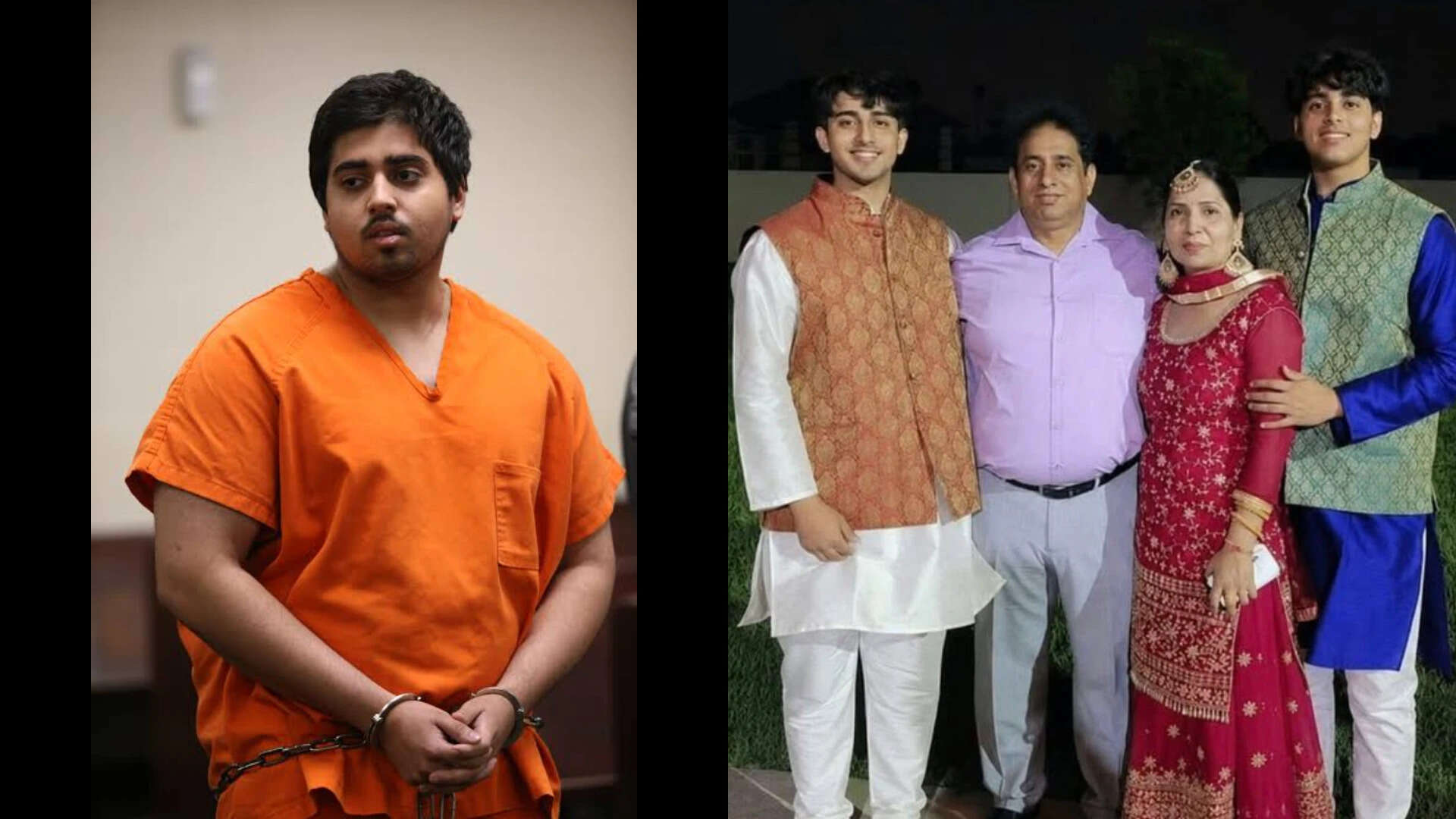
The coffee in the mayor’s office had gone cold, but Ricardo Villarreal didn’t notice. His hands wrapped around the ceramic mug, his eyes staring out into the dust-kissed Texas horizon. In a small town like Alton, or neighboring Palmview, the borders between neighbors don’t exist on a map; they are written in shared backyard barbecues, late-night conversations over fences, and the quiet comfort of knowing who has your back.
To the rest of the world, Sweeta Ram was a 56-year-old businessman from Punjab, India, who had built a quiet life in the Rio Grande Valley. To Villarreal, he was something entirely different. Learn more on a connected subject: this related article.
He was a brother.
The headline on the evening news read like an anonymous horror dispatch from a distance: a triple homicide on a quiet Texas street. A 19-year-old son, a handgun, a frantic police chase that ended in a crushing car wreck miles away. But behind the clinical language of police reports lies the devastating wreckage of a human family completely torn apart from the inside. More journalism by BBC News delves into related views on the subject.
Consider what happens when the very walls meant to protect you become the perimeter of your final moments. On that Tuesday morning, police officers rushed to a local residence. Inside, the quiet was shattered. Kamlesh Rani, 46, and her mother, 76-year-old Minder Kaur, were already gone. Sweeta Ram was still breathing when the flashing lights illuminated the driveway. Emergency workers did everything they could, pumping chest compressions in the back of an ambulance speeding toward the local hospital. It wasn't enough. The man who had spent decades building a sanctuary for his family died on a sterile gurney, miles away from the home he loved.
But the real tragedy lies elsewhere, lurking in the unmapped spaces of a quiet household.
Sweeta was the kind of person who filled a room without trying. He brought food, laughter, and an infectious, high-spirited energy to a community that can sometimes feel isolated by the heat and the flat South Texas landscape. Neighbors remember him standing in his front yard, speaking with absolute, unmistakable pride about his wife and his children. He had watched them grow up under the fierce Texas sun. He hosted get-togethers where the smoke from the grill smelled of spices from home and wood from the desert.
Then came Gaurav Chopra.
At 19, his son was on the cusp of everything. Instead, he chose a dark, incomprehensible path. Hidalgo County Sheriff Eddie Guerra would later stand before microphones and admit to reporters that there was no known motive. There were no warning signs. The family had never called the police for domestic disputes. There was no history of violence, no trail of breadcrumbs leading to the edge of the cliff.
Just a sudden, violent snap.
Imagine the confusion of the neighbors who watched Gaurav grow from a child into a young man, only to see him flee the house in a manic, high-speed panic, his car hurtingling down the tarmac until it slammed into an innocent vehicle, sending two completely unrelated bystanders to the hospital. A discarded handgun lay at the crash site, a cold piece of metal that had just reauthored the history of an entire community.
Grief in a small town behaves differently than it does in a city. It doesn’t dissipate in the crowds. It settles into the local grocery stores, the gas stations, and the pews. It lingers in the silence of a mayor who lost the one person who always had something positive to say.
We build lives out of thin air, crossing oceans and continents to plant roots in unfamiliar dirt, believing that hard work and love can shield us from the dark. We assume the dangers are outside the front door. We lock the deadbolts to keep the world out, never imagining that the true threat might already be sitting at the dinner table, smiling back at us.