In January 2026, Taiwan quietly took delivery of its first batch of 16 U.S.-made Army Tactical Missile Systems (ATACMS). While local media and defense analysts celebrate this as a massive leap in long-range strike capabilities, the physical reality on the ground is far more complex and dangerous. Beyond the tactical excitement of hitting targets up to 300 kilometers away, Taipei’s reliance on American solid-fuel ballistic missiles introduces severe supply bottlenecks, electronic warfare vulnerabilities, and forward-deployment risks that could easily backfire in a major cross-strait conflict.
The transaction is part of a broader, highly contentious effort to convert the self-ruled island into an unassailable fortress. But as the defense establishment celebrates the arrival of these mobile, truck-mounted weapons, a sober look at the strategic math reveals that having the capability to strike the Chinese mainland is not the same as deterring an invasion.
The Geography of Escalation
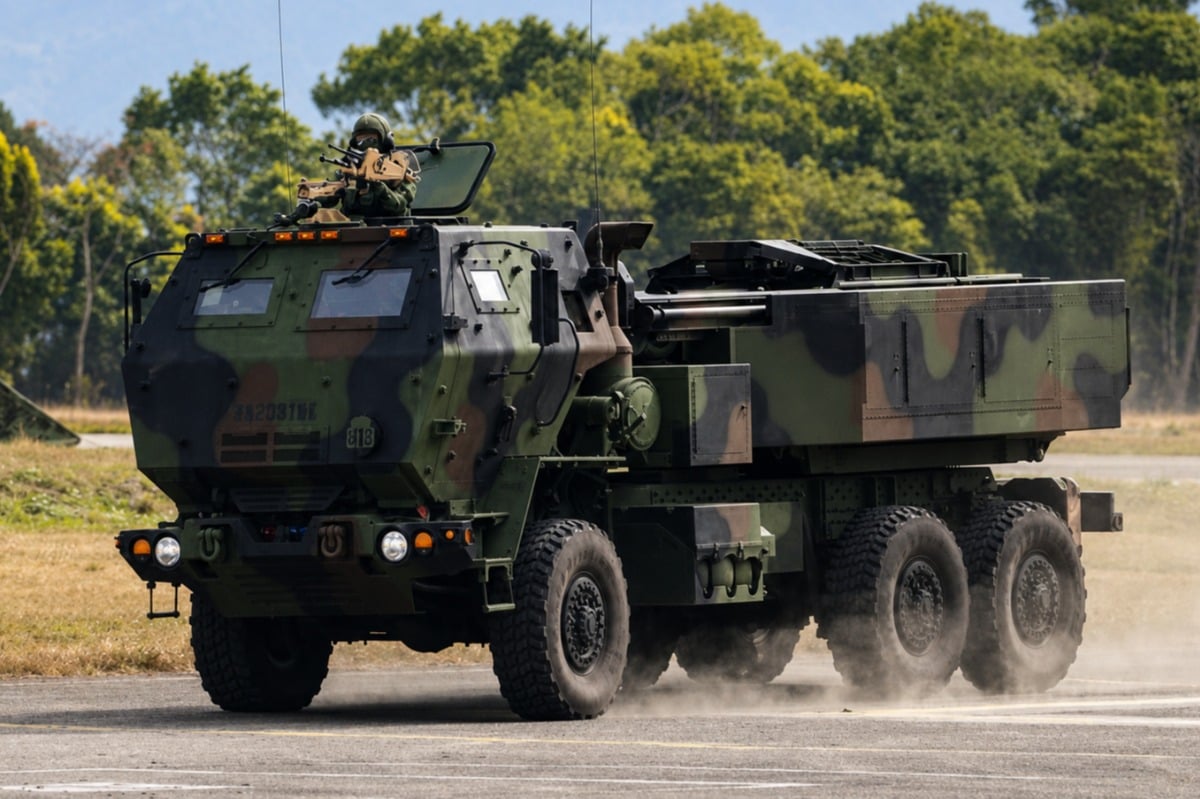
The strategic logic of acquiring the ATACMS is simple. By deploying these precision-guided missiles on the M142 High Mobility Artillery Rocket System (HIMARS), Taiwan’s military can theoretically strike the assembly areas, ports, and airfields of the People's Liberation Army (PLA) in Fujian and Zhejiang provinces before an invasion fleet can even launch.
The military has drawn up plans to forward-deploy these missile batteries to outlying islands like Penghu and Dongyin. Dongyin sits a mere 16 kilometers from the mainland coast. From this tiny outcrop of rock, a single ATACMS can reach critical PLA naval facilities, airbases hosting advanced fighter wings, and strategic missile bases.
But this proximity is a double-edged sword. Placing highly valuable, western-supplied systems so close to the mainland makes them prime targets for early, overwhelming pre-emptive strikes. Dongyin is within range of basic Chinese tube artillery and cheap commercial-grade suicide drones. A rocket battery parked on a flat, barren island has nowhere to hide. If a conflict breaks out, these forward-deployed systems will likely be destroyed in the opening minutes of a coordinated bombardment, long before they can fire a second salvo.
The military assumes it can use these weapons to disrupt Chinese invasion timelines. However, the geographic reality suggests that forward deployment is less of a strategic shield and more of an exposed tripwire.
The Flight Data Compromise
A quiet crisis in Taipei recently illuminated the hidden technical weaknesses of the ATACMS strategy. The Republic of China Army recently moved its planned live-fire exercises for the newly delivered missiles from Jiupeng Air Base in southern Taiwan to the United States.
The official reason given was safety, but the real concern was intelligence leakage. If Taiwan test-fires a ballistic missile from its own soil, Chinese electronic surveillance ships, ground-based radars, and satellites will capture every detail of the missile’s flight path, its terminal guidance behavior, and its electronic signatures.
This precaution highlights a glaring vulnerability:
- Electronic Warfare Saturation: The ATACMS relies heavily on GPS-aided inertial guidance.
- Combat Data Exposure: The system has been used extensively by Ukrainian forces. This means Russian electronic warfare units have spent months analyzing its guidance frequencies and GPS-jamming vulnerabilities.
- The Sino-Russian Intelligence Pipeline: It is highly probable that Moscow has shared these electronic countermeasures and jamming profiles with Beijing.
By the time Taiwan fires an ATACMS in actual combat, the PLA may already have the exact electronic warfare algorithms needed to jam its GPS receivers, turning a million-dollar precision weapon into an unguided, drifting rocket.
The Bottleneck of American Production
Even if the guidance systems remain secure, Taiwan faces a basic arithmetic problem. The first batch of 16 missiles is a drop in the ocean. While the U.S. government approved a massive $11 billion arms package that includes 420 additional ATACMS, there is currently no formal contract or set delivery timeline for these weapons.
The American defense industrial base is visibly buckling. The Pentagon is struggling to replenish its own stockpiles while simultaneously feeding high-intensity conflicts in Europe and the Middle East. Manufacturers are plagued by shortages of solid rocket motors, machine tools, and microelectronics.
To make matters worse, political dysfunction in Taipei is threatening the purchases. Taiwan's legislature has repeatedly deadlocked over the special defense budgets required to fund these massive American acquisitions. Without legislative consensus, funding for subsequent batches of missiles remains frozen, leaving the military with a highly publicized capability that exists mostly on paper.
Taiwan ATACMS Acquisition Outlook (2026)
┌───────────────────────────┬──────────────────────────────────┐
│ Status                    │ Missile Count                    │
├───────────────────────────┼──────────────────────────────────┤
│ Delivered (Jan 2026)      │ 16 units                         │
│ On Order (Pending 2026)   │ 48 units                         │
│ Approved (No Contract)    │ 420 units                        │
└───────────────────────────┴──────────────────────────────────┘
Domestic Alternatives Take the Stage
Recognizing the fragility of the American supply chain, Taipei is quiet about its most critical defense initiatives. The National Chung-Shan Institute of Science and Technology is rapidly expanding domestic missile production facilities.
Rather than waiting for American factories to catch up, Taiwan is pouring capital into its own programs, most notably the Hsiung Feng II and III anti-ship missiles, and the Hsiung Sheng land-attack cruise missile. The Hsiung Sheng, with a range estimated at over 1,000 kilometers, can strike deep into Chinese territory, far beyond the reach of the ATACMS.
Unlike American sales, domestic programs do not require congressional approval, are not subject to foreign policy shifts in Washington, and can be mass-produced at a fraction of the cost. The military plans to deploy over 1,400 domestic and imported anti-ship missiles by the end of the year, creating a dense coastal defense network that relies far less on American delivery schedules.
This domestic shift reveals a growing, pragmatically cynical view within Taiwan's defense establishment. American weapons make great headlines and show political solidarity, but domestic production is what actually keeps the lights on.
Relying on foreign missile systems that have already had their electronic secrets exposed on European battlefields is a precarious foundation for national defense. True deterrence will not come from a handful of imported tactical missiles, but from Taiwan’s ability to build, maintain, and fire its own weapons when the supply ships stop coming.