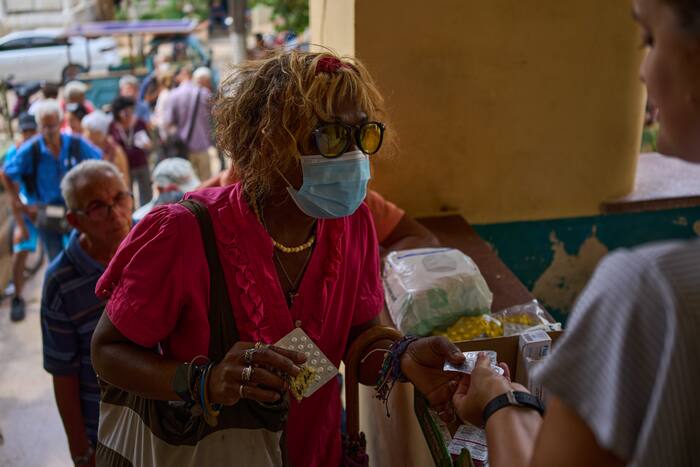
The standard narrative writes itself. Headlines mourn the plight of ordinary Cubans navigating empty state-run hospital shelves, painting community networks of improvised remedies and neighborhood medicine pools as heroic triumphs of grassroots solidarity. It is a comforting fable. It makes for compelling television. And it is completely backward.
Free community pharmacies and informal neighborhood survival mechanisms do not solve a crisis. They subsidize failure. By stepping in to absorb the catastrophic shockwaves of structural collapse, these localized stopgaps remove the exact pressure required to force systemic reform. When compassion becomes the shock absorber for a broken state apparatus, you stop fixing the engine and start praising the passengers for learning how to push the car. If you enjoyed this post, you might want to check out: this related article.
Let us strip away the romanticism.
The Economics of Eternal Scarcity
Every time a local volunteer network or church group redistributes aspirin, antibiotics, or herbal tinctures to neighbors in need, a vital signal is suppressed. Markets and states operate on feedback loops. When a centralized distribution mechanism fails to deliver basic pharmacotherapy, the political cost of that failure ought to be immediate, intolerable, and loud. For another look on this development, refer to the latest coverage from The New York Times.
Instead, decentralized survival networks absorb the friction. They create a quiet cushion that absorbs the blows of economic mismanagement. The state saves face because people do not die in the streets en masse, and the underlying inefficiencies—price controls, central planning bottlenecks, and the criminalized suppression of private medical commerce—remain untouched.
I have watched similar dynamics play out across parallel distribution economies in developing markets for over a decade. Whenever well-meaning communities construct shadow supply chains to bypass official paralysis, they inadvertently grant the architects of that paralysis an extension on their lease. You cannot reform a system that you keep accidentally saving from itself.
The conventional take views these community pharmacies as mutual aid at its finest. The reality is far uglier: they are the shock absorbers of state stagnation.
Dismantling the Myth of Free Distribution
Price the medicine at zero, and you get exactly zero supply. Basic economics does not take a ideological holiday just because a government bans private enterprise. When drugs are nominally free but practically nonexistent, the actual price citizens pay is measured in hours spent waiting, connections leveraged, black-market markups, and deteriorating health outcomes.
Let us look at how the machinery actually breaks down.
- Price Controls Destroy Margins: When the official price of a vital pharmaceutical is fixed below the cost of logistics, importation ceases to exist outside of emergency state-to-state donations.
- Black Markets Replace Infrastructure: Because official channels run dry, underground networks take over. These are not romantic community cooperatives; they are high-risk gray-market trades marked by counterfeit risks, exorbitant cash-or-barter pricing, and zero quality control.
- The Informal Tax: Ordinary people spend more cognitive bandwidth and personal capital tracking down basic antihypertensives through informal favor-trading than they would ever spend in a transparent, monetized market economy.
Call it what it is. A system where you must rely on neighborhood barter or underground medical scraps is not egalitarian. It is a regressive tax on the desperate, hitting those with the fewest social connections the hardest.
Why the Aid Model Perpetuates the Trap
Aid workers and international observers love to celebrate resilience. Resilience is a wonderful trait for surviving a hurricane. It is a toxic trait for surviving a permanent political architecture that refuses to modernize.
When you frame neighborhood pharmacies as inspiring models of community resourcefulness, you validate the premise that the public sector has no obligation to function. You tell the populace that their job is to hustle, improvise, and make do with scraps, while the central planners retreat behind insulated administrative walls.
True reform looks messy, disruptive, and uncomfortable. It requires letting broken systems fail loud enough that they can no longer be ignored or patched over with homegrown herbal remedies and donated pills from suitcase travelers.
If you want to help a population trapped in medical scarcity, stop praising their ability to survive without medicine. Demand the dismantling of the monopolies that starved them in the first place.
Stop managing the symptom. Smash the bottleneck.


