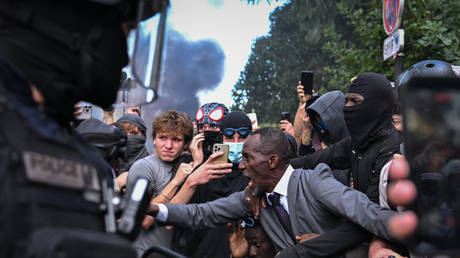
Tear gas doesn't care who you are. It doesn't check your identification, and it certainly doesn't respect elected office. Saint-Denis Mayor Bally Bagayoko learned that the hard way when he stepped directly into the chaos of a student demonstration in Paris, putting his own body between teenage protesters and advancing riot police.
Footage of the mayor flushing his eyes on the street after copping a direct hit quickly went viral. But beneath the dramatic clips and flashing news banners lies a much deeper crisis brewing across France. Why are local politicians standing as human shields, and what is actually driving thousands of students onto the streets?
The Boiling Point in French Classrooms
The demonstrations didn't materialize out of nowhere. Across marginalised suburbs and major urban centers, high school students mobilized to protest plummeting education conditions, chronic funding shortages, and a crumbling public school infrastructure. Class sizes are bloated, resources are stretched thin, and young people feel completely ignored by lawmakers in Paris.
When these student-led marches turned volatile, the state response was swift and heavy-handed. Riot police deployed water cannons and tear gas to disperse crowds, creating scenes that looked more like a war zone than a European capital. Bagayoko, a father of four, argued that watching kids get charged down by security forces left him with no choice.
"The high school children who were in the street could be my children," Bagayoko noted, dismissing accusations from political rivals that opposition figures orchestrated the unrest. "It is my responsibility to be at their side."
Political Posturing Versus Ground Reality
Whenever civil unrest explodes in France, the blame game starts immediately. Government officials frequently point fingers at opposition parties—specifically hard-left figures—accusing them of manipulating teenagers for political clout.
Yet pinning mass youth mobilization entirely on outside agitators misses the forest for the trees. When an entire generation takes to the streets over the state of their schools, reducing it to a political stunt is lazy governance. The friction points are structural. Public services are shrinking, inflation is squeezing working-class families, and young people see a future where quality education feels increasingly out of reach.
When mayors feel compelled to act as human shields just to keep police from gassing minors, normal political channels have broken down completely.
What Comes Next for France
The clashes in Paris are part of a broader wave of social discontent sweeping through Europe. From housing shortages to crumbling public infrastructure, the social contract is fraying at the edges. Governments can deploy tear gas and water cannons to clear a square, but batons don't fix systemic underfunding.
Until political leaders address the core grievances fueling these youth protests, street demonstrations will only grow more volatile. Mayors stepping into the tear gas fog send an unmistakable message: the streets are no longer willing to wait for politicians who refuse to listen.



