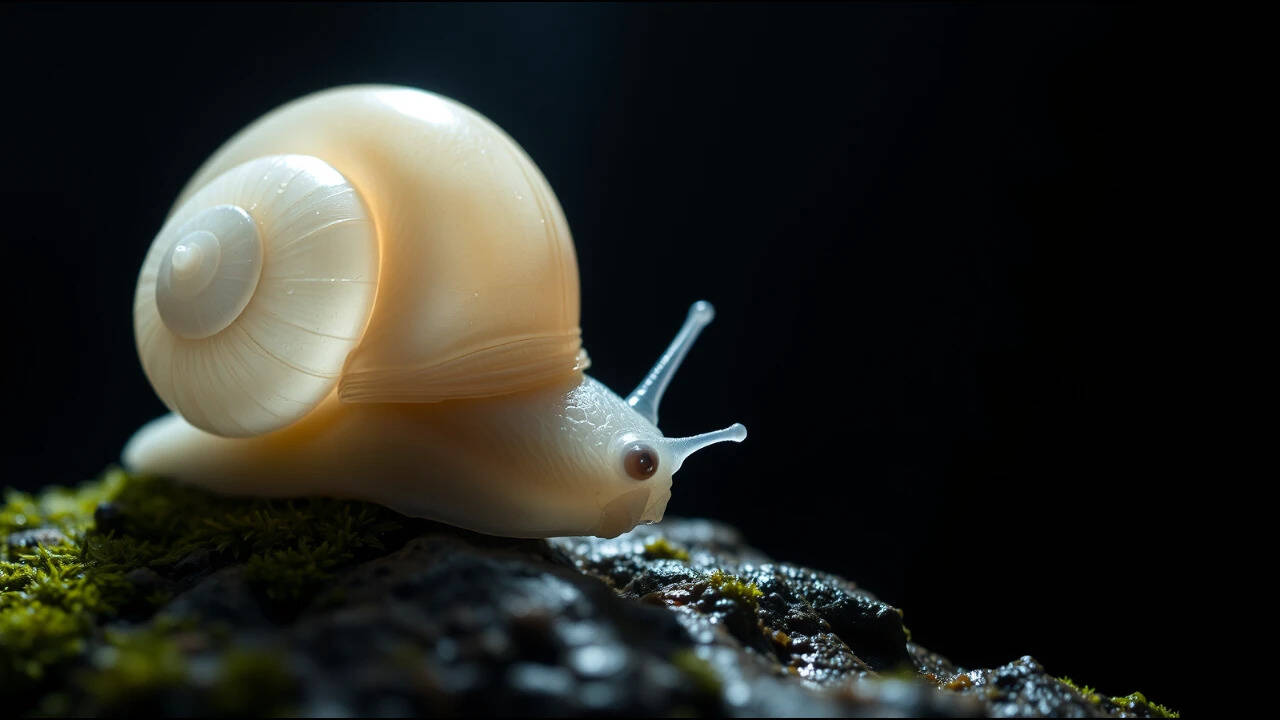
Subterranean ecosystems operate under severe resource constraints, forcing evolutionary trajectories distinct from surface environments. The discovery of China’s first freshwater cave snail within an aphotic subterranean chamber provides a concrete case study in extreme habitat adaptation. Standard journalistic accounts treat such biological finds as isolated novelties, obscuring the rigorous evolutionary mechanics, hydrological isolation factors, and physiological trade-offs that govern life in permanent darkness.
Evaluating this discovery requires shifting the analytical framework from simple species cataloging to a multi-variable study of subterranean colonization. The presence of a localized freshwater gastropod in a dark mountain cave represents the culmination of prolonged geographic isolation, extreme metabolic downregulation, and morphological reduction.
The Hydrological Isolation Matrix
Subterranean aquatic species rarely emerge through random dispersion. They are the surviving nodes of ancient surface populations trapped by radical environmental shifts.
The primary driver of this isolation is tectonic and climatic restructuring. As surface hydrological networks dry, fragment, or submerge beneath karst topographies, surface-dwelling ancestors are funneled into subterranean drainage basins.
Surface Hydrology -> Karst Sinking -> Subterranean Aquifer Trapping -> Isolation Bottleneck
This pipeline forces a strict environmental filter.
- Hydrodynamic Stability: Unlike surface streams subject to seasonal flooding and thermal spikes, deep cave aquatic systems maintain relative thermodynamic and hydrological stochasticty.
- Nutrient Deprivation: Surface inputs are limited to allocthonous organic matter, primarily delivered via percolating rainwater, root exudates, or guano deposits from bats and cave-roosting birds.
- Topographic Confinement: Subterranean water bodies function as ecological islands. Gene flow between separate cave systems is frequently zero due to impermeable rock barriers and dry-zone boundaries.
When a population is confined to a single cave chamber or aquifer segment, the effective population size plummets. This structural bottleneck strips genetic variation, accelerating either extinction or rapid, specialized adaptation.
The Evolutionary Cost Function of Aphotica
Life without light alters the fundamental energetic balance of an organism. In surface environments, vision and pigmentation consume significant portions of an animal's metabolic budget.
Natural selection in a permanent dark zone operates through energetic parsimony. Every calorie counts toward survival and reproduction, making energetically expensive traits liabilities.
Metabolic Redirection
- Visual Apparatus Atrophy: Eyes require constant cellular maintenance and neural processing overhead. In the absence of photons, mutations that reduce or eliminate ocular structures are no longer penalized by selection, leading to microphthalmia or total anophthalmia.
- Pigmentation Loss: Melanin synthesis demands metabolic precursors and enzymatic energy. Without ultraviolet radiation or visual camouflage pressures, depigmentation becomes the default energetic savings mechanism.
- Sensory Compensation: The energetic deficit created by losing sight is systematically reallocated toward mechanoreceptive, chemosensory, and tactile apparatuses. Long antennae, specialized setae, and heightened tactile receptors allow navigation and prey detection in total darkness.
The snail under analysis exhibits these exact trade-offs. The shell structure and soft-body morphology reflect a minimization of structural waste, prioritizing calcium conservation in a calcium-carbonate-buffered karst environment where mineral acquisition is chemically constrained.
Morphological and Physiological Adaptations
Gastropod biology in subterranean niches relies on specific structural shifts to counter chronic starvation and navigational hurdles.
Surface freshwater snails graze on high-density periphyton and algal mats fueled by solar energy. Cave environments lack primary producers entirely, shifting the base of the food web to chemolithoautotrophic bacteria and heterotrophic biofilms.
Feeding Mechanics under Starvation Pressures
- Radula Specialization: The radula must adapt to scrape thin microbial films off rough limestone walls rather than chewing macro-vegetation.
- Extended Lifespan and Slowed Metabolism: With scarce, unpredictable food inputs, subterranean species routinely evolve lower metabolic rates, delayed sexual maturity, and extended lifespans compared to surface relatives. This buffers the population against multi-year starvation cycles when organic inputs from the surface cease.
- Shell Thinning: Calcium carbonate availability in karst waters varies wildly. While limestone caves are rich in dissolved calcium, the energetic cost of shell deposition remains high when metabolic intake is low. Subterranean gastropods often display thinner, more translucent shells than their epigean counterparts, maximizing internal volume while minimizing material expenditure.
The Biogeographic Significance of Karst Endemism
The identification of a novel subterranean gastropod in China highlights the vast, under-sampled nature of Asian karst landscapes. South China contains one of the most extensive karst formations on Earth, spanning millions of hectares across provinces like Guangxi, Guizhou, and Yunnan.
These cave networks function as evolutionary incubators. Because each cave or isolated aquifer acts as an independent laboratory, speciation events occur at high rates across micro-geographic scales. Two caves separated by only a few kilometers of impenetrable dry limestone can harbor entirely distinct, non-interbreeding lineages of subterranean fauna.
This extreme endemism creates a severe conservation vulnerability. A single hydrological disruption, such as agricultural runoff, industrial pollution, or dam construction upstream, can wipe out an entire global population restricted to a single subterranean pool.
Strategic Assessment for Subterranean Biodiversity Management
Understanding the ecological mechanics of China's newly discovered freshwater cave snail moves conservation beyond passive observation. Effective management of subterranean ecosystems requires treating aquifers and cave networks as integrated hydrological units rather than isolated geological curiosities.
- Non-Invasive Monitoring: Sampling must rely on environmental DNA (eDNA) profiling of cave waters to map subterranean biodiversity without disturbing fragile micro-populations.
- Watershed Protection: Surface land-use policies directly dictate subterranean health. Agricultural fertilizer infiltration alters the chemical balance of karst waters, favoring opportunistic generalists over specialized troglobites.
- Taxonomic Baseline Expansion: Current species inventories in subterranean Asia capture a fraction of actual diversity. Funding must target integrative taxonomy, combining morphological analysis with mitochondrial DNA barcoding to map cryptic lineages before anthropogenic habitat degradation outpaces scientific discovery.
The discovery of a freshwater cave snail in a dark mountain chamber is not a statistical anomaly. It is a predictable outcome of evolutionary pressure acting within isolated subterranean silos, underscoring the necessity of treating cave systems as high-priority zones for conservation and physiological research.
:max_bytes(150000):strip_icc()/ar-American-Cheese-taste-test-horizon-4x3-54cc339550cd44b9a818c17bdfd5428d.jpg)