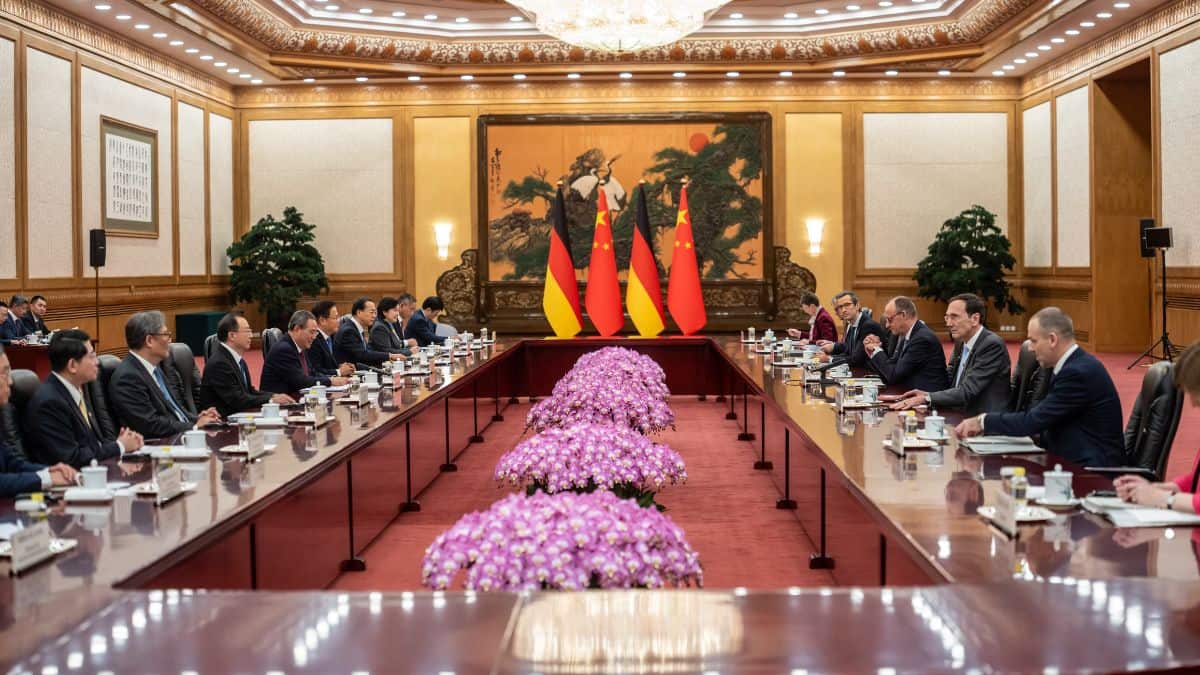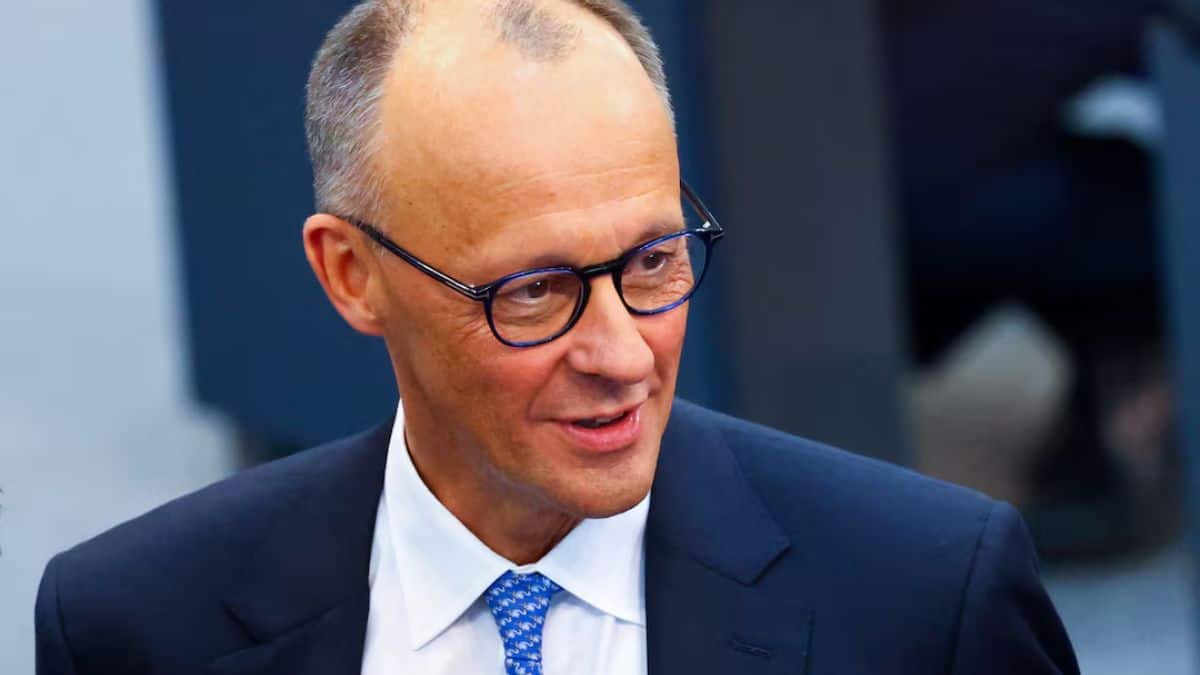
German Chancellor Friedrich Merz is not visiting Beijing to play nice or exchange pleasantries over porcelain tea sets. He is there because the German industrial engine is sputtering, and the traditional "change through trade" philosophy has officially hit a brick wall. This delegation, packed with the heavyweights of the DAX, represents a desperate attempt to renegotiate the terms of a relationship that has become dangerously lopsided. Merz is attempting to balance the demands of a struggling domestic economy with the intensifying pressure from Washington to decouple from Chinese supply chains. It is a tightrope walk over a geopolitical abyss.
The reality on the ground in Berlin is one of quiet panic. For decades, the German economic model relied on cheap Russian energy and an insatiable Chinese hunger for German machinery and automobiles. Both pillars have crumbled. With energy costs remains volatile and Chinese domestic brands now outcompeting Volkswagen and BMW on their own turf, Merz has arrived in China with a mandate to stop the bleeding. The goal is no longer just "more trade," but rather a fundamental reset of how German intellectual property is protected and how much market access German firms can actually expect in an increasingly insular Chinese economy.
The Illusion of Fair Market Access
The primary grievance being aired behind closed doors in Beijing involves the systematic tilting of the playing field. German executives accompanying Merz are reporting a consistent pattern of "hidden" barriers that make it nearly impossible for foreign firms to compete with state-subsidized Chinese giants. While China has officially lowered some tariffs, the bureaucratic hurdles—ranging from opaque licensing requirements to localized "security" standards—have grown taller.
Merz is pushing for concrete reciprocity. This isn't the vague optimism of his predecessors. He is carrying a ledger of specific instances where German firms were frozen out of public procurement contracts in China, even as Chinese green-tech firms flooded the European market. The message is blunt: if German companies cannot compete fairly in China, the political appetite in Berlin for protecting Chinese interests in the European Union will vanish.
This isn't just about car sales. It’s about the future of the "Mittelstand," the small and medium-sized enterprises that form the backbone of German industry. These companies are terrified. They lack the legal departments and political connections of a Siemens or a BASF, making them easy targets for forced technology transfers. Merz knows that if these companies fail, the German social contract fails with them.
The Shadow of the White House
Every move Merz makes in Beijing is being watched by a skeptical administration in Washington. The United States has made its position clear: any European pivot toward China that compromises Western security or strengthens China’s military-industrial complex will be met with consequences. This puts Germany in a vice.
The Chancellor is trying to frame this trip as a "de-risking" mission rather than a "decoupling" one. It is a linguistic distinction that barely masks the underlying tension. By bringing the CEOs of Germany’s largest corporations, Merz is signaling to the U.S. that Germany’s economic survival depends on maintaining some level of engagement with the world’s second-largest economy. However, he is also signaling to Beijing that he is willing to align more closely with U.S. export controls if China doesn't offer significant concessions on trade.
The Automotive Crisis at the Center
The sheer scale of the crisis facing the German auto industry cannot be overstated. For the first time in history, German automakers are losing their technological edge. The transition to electric vehicles (EVs) has been a disaster for the legacy brands that once dominated the global market. Chinese manufacturers like BYD and Xiaomi are producing cars that are cheaper, more software-integrated, and more appealing to the younger Chinese demographic.
Merz is attempting to negotiate a stay of execution for these companies. He wants to ensure that German carmakers can at least maintain their joint-venture profits while they attempt to catch up on battery technology. But the leverage is shifting. China no longer needs German engineering to build a world-class car. They have their own. This shift in power dynamics has stripped the German delegation of its usual arrogance, replaced by a gritty, survivalist pragmatism.
The Hidden Cost of the Green Transition
One of the most contentious points of the Merz mission involves the supply chains for renewable energy. Germany has bet its future on the "Energiewende," yet the hardware required to achieve it—solar panels, wind turbine components, and rare earth minerals—is almost entirely controlled by China. Merz is in the awkward position of criticizing Chinese trade practices while begging for a steady flow of the materials needed to meet Germany’s climate goals.
This dependency is a strategic nightmare. If Beijing decides to weaponize its control over green-tech exports, the German economy would grind to a halt within months. Merz is reportedly discussing "diversification agreements," which is a polite way of asking China not to cut off the supply while Germany frantically tries to build its own production capacity elsewhere. It is a race against time that Germany is currently losing.
Intellectual Property as a Battlefield
The "trade reset" Merz is calling for hinges on the protection of intellectual property (IP). In the past, German companies often traded their secrets for short-term market access. That era is over. Merz is proposing a new framework for R&D cooperation that includes strictly enforced penalties for IP theft.
The Chinese response has been predictably cool. Beijing views technology as a national security asset, not just a commercial one. For Merz to succeed, he needs more than just promises; he needs a mechanism for independent arbitration. Given the current political climate in China, that remains a distant hope.
Why This Trip Might Fail
Despite the bravado and the high-profile delegation, there are several reasons why this trade reset could result in little more than a stack of non-binding memorandums.
- Internal EU Divisions: France and the Eastern European states are increasingly hawkish on China. Merz does not speak for a united Europe, and Beijing knows it. They will attempt to play EU members against each other to dilute any collective pressure.
- China’s Economic Cooling: China is facing its own internal economic struggles, from a property market collapse to high youth unemployment. Xi Jinping may not have the political capital to offer the kind of concessions Merz is demanding without appearing weak to his own domestic audience.
- The Zero-Sum Mindset: Both sides are increasingly viewing trade through a security lens. When trade becomes a weapon, the room for win-win negotiations shrinks to almost nothing.
A New Era of Transactional Diplomacy
The Merz approach signals the end of the romanticized view of global trade that dominated the last thirty years. We are entering an era of hard-nosed, transactional diplomacy. Merz isn't looking for a partnership; he's looking for a treaty that prevents a total collapse of the German industrial base.
The corporate heavyweights on this trip are no longer the "ambassadors of German quality." They are more like survivors on a lifeboat, trying to negotiate a safe harbor. If Merz returns to Berlin without a concrete agreement on market access and IP protection, it will be a signal to the markets that the "German Miracle" is officially over.
The Chancellor’s visit is a gamble that he can convince China that a stable, prosperous Germany is more valuable than the short-term gains of predatory trade practices. It is a bet that the logic of the market can still triumph over the logic of the state. If he is wrong, the repercussions will be felt far beyond the borders of Germany.
Watch the specific language used in the joint communiqués regarding "overcapacity" and "industrial subsidies." If those terms are absent or watered down, Merz has failed. The time for diplomatic niceties has passed; now we see if German industry has any teeth left.
Order a full audit of your supply chain dependencies before the next round of tariffs hits.