The hand-wringing in Whitehall and the halls of academia has reached a predictable, deafening crescendo. The narrative splashed across the tech press and mainstream media follows a tired script: British physics is under existential threat, dratstic budget cuts are about to cripple our scientific crown jewels, and the UK is on the fast track to technological irrelevance.
It is a comforting story for institutional bureaucrats. It shields them from accountability. But it is entirely wrong. Don't miss our earlier post on this related article.
The lazy consensus screams that more money automatically equals better science. We are told that without massive, open-ended state subsidies, fields like quantum computing, nuclear fusion, and semiconductor research will simply wither away. Having spent years tracking research output versus capital allocation, I can tell you the reality is far uglier. The British scientific establishment has become bloated, risk-averse, and obsessed with securing the next grant rather than delivering actual breakthroughs.
Choking off the endless supply of easy capital is not a death sentence. It is a necessary diagnostic tool. If you want more about the history of this, Wired provides an in-depth summary.
The False Idols of Big Physics
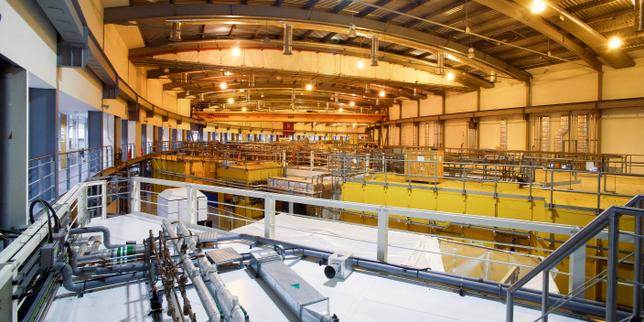
Every time a funding crisis hits the headlines, proponents of the status quo point to massive, centralized legacy projects. They want you to believe that the soul of British innovation lives exclusively in mega-labs and multi-million-pound particle accelerators.
This is institutional gaslighting.
Let us look at how real breakthroughs happen. Historically, the most disruptive shifts in physics did not come from bloated committees managing massive budgets. They came from lean, agile teams operating under intense constraints. When Ernest Rutherford split the atom at the Cavendish Laboratory, he did it with string, sealing wax, and a budget that would look like pocket change to a modern university department.
The current funding model rewards a specific kind of academic gamification. To secure a piece of the state-sponsored pie, researchers must commit to multi-year timelines, predictable outcomes, and safe, incremental experiments. It is an environment designed to produce paperwork, not progress.
When you flood a sector with uncritical capital, you create a bubble. In the UK, that bubble has manifested as a glut of administrative overhead. A shocking percentage of every pound allocated to physics research never touches a test tube or a supercomputer. It is eaten alive by university overheads, grant writing consultants, and diversity, equity, and inclusion compliance officers.
Cutting the budget forces a brutal, long-overdue triage. It forces institutions to ask: What are we actually discovering, and what are we just maintaining out of habit?
Dismantling the Premise of the Funding Panic
People often look at the panic surrounding science funding and ask the wrong questions. The public discourse is dominated by flawed premises that need to be dismantled immediately.
Do budget cuts mean British scientists will stop innovating?
Only if you believe innovation is a commodity you buy by the ton. The opposite is frequently true. Resource scarcity forces prioritization. When funding dries up for safe, iterative research, ambitious minds are pushed to take radical, low-cost swings. It shifts the focus from "how much money can we spend?" to "how elegant can we make the solution?"
Won't the UK lose all its top talent to the US and Europe?
This is the standard blackmail tactic used by university vice-chancellors. "Give us money or the brains leave." Let them. The talent that flees at the first sign of a lean budget is rarely the talent that drives foundational shifts. The scientists who stay are the ones forced to build leaner, more efficient research models. Furthermore, the US model is increasingly bogged down by the exact same bureaucratic paralysis.
Can private enterprise fill the gap left by state funding?
Yes, but not in the way most people think. The traditional view is that private venture capital only wants near-market commercial applications. That is a misunderstanding of modern venture studios and deep-tech funds. Private capital is increasingly willing to fund high-risk, high-reward foundational physics precisely because the state has made the academic route so slow and painful.
The Tragedy of the Subsidy Trap
Imagine a scenario where a brilliant young physicist wants to explore a radical new approach to room-temperature superconductivity. Under the current state-funded paradigm, their first step is not to enter the lab. Their first step is to spend six months filling out a grant application for a research council.
To win that grant, they must convince a panel of established peers—the very people whose careers are built on the existing orthodoxy—that their idea is viable. The system is fundamentally rigged against disruption. It protects the status quo because the status quo controls the peer-review panels.
This is the subsidy trap. It turns brilliant contrarian thinkers into corporate middle managers.
When the state dials back its funding, this artificial life-support system collapses. The immediate aftermath is undeniably painful. Some labs will close. Some post-doc contracts will not be renewed. But the long-term effect is a clearing of the intellectual topsoil.
The projects that survive are those that can demonstrate undeniable value, whether through sheer scientific brilliance or immediate practical utility. More importantly, it breaks the monopoly that universities hold on deep-tech research. It forces a migration of talent out of the ivory tower and into the private sector, where the feedback loops are faster, harsher, and infinitely more productive.
The Actionable Alternative: Lean Science
We need to stop begging the Treasury for scraps and change how physics is executed in the UK. If the state is going to spend money, it should not be through the bloated mechanism of research councils and university block grants.
- Fund People, Not Projects: Instead of funding massive five-year project proposals with predictable outcomes, give smaller, unrestricted grants directly to exceptional individual researchers. Let them pivot, fail, and change direction without needing to file an amendment form with a bureaucrat.
- Embrace the Skunkworks Model: Break research out of the traditional university structure. Create small, hyper-focused institutes with zero administrative bloat, a fixed five-year lifespan, and a single, seemingly impossible objective. If they fail, shut them down. No legacy costs.
- Build Direct Bridges to Deep Tech: Tax incentives should be drastically tilted toward corporate R&D laboratories rather than academic institutions. A dollar spent on a physics lab inside a company that actually builds hardware is structurally more efficient than a dollar spent inside a university geography department trying to justify its tech-transfer office.
The downside to this approach is obvious: it lacks security. It is chaotic. It will result in high-profile failures. But security is the enemy of revolutionary science. The illusion that we can progress by keeping every mid-tier university physics department perfectly funded and perfectly comfortable is a lie we can no longer afford to tell.
The budget cuts are not a crisis. They are an eviction notice for a system that has spent decades growing fat on the taxpayer's dime while delivering incrementalism. It is time to stop mourning the loss of the budget and start capitalizing on the freedom of the constraints.