The Empty Rhetoric of Total Eradication
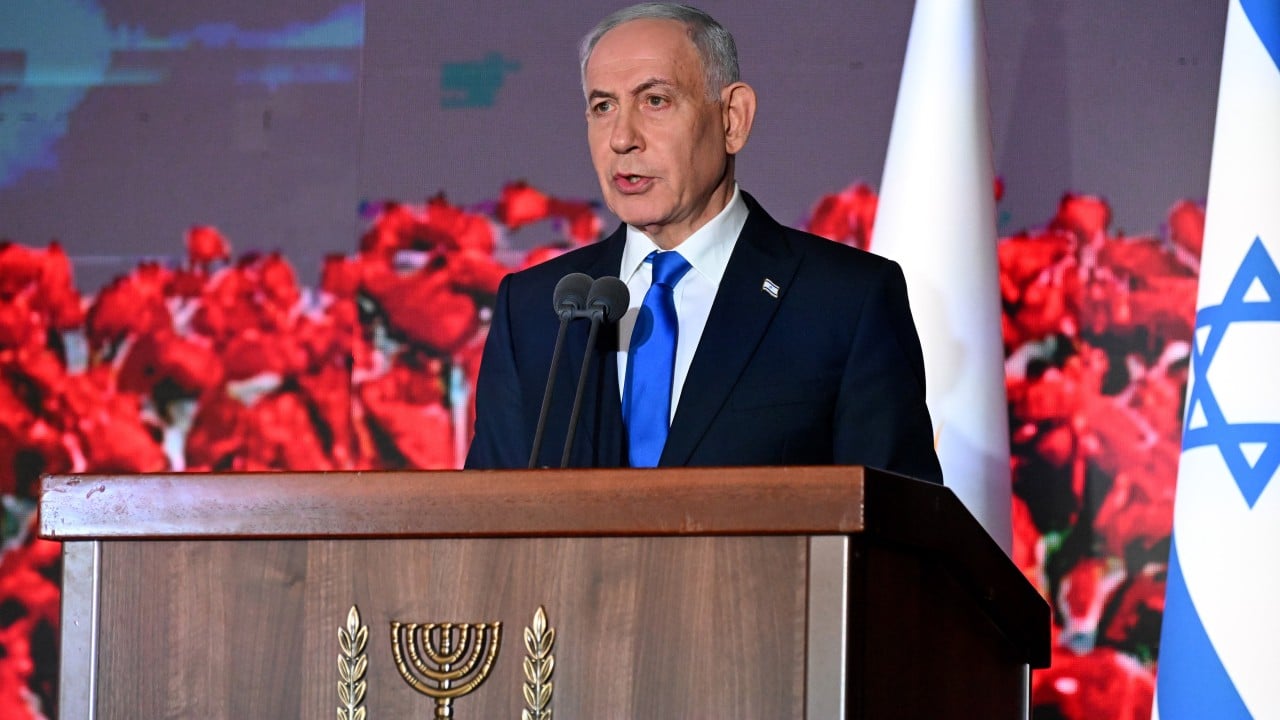
Benjamin Netanyahu stands at podiums and repeats a comforting fairy tale. The line is clean, muscular, and entirely detached from military reality. There will be no Hamas rule in Gaza. The phrasing implies a neat surgical removal, a localized tumor cut out by a sovereign scalpel, leaving a pristine patient behind.
It is a sales pitch designed for domestic political survival, and anyone who has spent five minutes studying asymmetric urban warfare knows it is a structural impossibility.
Political leaders love binary outcomes because voters demand them. War is framed as a switch you flip from on to off, from enemy control to liberation. But insurgencies do not vanish because a speechwriter found a punchy cadence for an October 7 memorial. When you flatten a city block, you do not destroy an ideology; you mass-produce its future recruits. Every collapsed apartment building is a radicalization seminar. Every grieving relative is a permanent hostile actor.
The lazy consensus in mainstream coverage accepts the premise that military dominance equals political erasure. It treats governance in a failed state like a corporate hostile takeover. You oust the board of directors, install your own executives, and ring the bell on the exchange.
History offers a brutal corrective to this delusion. Insurgency is not a fixed army wearing uniforms in a trench. It is an underground network embedded in the social fabric, sustained by trauma, scarcity, and a complete absence of alternatives.
The Vacuum Business
Power hates a vacuum. Nature hates a vacuum. And geopolitics reacts to a vacuum with chaotic violence.
When you dismantle a governing apparatus—no matter how brutal, corrupt, or murderous that apparatus is—you assume the administrative burden of feeding two million people, managing sewage, running hospitals, and policing streets. If you refuse that burden, something else fills the space.
Who takes over when the dust settles? The Israeli security establishment has no answer because the answer requires admitting a bitter truth. There is no moderate, Western-friendly technocratic elite waiting in the wings to take the keys to Gaza City. Anyone perceived as cooperating with an occupying or invading force is immediately delegitimized.
The alternative to Hamas rule is not peace and democracy. The alternative is permanent warlordism, clan-based fiefdoms, and localized criminal gangs filling the administrative void. That is not a step forward; it is Somalia on the Mediterranean.
We saw this script play out in Iraq. The Coalition Provisional Authority dissolved the Baathist military and civil service, convinced that removing the top layer would instantly liberate a grateful populace. Instead, they uncorked a sectarian civil war and birthed a succession of extremist factions far more lethal than the ones they replaced. Smart strategists understood instantly that institutional decapitation without a viable, organic replacement is an act of strategic self-harm. Yet leaders keep repeating the exact same error, expecting different physics.
The Metrics of Delusion
Let us look at the operational reality on the ground. A movement rooted in underground tunneling and asymmetrical guerrilla tactics cannot be defeated by conventional armor divisions.
You can seize territory. You can kill commanders. You can turn square miles of concrete into gravel. But you cannot bomb an idea out of someone's head when their reality is defined by rubble and blockades.
Military analysts talk about tactical victories as if they automatically translate into strategic wins. They do not. A tactical victory without a political horizon is just attrition for the sake of optics. Netanyahu vows to prevent any return of the status quo ante, yet every month of sustained military engagement deepens the very conditions that make alternative governance impossible.
The math is unforgiving. If your operational goal requires an infinite military occupation of a hostile civilian population, you have already lost. Empires bleed out in urban alleyways while their leaders pretend they are winning on points.
The Unspoken Trade-Off
Nobody in power wants to state the real price of total eradication because the public would revolt at the ledger.
To prevent a resurgence of underground political-military movements in a densely packed enclave, an external power would have to govern it with an iron fist for a generation. That means permanent checkpoints, perpetual curfews, constant counter-insurgency sweeps, and a blank check written in blood and treasure.
Are the citizens of Israel ready for permanent conscription cycles and endless low-intensity conflict bleeding into the next decade? Is the international community willing to bankroll the multi-decade reconstruction of a territory kept under permanent military lockdown?
Of course not. The political class prefers the illusion of a clean break. They offer speeches about absolute victory because the alternative requires admitting that some problems in statecraft do not have military solutions. Sometimes, you are not curing a disease; you are managing a chronic
Why Netanyahu is Completely Wrong About the Day After in Gaza
news
The official script sounds clean enough for a podium speech. Netanyahu stands at an October 7 memorial, microphone gripped tight, and declares that Hamas will never rule Gaza again. The crowd nods. The pundits transcribe it. Western capitals write policy papers around it. Everyone pretends that political rhetoric functions as physical gravity, as if uttering a flat refusal into a microphone can repeal the laws of asymmetric warfare and urban insurgencies.
It is a comforting delusion. And it is entirely detached from reality.
Let us look at what actually happens when modern nation-states try to erase political movements through pure kinetic force without a viable governing alternative. I have watched this movie before across multiple theaters of conflict. When you smash a governing apparatus to dust without building an immediate, credible substitute, you do not destroy your enemy. You outsource security to chaos, and in the vacuum of total administrative collapse, the most violent surviving faction always fills the void.
The lazy consensus says that military dominance equals political erasure. That is a structural lie.
The Vacuum Fallacy
Look at the mechanics of state failure. Hamas is not just a collection of militants living in tunnels; it functions as a sprawling bureaucratic entity, a social services provider, a tax collector, and a municipal administration woven directly into the demographic fabric of the strip. When a government is dismantled at gunpoint, the territory does not magically revert to a blank slate waiting for a technocratic committee to arrive with spreadsheets and donor funds.
History offers a brutal ledger on this. Think back to post-invasion Iraq in 2003, where the complete dismantling of the Ba'athist state machinery did not liberate the population; it birthed a generation of insurgencies because nobody planned for Tuesday morning after the regime fell. You cannot bomb an administrative vacuum out of existence. Every week that passes without a functioning, indigenous civilian administration is a week where decentralized criminal networks, clan militias, and underground cells consolidate local power.
Netanyahu's vow treats governance as an off switch. You flip it, the lights go out, and the room stays empty. In reality, when you turn off the lights, scavengers move into the dark.
The Myth of Absolute Eradication
Let us define terms precisely. What does "no Hamas rule" actually mean in operational terms? Does it mean zero uniformed fighters marching down streets? Or does it mean the total absence of Hamas-aligned ideology, personnel, and taxation systems operating in the shadows?
Governments fall, but underground networks adapt. Insurgencies do not surrender because their headquarters are leveled; they morph into protracted shadow governance. If you leave a population starving, displaced, and trapped behind concrete rubble with zero economic horizons, you hand the underground recruitment office an infinite supply of foot soldiers. Every destroyed home becomes a recruitment poster. Every lost family member hardens ideological resolve.
To believe that military occupation paired with intermittent raids can permanently suppress an entrenched insurgency is to ignore every lesson of counter-insurgency doctrine from Vietnam to Afghanistan. Without a political horizon, military victory is just a temporary pause between uprisings.
The Cost of Refusing to Plan
The uncomfortable truth that both hawks and international diplomats ignore is that political vacuums abhor emptiness. If the current leadership refuses to countenance a realistic, sovereign Palestinian political framework to take over civil administration—whether through a revitalized Palestinian Authority or an international transitional coalition—then they are choosing perpetual low-intensity warfare.
A state cannot survive on military deterrence alone. Deterrence works against rational actors calculated on cost-benefit analyses; it fails entirely against asymmetric actors who measure time in decades and view survival as victory.
Stop pretending that a speech at a memorial service constitutes a strategy. The day after in Gaza will not be shaped by what leaders vow at podiums. It will be shaped by the administrative void they leave behind, and right now, that void is wide open.