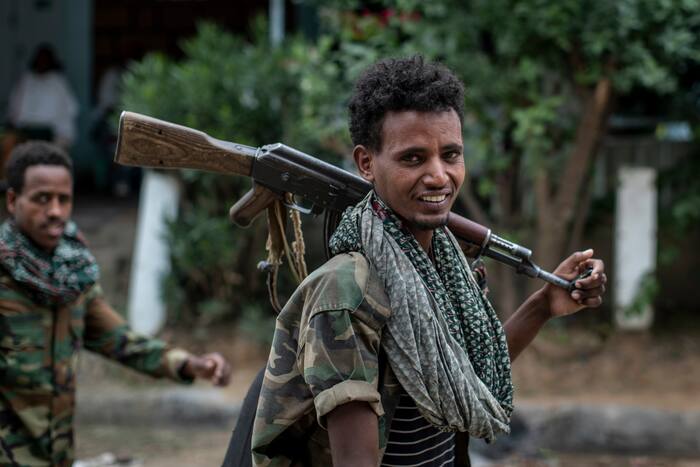
The federal recapture of Mekelle by the Ethiopian National Defense Force and allied factions represents a tactical victory masking a strategic deficit. Territorial control is frequently misread as political consolidation. In asymmetric internal conflicts, occupying an urban center transfers the cost of administration, supply line defense, and population policing to the occupier without securing political legitimacy or pacifying the insurgency.
The Urban Control Fallacy
Military strategy dictates that holding terrain requires securing lines of communication and denying sanctuary to mobile adversaries. When federal forces entered Mekelle following the tactical withdrawal of the Tigray People's Liberation Front, state media framed the maneuver as the restoration of sovereignty.
This perspective ignores the mechanics of counterinsurgency. Every urban node secured without local political consent functions as a fortified garrison:
- Logistical Vulnerability: Supply corridors traversing contested regional boundaries require dedicated force protection assets, drawing resources away from frontline stabilization.
- Asymmetric Attrition: Insurgent forces operating from peripheral highlands dictate the tempo of engagement, choosing when to contest supply lines or absorb urban sorties.
- Administrative Friction: Installing a compliant regional administration without organic civic buy-in produces passive resistance, intelligence blackouts, and high security overheads.
Structural Divergence From Prior Campaigns
The current operational environment differs fundamentally from the initial 2020 federal intervention. The structural variables defining the current conflict architecture include:
- The Dissolution of the Coercive Coalition: The original federal offensive relied on a convergence of convenience between federal authorities, regional Amhara forces, Eritrean troops, and mobilized Afar units. That transactional alignment has fractured. Competing territorial ambitions, particularly regarding Western Tigray, have turned former allies into latent or active adversaries.
- Internal Fragmentation of Resistance: The introduction of localized actors such as the Tigray Peace Force demonstrates that opposition to the TPLF leadership exists, but this does not automatically translate into unconditional loyalty to federal authority. Factionalization inside Tigray creates multiple centers of armed friction rather than a unified civil peace.
- Regional Geopolitical Contagion: Interstate friction, including the diplomatic rupture with Eritrea and instability along porous borders with Sudan, ensures that external patrons remain willing to support proxy elements. The conflict is no longer contained within domestic administrative boundaries.
The Cost Function of Garrison Politics
The strategic equation facing Addis Ababa is defined by diminishing returns on coercion. Every square kilometer occupied must be garrisoned; every supply convoy must be armed; every displaced civilian returning to a shattered urban center adds to the humanitarian liability of the central state.
When a state measures victory by the flags raised over regional government buildings rather than the institutionalization of voluntary civic participation, it commits to a permanent state of emergency. The withdrawal of opposition fighters from Mekelle was a doctrinal choice to conserve personnel and shift the burden of logistics onto the federal state.
Strategic Forecast
Federal command over the urban centers of Tigray and Afar provides operational depth, but it does not resolve the underlying crisis of state architecture. Unless the central government transitions from kinetic pacification to an inclusive political settlement addressing regional autonomy, land disputes, and constitutional power-sharing, the recapture of Mekelle remains merely an intermediate phase in an unresolvable cycle of state-fragmentation conflict. Holding territory requires an army; holding a country requires political architecture.
This video provides on-the-ground context regarding the federal recapture of Mekelle and the immediate aftermath following the withdrawal of regional forces.