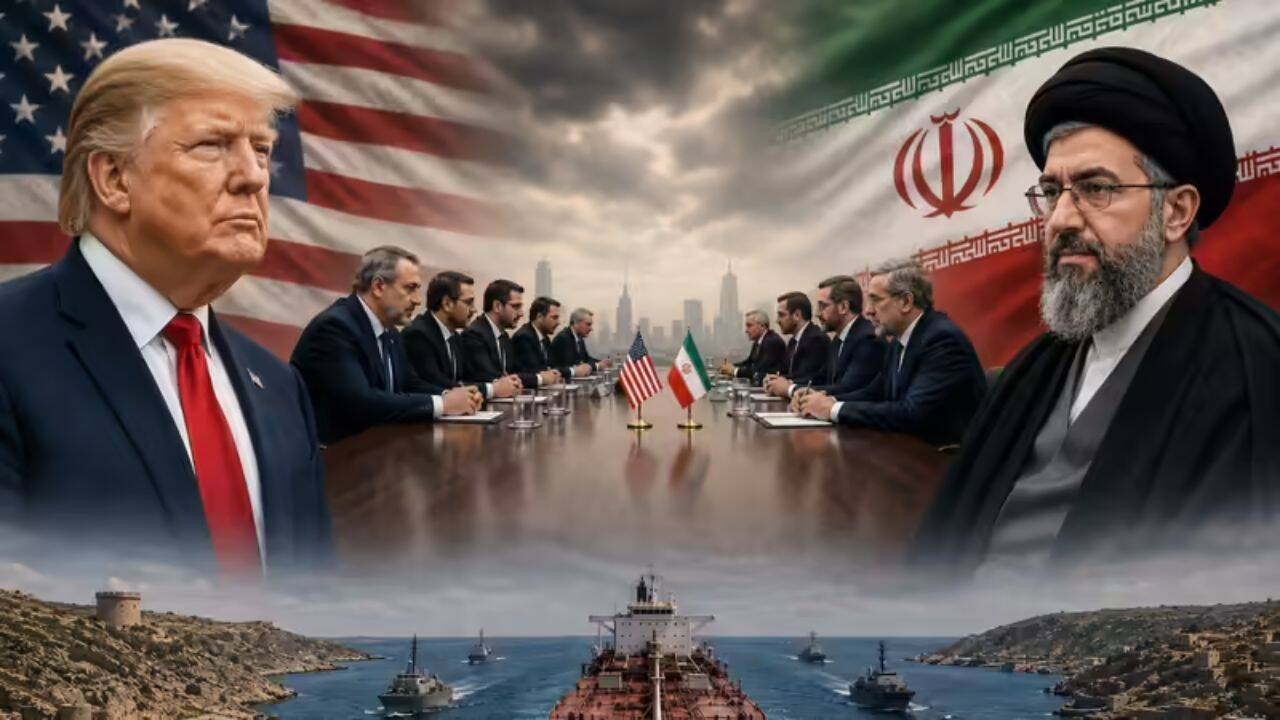
The escalating rhetoric from media outlets linked to the Islamic Revolutionary Guard Corps advocating for the acquisition of a nuclear weapon represents a calculated shift in strategic deterrence doctrine rather than a simple reaction to failed diplomatic frameworks. This shift is driven by a systematic recalculation of regional security threats, the perceived degradation of Western security guarantees, and the structural limitations of economic statecraft. By analyzing this position through the lens of offensive realism and strategic deterrence theory, the underlying drivers of this rhetoric reveal a highly rational, risk-insulated framework designed to maximize state survival and regional hegemony.
The Tripartite Framework of Iranian Security Architecture
The strategic imperative driving the arguments within state-linked media can be deconstructed into three distinct vectors: conventional military asymmetry, domestic political consolidation, and regional alignment architectures.
Conventional military balance in the Middle East heavily disfavors unilateral Iranian action due to the sophisticated air defense and precision-strike capabilities possessed by regional adversaries and Western powers. Nuclear acquisition is viewed not as a tool for offensive deployment, but as an ultimate equalizer to offset these structural vulnerabilities. The strategic utility of a nuclear deterrent lies in its capacity to alter the cost function of foreign intervention.
Domestic political consolidation operates on a separate axis. The rhetoric serves as an ideological anchor, signaling strength to internal factions and security apparatuses during periods of economic stagnation caused by international isolation. Framing nuclearization as an unavoidable security necessity shields the leadership from internal criticism regarding the economic fallout of collapsed diplomatic agreements.
Regional alignment architectures depend heavily on proxy networks. A sovereign nuclear umbrella fundamentally alters the operational threshold for these sub-state actors. Adversaries considering retaliatory strikes against these networks face a significantly heightened escalation risk if the patron state possesses a non-conventional second-strike or breakout capability.
The Cost-Function Failure of Sanctions Diplomacy
The structural failure of international agreements, specifically frameworks resembling the Joint Comprehensive Plan of Action, stems from an inherent credible commitment problem. Iran’s strategic planners operate under the assumption that Western democratic administrations cannot guarantee long-term policy continuity. The unilateral withdrawal of the United States from the 2015 agreement demonstrated to Iranian decision-makers that the economic benefits of compliance are transient, while the structural degradation of their strategic position under compliance is permanent.
The economic variables governing this calculus have shifted. Iran has developed sophisticated mechanism evasion strategies, building alternative financial pathways through non-aligned global markets and shifting its primary energy export dependencies toward economic actors willing to bypass Western unilateral measures. The marginal utility of sanctions relief has consequently diminished relative to the perceived permanent security utility of an unassailable defensive deterrent.
This creates an analytical bottleneck for Western policymakers:
- The enforcement mechanism (sanctions) yields diminishing returns over time as the target economy adapts.
- The incentive mechanism (sanctions relief) is viewed as highly volatile and subject to domestic political shifts in foreign capitals.
- The security variable (nuclear breakout capability) offers a permanent, non-negotiable alteration of the balance of power.
The Mechanism of Latent Proliferation
The current strategy advocated by internal hardliners does not necessarily require the immediate detonation or overt deployment of a weaponized device. Instead, the optimal strategic play relies on achieving a state of "latent proliferation" or terminal breakout capacity.
Achieving a technical threshold where weaponization can occur within days or weeks provides the state with the geopolitical benefits of a nuclear deterrent without triggering the immediate military responses that an overt weapons program might provoke. This threshold alters the negotiation equilibrium. Future diplomatic engagements would no longer center on the prevention of enrichment capabilities, but rather on the management and containment of an existing, functional breakout capacity.
The operational bottleneck for this strategy is no longer enrichment technology, which has achieved a high degree of domestic replication and scale, but rather the weaponization and delivery systems. The public positioning by media organizations close to the security apparatus acts as a psychological operations vector, normalizing the inevitability of this transition to prepare external observers for the eventual structural shift in regional power dynamics.
Strategic Realignment and Adversary Response Loops
The pursuit of this doctrine triggers predictable, systemic counter-actions from regional competitors. The security dilemma dictates that any move toward latent proliferation compels adversaries to enhance their own strike options or seek parallel deterrent capabilities. This cycle compresses the time available for diplomatic intervention and elevates the risk of miscalculation.
The response function of regional adversaries typically involves two main pathways:
- Preemptive counter-force operations targeting enrichment facilities, deep underground command nodes, and research infrastructure.
- The rapid acquisition of sovereign non-conventional capabilities by regional competitors, leading to a multipolar deterrent framework in the Middle East.
Iranian strategic analysts discount the likelihood of a sustained preemptive campaign due to the geographical dispersion and deep fortification of their nuclear infrastructure. The physical dispersal of processing facilities across multiple subterranean complexes creates a high survival probability for core technical assets against standard conventional munitions.
The Optimal Strategic Directive
Given the structural realities of the current geopolitical environment, the strategic trajectory for regional actors and global powers must pivot away from standard sanctions-driven negotiation models. The historical framework of trading temporary economic incentives for permanent technical rollbacks is fundamentally obsolete from the perspective of Iranian security planners.
The most effective stabilization mechanism requires the establishment of a hard containment framework that establishes explicit, kinetic thresholds for intervention while acknowledging the reality of Iran's permanent enrichment architecture. Diplomatic efforts must focus on verifiable monitoring protocols designed to detect the transition from latent capacity to active weaponization, rather than futile attempts to completely dismantle built-in technical infrastructure. Managing the stability of a highly armed, multi-polar regional balance of power remains the only viable long-term strategic posture.