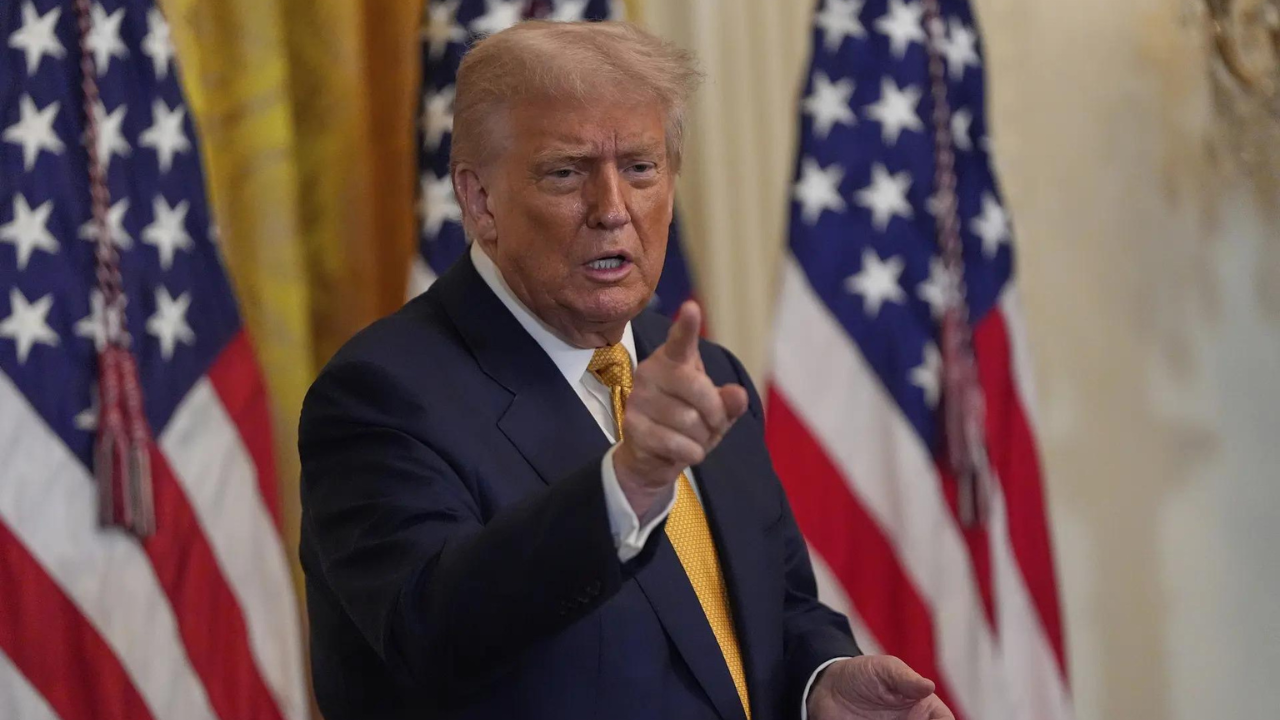
The political press corps loves a script. They thrive on the predictable theatre of diplomatic communiqués, bilateral handshakes, and carefully choreographed press briefings. So when Donald Trump stood before international cameras at a G7 summit and declared "I'm the boss" before brushing it off as "just being cute, funny," the media establishment ran its standard, tired playbook. They framed it as a gaffe, a momentary slip of the authoritarian mask, or a desperate walkback by a leader caught overplaying his hand.
They got it completely backward. If you liked this piece, you might want to look at: this related article.
The lazy consensus among mainstream political analysts is that international diplomacy operates on a rigid plane of decorum where words carry absolute, literal weight. In this flawed view of global affairs, a leader’s humor is either a mistake or a malfunction. What these commentators miss is the calculated utility of strategic absurdity. Trump’s "boss" comment and subsequent pivot to humor was not a clumsy retreat. It was a masterclass in dominant framing—a deliberate tactic designed to assert authority while leaving his critics with absolutely no leverage to strike back.
The Mirage of Diplomatic Decorum
Mainstream journalism operates on the premise that global summits are governed by the rules of a high school debate tournament. They assume that points are scored through adherence to protocol and that breaking character is a sign of weakness. I have spent years analyzing the rhetoric of high-stakes negotiations, and I can tell you that the obsession with "presidential behavior" is an obsession with a myth. For another perspective on this event, refer to the recent coverage from The New York Times.
When a leader uses humor to assert dominance, they are employing an asymmetric rhetorical strategy. Consider the mechanics of the interaction. By saying "I'm the boss," the underlying message of economic and military supremacy is delivered clearly to the room. By immediately following it with "just being cute," the speaker builds a perfect rhetorical fortress.
If a rival leader or a journalist takes the original statement seriously, they look fragile, literal-minded, and devoid of social intelligence. If they ignore it, the assertion of dominance stands unchallenged. It is a psychological trap. The media fell into it headfirst, spending days debating the literal definition of a "boss" in a multilateral alliance, while completely missing the raw power dynamic on display.
Weaponized Ambiguity on the Global Stage
To understand why the standard analysis fails, we have to look at the concept of strategic ambiguity. In traditional foreign policy, strategic ambiguity is used to keep adversaries guessing about military interventions or treaty obligations. Think of the historical consensus around ambiguous defense pacts. It is a calculated refusal to commit to a single interpretation.
What occurred at the G7 was the application of that exact principle to interpersonal diplomacy.
- The Setup: An overt assertion of unilateral power.
- The Pivot: A humorous dismissal that reclasses the assertion as a joke.
- The Result: The core message remains in the subconscious of the listeners, but it is stripped of any formal accountability.
Imagine a corporate negotiation where the majority shareholder smiles, looks at the minority board members, and says, "We all know I run this circus anyway." If the board members get angry, they appear insecure. If they laugh along, they have tacitly accepted their subordinate status. This is not a failure of diplomacy; it is negotiation mechanics at their most basic level.
Dismantling the Punditry Premises
Let's address the flawed questions that dominate the current media ecosystem. If you look at standard news analysis, the questions being asked are fundamentally wrong.
Did the comment damage relationships with traditional allies?
This question assumes that international alliances are built on hurt feelings and social slights. They are not. Alliances are built on hard power, intelligence sharing, trade deficits, and mutual defense capabilities. Germany does not reassess its entire security apparatus because of a joke at a press conference. France does not rewrite its economic policy because of a smirk. To suggest that a quip undermines decades of institutional treaties is a profound misunderstanding of how global power works.
Was the explanation a sign of weakness?
The consensus view claims that walking back a statement shows regret. That might be true in a court of law, but in the court of public opinion, a humorous dismissal is an act of dismissal itself. It signals that the speaker does not view the press corps or the audience as serious enough to warrant a formal, defensive clarification. It is an assertion that says, "I define the meaning of my words, and you are merely the audience trying to keep up."
The Risk of the Asymmetric Playbook
This approach is not without its vulnerabilities. The primary downside of relying on weaponized humor and dominant framing is the total erosion of institutional predictability. When every statement can be retroactively classified as a joke, communication becomes erratic. For traditional bureaucrats who require stability to draft policy, this style is a nightmare.
However, looking at this through the lens of traditional institutionalism misses the point of populist diplomacy entirely. The goal of this rhetorical style is not to please the bureaucrats within the state department; the goal is to disrupt the existing hierarchy and signal directly to a domestic base that their leader refuses to bow to international etiquette.
Stop Looking for the Traditional Script
The political commentary class will continue to analyze these moments using an obsolete framework. They will keep looking for policy consistency where none is intended. They will keep demanding adherence to 20th-century diplomatic norms in an era defined by media saturation and attention economics.
International relations are not a series of polite committee meetings. They are a continuous, shifting struggle for leverage. When a leader shatters the expected decorum and reduces a high-level summit to a playground dynamic, they aren't losing control of the room. They are rewriting the rules of engagement in real time, forcing everyone else to play a game they don't understand.
The media can keep writing articles dissecting the literal meaning of a joke, hoping for a return to the predictable scripts of the past. It will not happen. The old guard is left holding a rulebook for a game that is no longer being played.